Snail
Zebra Nerite Snails
Neritina natalensisNeritidaeSnails
Price: $13.99 USD
Add from My tanks →1 photos
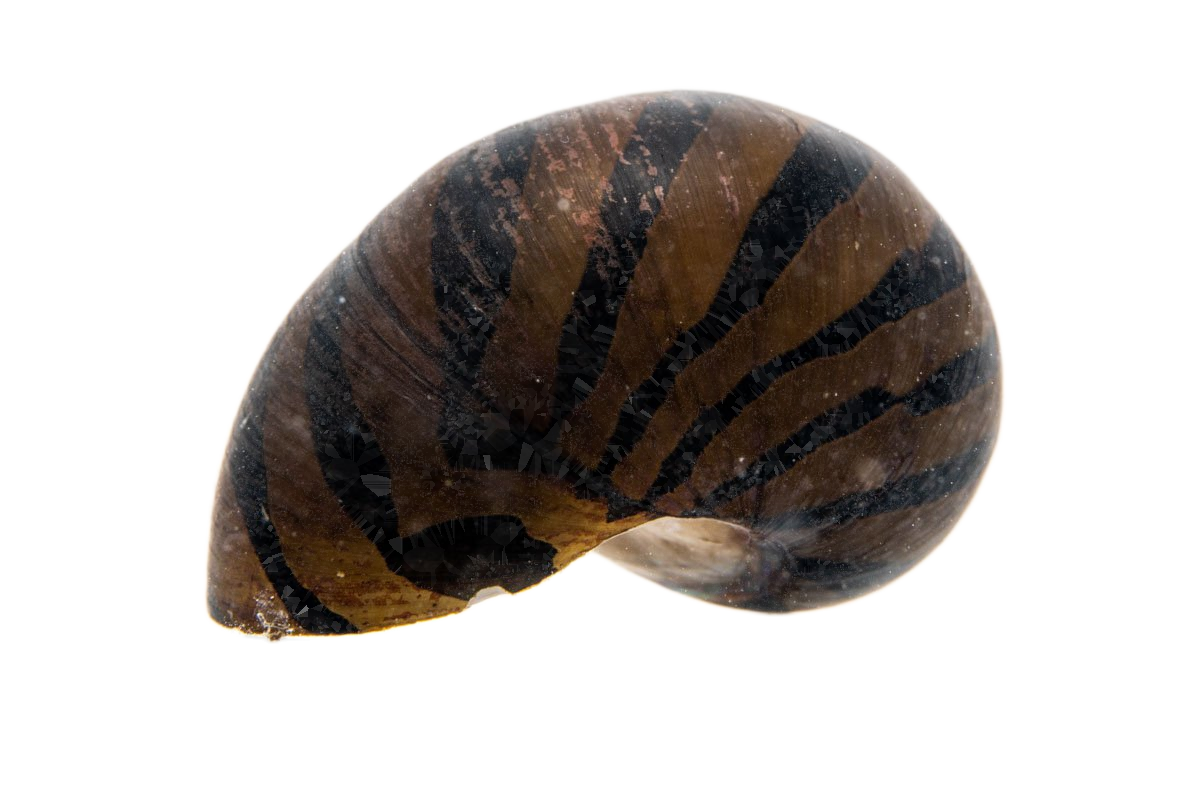
Zebra nerite snails (Neritina natalensis) are African freshwater snails known for the bold black stripes on their gold shells. They are among the best algae-eating snails for planted tanks, extremely easy to care for and undemanding, and will not eat healthy plant leaves.
Quick facts
Identity
- Also known as
- Spotted nerite; Tiger snail; Red spotted snail
- Synonyms
- Vittina natalensis; Nerita natalensis
- Environment
- Freshwater
- Native to
- South Africa, Mozambique, Kenya, Tanzania
- Habitat
- Coastal rivers, streams, estuaries and mangrove swamps in East and Southern Africa, on hard substrates such as rocks and submerged wood with moderate flow.
- Sourcing
- Wild-caught
- Conservation
- Not Evaluated
Care
- Care level
- Easy
- Temperament
- Peaceful
- Adult size
- 0.5 – 1 in (1.3 – 2.5 cm)
- Lifespan
- 1 – 2 yrs
- Min tank
- 10 gal (38 L)
- Growth rate
- Slow
- Placement
- Rock & glass
Water
- Temperature
- 72 – 78 °F (22 – 26 °C)
- pH
- 7.2 – 8.4
- GH
- 8 – 18 dGH
- TDS
- 200 – 500 ppm
- dKH
- 5 – 12 dKH
- Flow
- Moderate
Behavior & compatibility
- Social
- Solitary
- Aggression to own kind
- Low
- Active
- Night
- Invert safe
- Yes
- Plant safe
- Yes
- Shrimp safe
- Yes
- Clean-up role
- Algae, Biofilm
- Population boom risk
- Low
Feeding & breeding
- Diet
- Herbivore
- Foods
- Algae, Biofilm, Vegetables, Wafers
- Breeding type
- Broadcast spawner
- Breeding difficulty
- Not bred in captivity
- Sexing
- Sexes are separate but not visually distinguishable; internal examination or observation of mating behavior is required to sex individuals.
- Target feeding
- Beneficial
Something wrong or missing? Submit a correction
Care guide
Overview
Zebra nerite snails carry bold black stripes banding across a gold shell, giving each individual a distinct zebra-like pattern. This African species grazes algae and biofilm off rock, wood, and glass in fully cycled tanks with hard, alkaline water. It cannot reproduce in freshwater, so numbers stay in check, but a secure lid is needed to stop it climbing out.
Care
A hardy grazer suited to fully cycled tanks with an established film of algae and biofilm on rocks, wood, and glass. It needs moderately hard, alkaline water to keep its shell from pitting or eroding, so soft, acidic setups are unsuitable. A tightly fitting lid is essential, since this snail is a persistent climber and will dry out and die if it escapes the tank overnight.
Feeding
Feeds almost exclusively on soft green algae, diatoms, and bacterial biofilm growing on hard surfaces, and will largely ignore prepared foods. In tanks without enough natural growth, supplement with algae wafers or blanched vegetables such as zucchini or spinach to prevent starvation. Introduce only after an aquarium has matured and developed a visible algae film, not into a brand-new setup.
Tank mates
Peaceful and completely harmless toward fish, shrimp, and other snails, making it a good addition to community and planted shrimp tanks. Avoid pairing it with snail-eating species such as pufferfish, loaches, or assassin snails, which will prey on it. It does not compete aggressively for food and can be kept alongside other algae-eating cleanup crew members without issue.
Breeding
Females deposit small, hard white egg capsules on wood, rock, and glass, but these never hatch in freshwater. Larvae require brackish or full marine salinity to develop, so reproduction in a standard freshwater aquarium is impossible. Because of this, the species poses no risk of overpopulating a tank, unlike many other freshwater snails.
Health
Shell erosion and pitting are the most common issues, usually caused by soft or acidic water lacking sufficient calcium and carbonate hardness. Copper-based medications are highly toxic and must be avoided in any tank housing this species. Sudden temperature swings or prolonged exposure to poor water quality can also weaken the shell and shorten lifespan.
Sources
More Snails
Something wrong or missing? Submit a correction
In the community