Marine Invertebrates
Scarlet Skunk Cleaner Shrimp
Lysmata amboinensisLysmatidaeCleaner shrimp
Price: $28.20 USD
Add from My tanks →1 photos
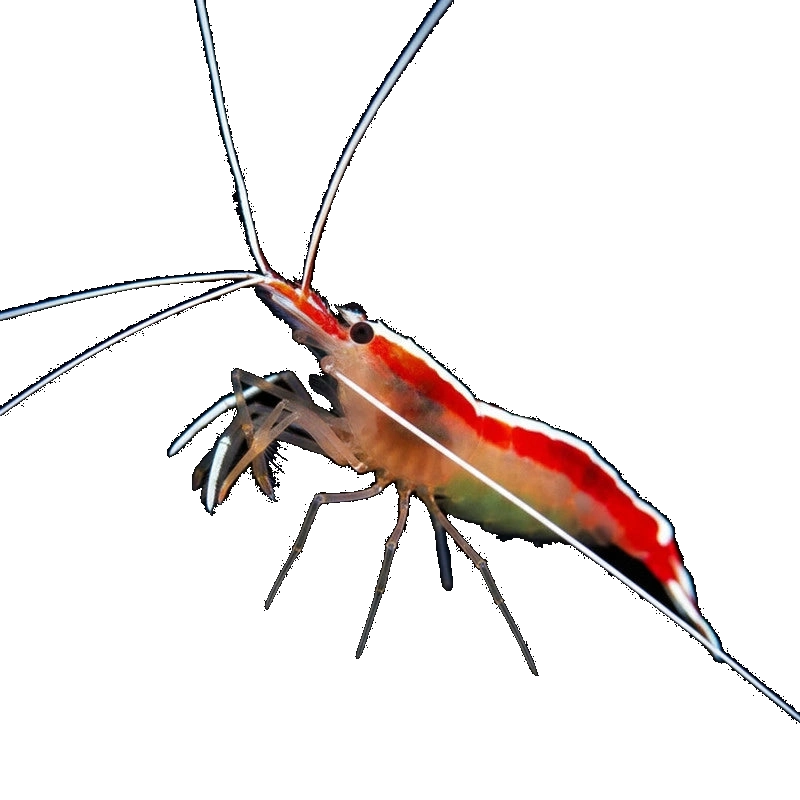
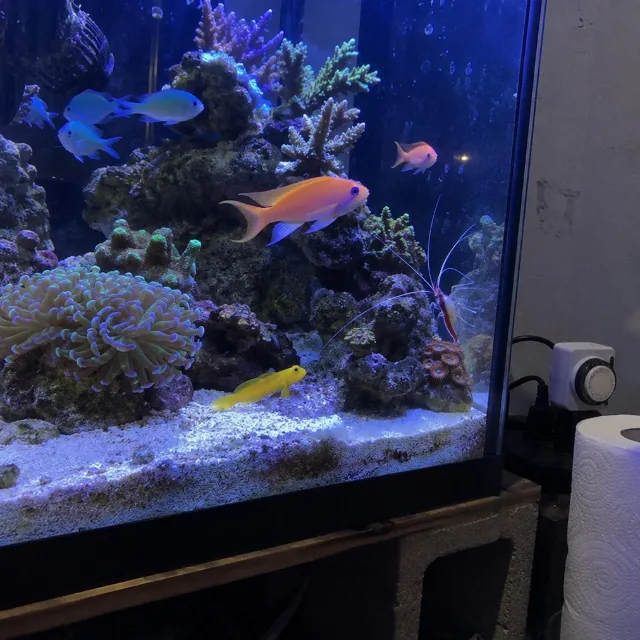
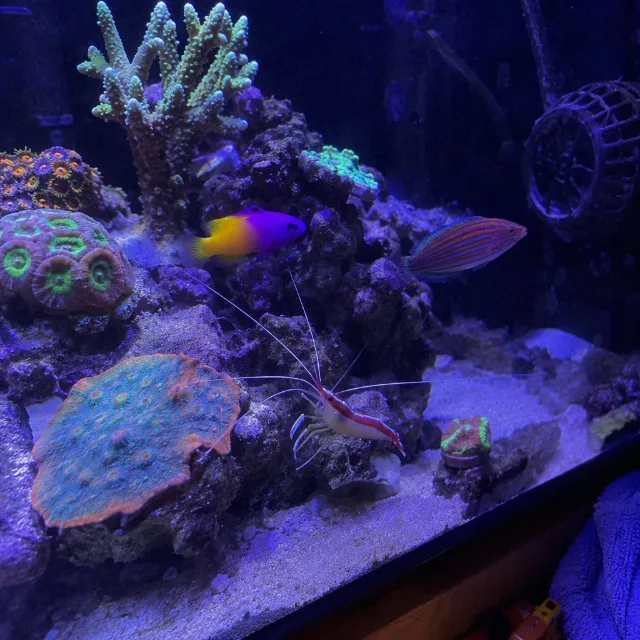
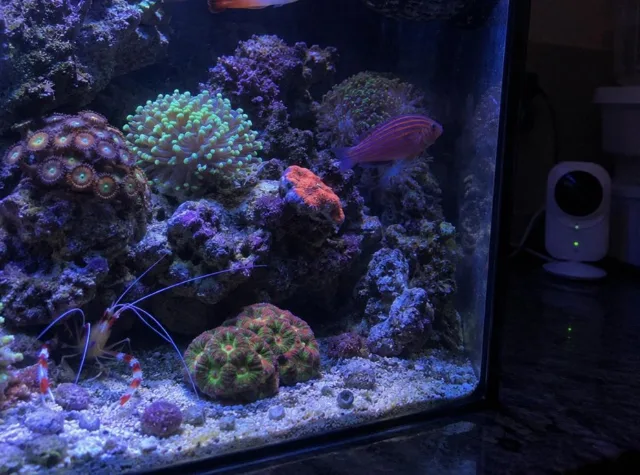
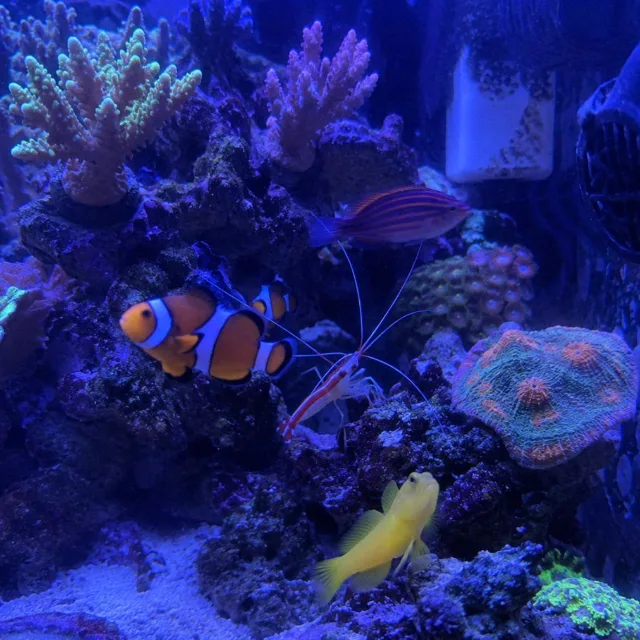
The Scarlet Skunk Cleaner Shrimp (Lysmata amboinensis) is a peaceful cleaner shrimp recognized by the pair of bright red stripes outlining the single white stripe down its back. It sets up cleaning stations on live rock and removes parasites and dead tissue from fish, needing peaceful tankmates, drip acclimation, iodine for molting, and tolerance-free water of copper medications.
Quick facts
Identity
- Also known as
- Pacific Cleaner Shrimp; Skunk Cleaner Shrimp; White-striped Cleaner Shrimp; Red Skunk Cleaner Shrimp
- Synonyms
- Lysmata grabhami (misapplied in some older literature)
- Environment
- Saltwater
- Native to
- Red Sea, Indo-Pacific, Indonesia, Philippines
- Habitat
- Coral reef caves, holes, and ledges at depths of roughly 5-40 meters, often near cleaning stations on rock outcroppings
- Sourcing
- Wild-caught
- Conservation
- Not Evaluated
Care
- Care level
- Easy
- Temperament
- Peaceful
- Adult size
- 1.5 – 2.5 in (3.8 – 6.4 cm)
- Lifespan
- 2 – 3 yrs
- Min tank
- 20 gal (76 L)
- Growth rate
- Moderate
- Placement
- Rock & glass
Water
- Temperature
- 72 – 78 °F (22 – 26 °C)
- pH
- 8.1 – 8.4
- dKH
- 8 – 12 dKH
- Salinity
- 1.023 – 1.025 SG
- Flow
- Moderate
Behavior & compatibility
- Social
- Group
- Aggression to own kind
- Low
- Active
- Daytime
- Reef safe
- Yes
- Invert safe
- Yes
- Shrimp safe
- Yes
- Clean-up role
- Leftover food, Detritus
- Population boom risk
- Low
Feeding & breeding
- Diet
- Omnivore
- Foods
- Frozen, Freeze-dried, Flakes, Pellets, Zooplankton
- Breeding type
- Broadcast spawner
- Breeding difficulty
- Difficult
- Sexing
- Protandric simultaneous hermaphrodite; all mature adults function as both sexes, so no external sexing is possible
- Target feeding
- Beneficial
Something wrong or missing? Submit a correction
Care guide
Overview
Reaching roughly 1.5 to 2.5 inches at maturity, this shrimp displays a single white dorsal stripe bordered by two scarlet bands running from antennae to tail fan. It stations itself on exposed rockwork to service passing fish and molts regularly, requiring stable calcium, alkalinity, and iodine levels. Keep it away from copper treatments and predatory tankmates.
Care
This shrimp adapts well to typical reef parameters and is considered hardy once acclimated, though it molts regularly and needs stable water chemistry to do so successfully. It appreciates rockwork with crevices where it can establish a cleaning station and feel secure between molts. Iodine, calcium, and magnesium supplementation support healthy shell development, and copper-based medications must be avoided entirely.
Feeding
In the wild much of its diet comes from parasites and dead tissue picked from fish visiting its cleaning station, but in captivity it readily accepts frozen mysis, brine shrimp, chopped seafood, and sinking pellets or flakes. It is not a picky eater and will scavenge leftover food and detritus around the tank. Offering a varied diet a few times a week helps supplement whatever incidental cleaning it performs on tankmates.
Tank mates
Best housed with peaceful fish that will respect its cleaning services rather than treat it as prey; larger predatory fish such as lionfish, groupers, triggers, and some hawkfish will readily eat it. It can be kept singly or in small groups, and unrelated individuals introduced together usually tolerate each other well. Avoid pairing with aggressive crabs or other predatory crustaceans that may compete for the same crevices.
Breeding
As a simultaneous hermaphrodite, any two mature individuals kept together can produce fertilized eggs, which the female-phase shrimp carries under her pleopods until hatching. The larvae pass through a long planktonic stage with more than a dozen zoeal stages before settling, making rearing them past hatching very difficult in a typical home aquarium. Most home breeding attempts end with the larvae being consumed by fish or pulled into filtration rather than surviving to metamorphosis.
Health
Failed molts are the most common health issue, usually linked to insufficient iodine or unstable calcium and alkalinity levels. Sudden salinity or temperature swings can also cause fatal molting problems or general stress, so consistent water quality is important. Copper exposure, even at levels considered safe for fish, is lethal to this shrimp and must be strictly avoided.
Sources
More Cleaner shrimp
Something wrong or missing? Submit a correction
In the community