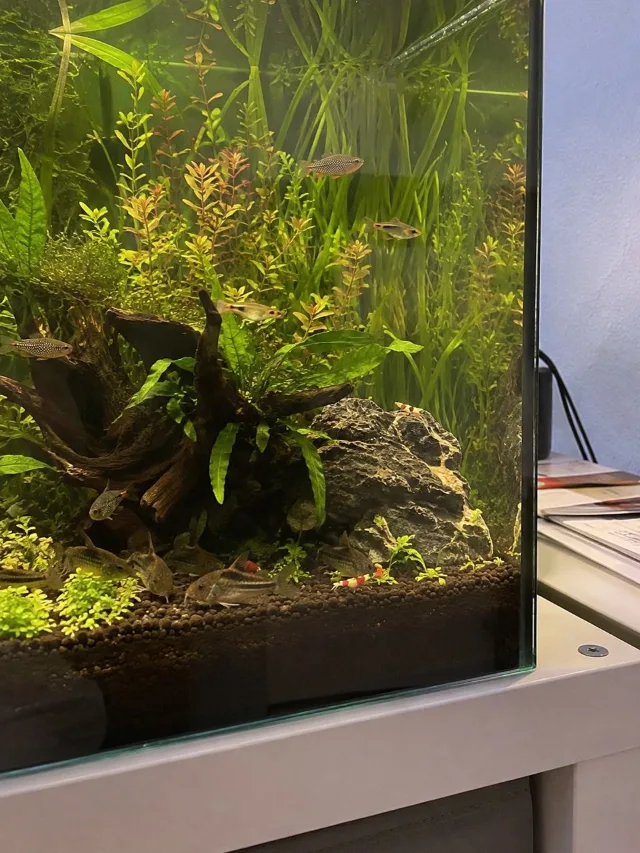
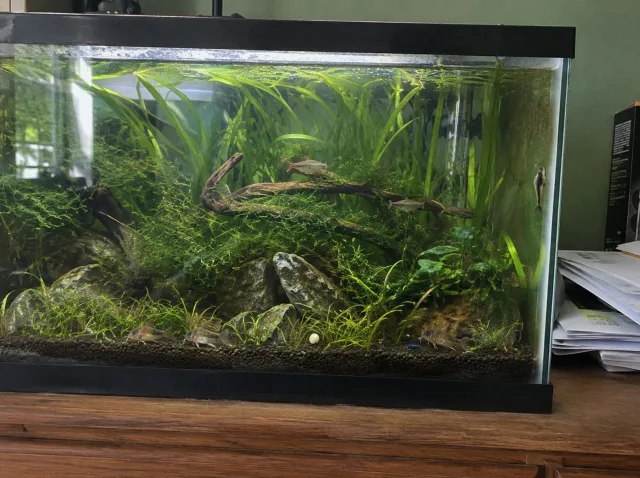
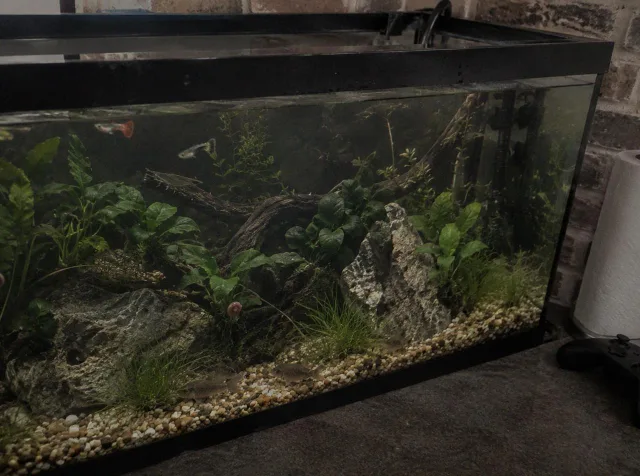
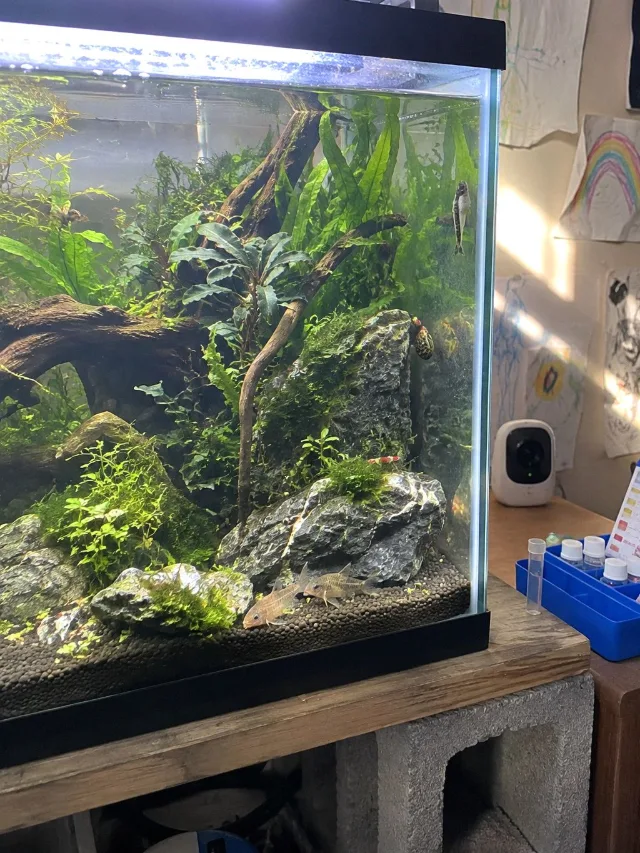
Cryptocoryne
Cryptocoryne Aponogetifolia
Cryptocoryne aponogetifoliaAraceaeCrypts
Price: $15.99 USD
Add from My tanks →1 photos
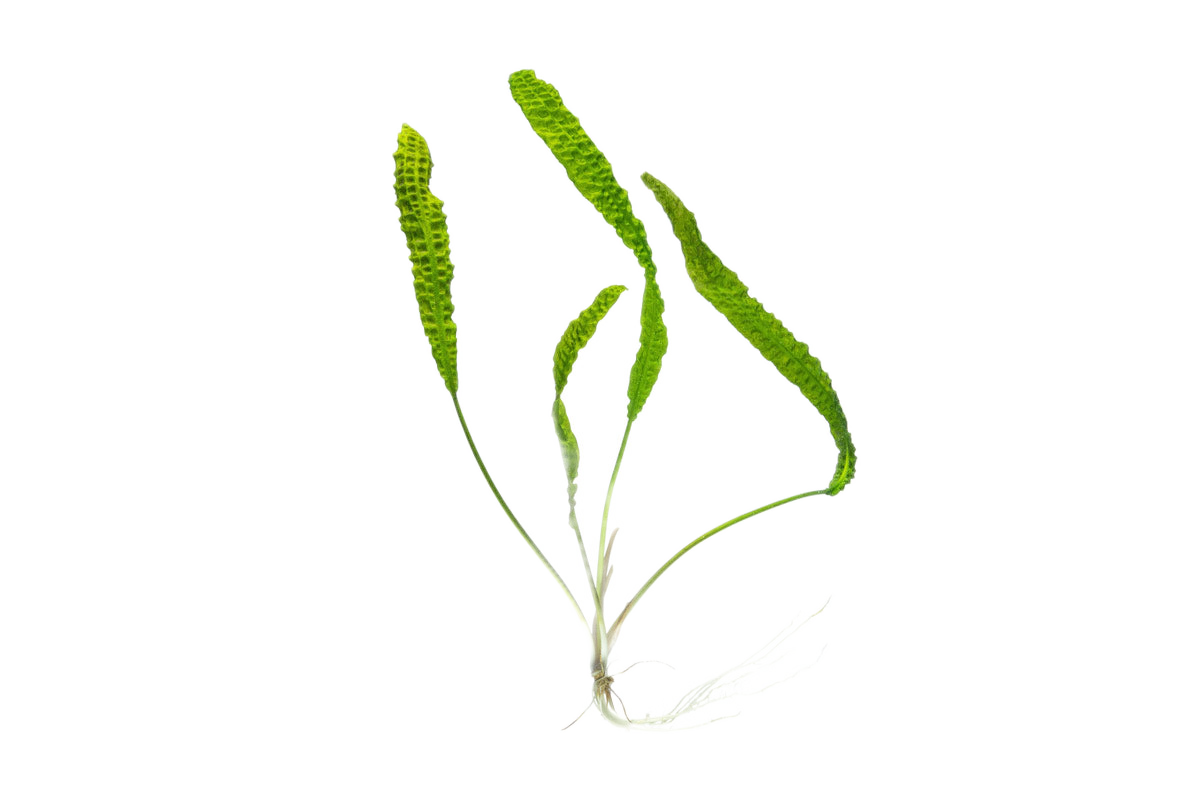
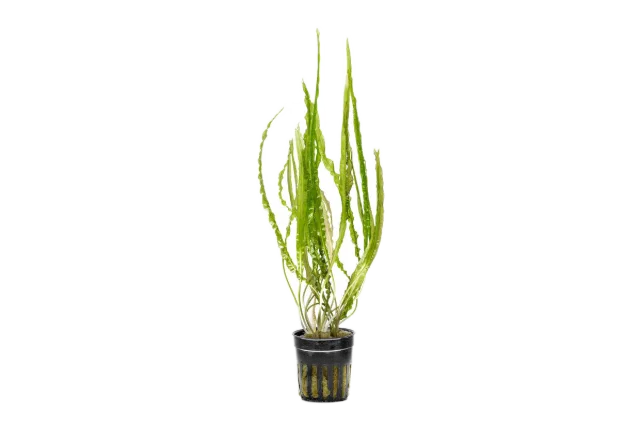
Cryptocoryne aponogetifolia is a large rosette aquarium plant native to the fast-flowing, limestone-rich rivers of the Philippines, with long ribbon-like leaves with a heavily bullated texture reaching 12 to 24 inches. It is a heavy root feeder that does best in a permanent spot with root tabs, tolerates hard water and low to medium light, and propagates by rhizome division or runner offshoots.
Quick facts
Identity
- Also known as
- Giant crypt; Aponogeton crypt
- Synonyms
- Cryptocoryne usteriana (formerly considered synonym, now recognized as distinct)
- Environment
- Freshwater
- Native to
- Philippines (Luzon, historically Panay and Negros)
- Habitat
- Fast-flowing, oxygenated, mineral-rich limestone rivers and rivulets, often forming dense submerged stands that emerge when water levels drop
- Sourcing
- Both
- Conservation
- Not Evaluated
Care
- Care level
- Easy
- Growth form
- Rosette
- Max height
- 12 – 40 in (30 – 102 cm)
- Spread
- 24 in (61 cm)
- Growth rate
- Moderate
- Placement
- Background
Water
- Temperature
- 68 – 82 °F (20 – 28 °C)
- pH
- 6.0 – 8.0
- GH
- 4 – 15 dGH
- dKH
- 7 – 21 dKH
- Flow
- Moderate-High
- Light
- Low
- CO₂
- Beneficial
Planting
- Substrate
- Nutrient-rich required
- Feeds from
- Roots
- Fertilizer needs
- High
- Colors
- Green
Feeding & breeding
- Propagation
- Rhizome division, Runners, Splitting
Something wrong or missing? Submit a correction
Care guide
Overview
Strap-like leaves can stretch 12 to 24 inches or more, making this the largest crypt in the hobby and a background focal plant rather than a foreground filler. Leaves show a heavily bullate, hammered texture in plain green with no purple underside. Best left undisturbed in a deep, nutrient-rich substrate, where it tolerates hard water and variable light once established.
Care
This is the largest species in the Cryptocoryne genus, forming a rosette of long, strap-like leaves that can exceed 24 inches in a mature aquarium and reach much greater lengths in the wild. The leaves have a pronounced bullate, hammered texture and a bright grass-green colour, with no purple pigmentation on the undersides. It tolerates a wide swing in hardness and pH and adapts to low through high light, making it forgiving once established, though settling into a new tank can take several months before strong runners appear. Because of its size it is really only suited to large background plantings in bigger tanks, and it is not touched by grazing fish, which makes it a favourite for African cichlid setups.
Planting & trimming
Plant the rhizome in a deep bed of nutrient-rich substrate or aquasoil, at least 4 inches deep, positioning it toward the back or side of the aquarium given its eventual footprint. Space specimens well apart since a mature plant can spread its root system and leaf rosette across a significant portion of the tank floor. Once established it should be left undisturbed in a permanent spot, since it takes months to settle before producing vigorous runners.
Fertilizing
As an obligate heavy root feeder, this plant depends on a nutrient-rich substrate rather than water column fertilization. Bury iron-rich root tabs deep and regularly beneath the rhizome and root mass in a substrate at least 4 inches deep, replenishing them as the plant sends out an extensive root system. Liquid fertilizers can supplement macro and micronutrients, but neglecting the substrate will slow growth and can lead to smaller, less textured leaves over time.
Propagation
Propagation is primarily through division of the rhizome and by separating daughter plantlets produced on runners once the parent plant is established. Runners can be left attached until the young plantlet has developed its own roots and several leaves before being cut away and replanted. Growth is on the slower side, so propagation is not rapid compared to many other aquarium plants.
Problems
Unlike many smaller crypts, this species is not particularly prone to sudden collapse or melt once acclimated, though newly imported or transplanted specimens may shed a few older leaves before settling in. Poor substrate nutrition rather than water changes is the more common cause of stunted or pale new growth. Algae can accumulate on the large, textured leaf surfaces in high-light setups, so moderate lighting paired with good flow around the leaves helps keep them clean.
Sources
More Crypts
Something wrong or missing? Submit a correction
In the community