
Aquatic Plant
Cryptocoryne Albida Costata
Cryptocoryne albida 'Costata'AraceaeCrypts
Price: $7.99 USD
Add from My tanks →1 photos
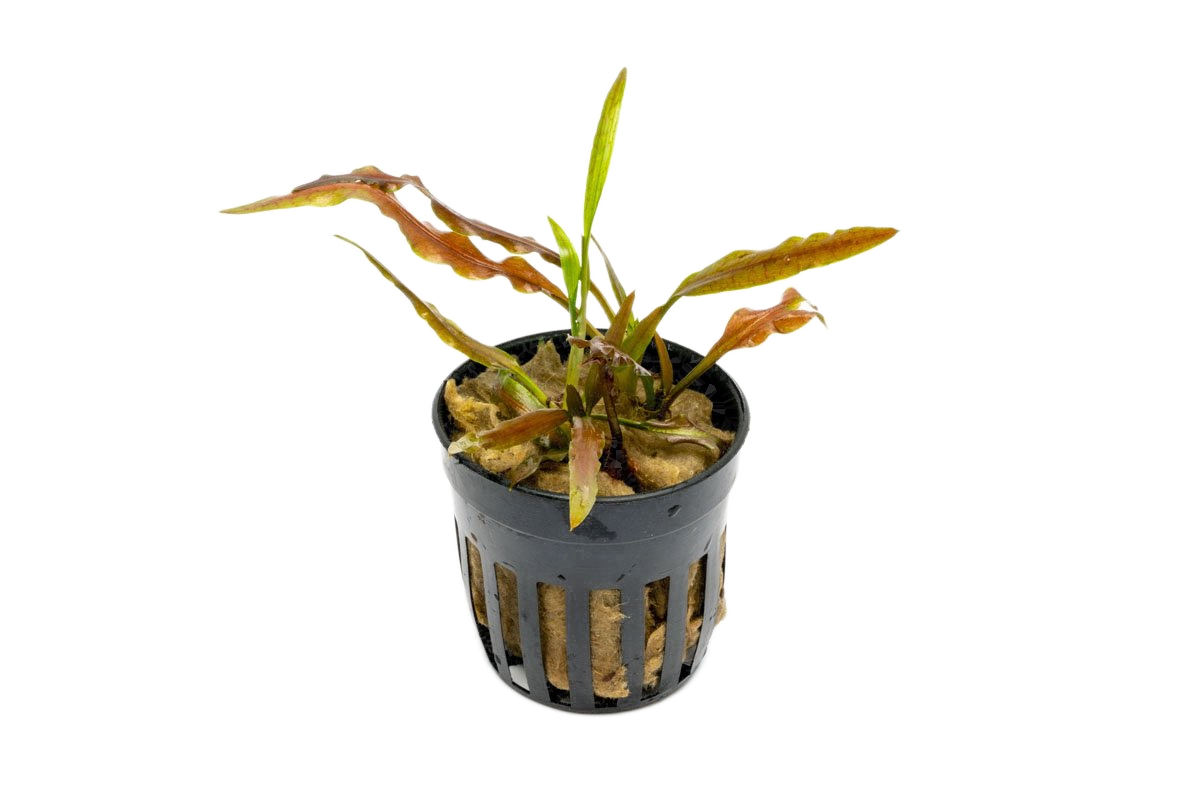
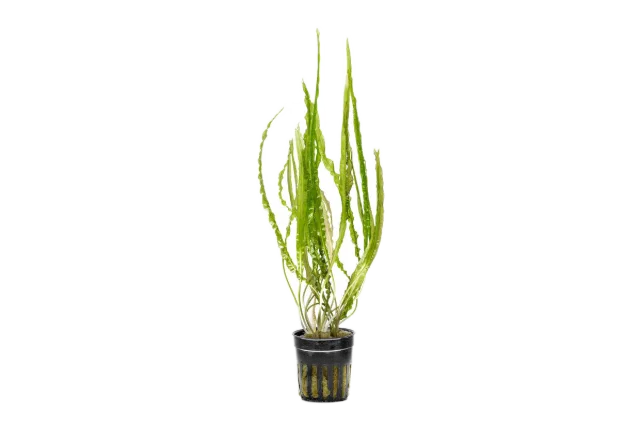
Cryptocoryne albida 'Costata', native to Southeast Asia, is a sought-after variety with slender, lance-shaped leaves and ruffled margins ranging from bright emerald green to warm reddish-brown. Compact and exceptional for hardscape gaps; easy care, low to moderate light, sensitive to sudden parameter shifts.
Quick facts
Identity
- Also known as
- Broadleaf Crypt; Costata Crypt; Cryptocoryne Costata
- Synonyms
- Cryptocoryne costata Gagnep.; Cryptocoryne retrospiralis subsp. albida; Cryptocoryne retrospiralis var. costata
- Environment
- Freshwater
- Native to
- Thailand, Malay Peninsula, Sri Lanka, India, Bangladesh
- Habitat
- Muddy and sandy banks of slow-moving rivers and forest streams, submerged in the rainy season and partially emersed during the dry season, in clayey nutrient-rich sediment.
- Sourcing
- Aquacultured
- Conservation
- Not Evaluated
Care
- Care level
- Easy
- Growth form
- Rosette
- Max height
- 3 – 12 in (7.6 – 30 cm)
- Spread
- 6 in (15 cm)
- Growth rate
- Slow
- Placement
- Midground, Background
Water
- Temperature
- 72 – 82 °F (22 – 28 °C)
- pH
- 6.0 – 7.5
- dKH
- 2 – 12 dKH
- PAR
- 35 – 50 PAR
- Flow
- Low-Moderate
- Light
- Low
- CO₂
- Beneficial
Planting
- Substrate
- Nutrient-rich preferred
- Feeds from
- Roots
- Fertilizer needs
- Medium
- Colors
- Green, Brown, Red
Feeding & breeding
- Propagation
- Runners, Rhizome division
Something wrong or missing? Submit a correction
Care guide
Overview
Populations range across Thailand, the Malay Peninsula, Sri Lanka, India, and Bangladesh, where this crypt roots in muddy, nutrient-rich river banks. It forms a low rosette of narrow, ruffled lance-shaped leaves in green to bronze-red tones, spreading slowly by runners once settled. Best left undisturbed after planting to avoid melt, it tolerates a broad parameter range in modest tanks.
Care
This crypt forms low, dense rosettes of narrow lance-shaped leaves with a ruffled edge, and it tolerates a wide range of water parameters once established. It grows steadily under low to moderate light without CO2, though supplemental CO2 and stronger light bring out the deeper bronze-red leaf tones. Leave newly planted specimens undisturbed, since crypts resent being uprooted and moved and will often melt back in response.
Planting & trimming
Remove any wool or pot material from the roots before planting and bury the rhizome fully in substrate, spacing individual crowns a few inches apart so rosettes can spread. Trim runners periodically once the clump matures to control spread, and replant daughter plantlets from runners directly into substrate. Avoid moving the plant once it is rooted, as repeated disturbance triggers melt.
Fertilizing
Roots take up most of its nutrition, so a nutrient-rich substrate or root tabs placed near the rhizome support steady growth. Pale or yellowing new leaves usually point to an iron or micronutrient shortfall and respond well to root tab dosing. Liquid fertilizer dosed to the water column offers a secondary boost but is less important than root feeding for this species.
Propagation
Propagates readily by runners sent out from the rhizome; daughter plants can be separated once they have their own root system and replanted elsewhere in the tank. Division of mature clumps is also possible, cutting apart connected crowns along the rhizome.
Problems
New arrivals frequently experience "crypt melt," where leaves dissolve after a change in water chemistry or when moving from emersed to submersed growth. This is a normal adjustment and not usually fatal; the rhizome and roots typically survive and send up fresh submersed leaves within a few weeks. Keeping parameters stable and avoiding replanting once established reduces the frequency and severity of melt episodes.
Sources
More Crypts
Something wrong or missing? Submit a correction
In the community
Popular tanks using Cryptocoryne Albida Costata
No public tanks are showcasing Cryptocoryne Albida Costata yet.