SPS Corals
JF Fox Flame Acropora
Acropora sp.AcroporidaeSPS corals
Price: $52.17 USD
Add from My tanks →1 photos
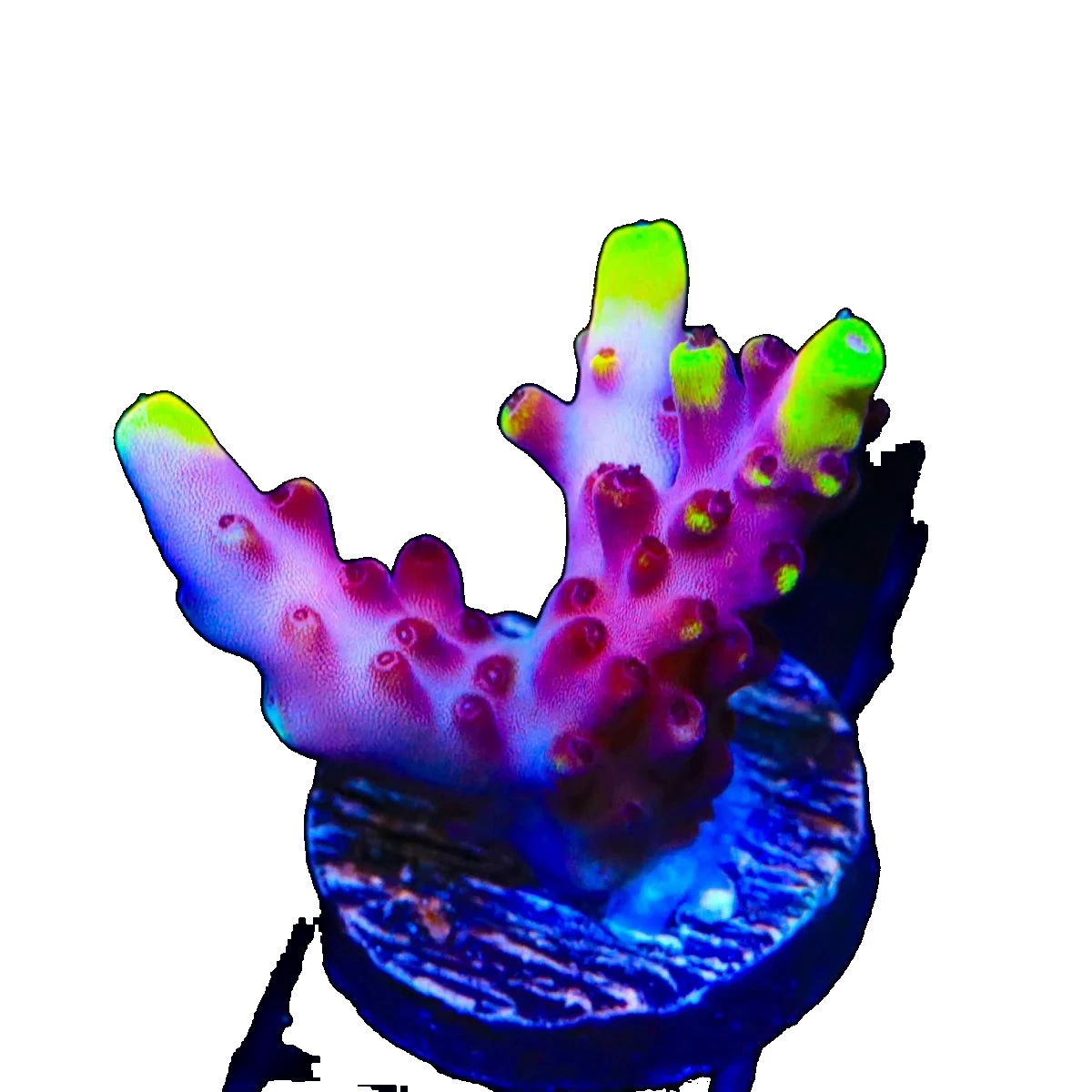
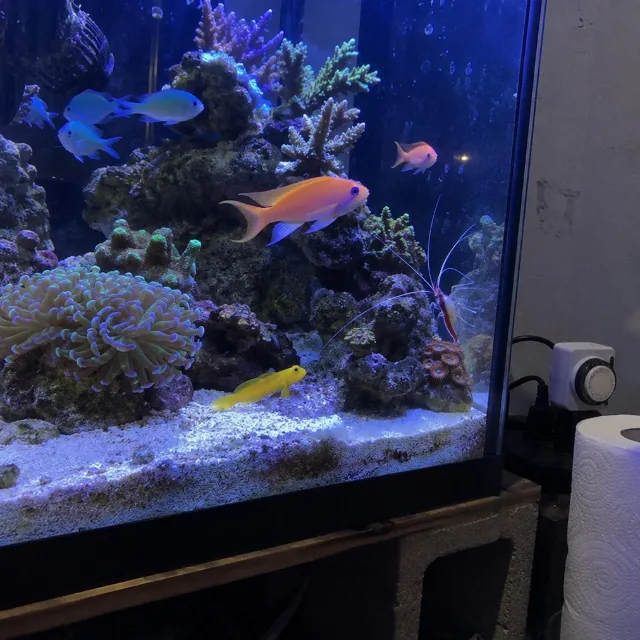
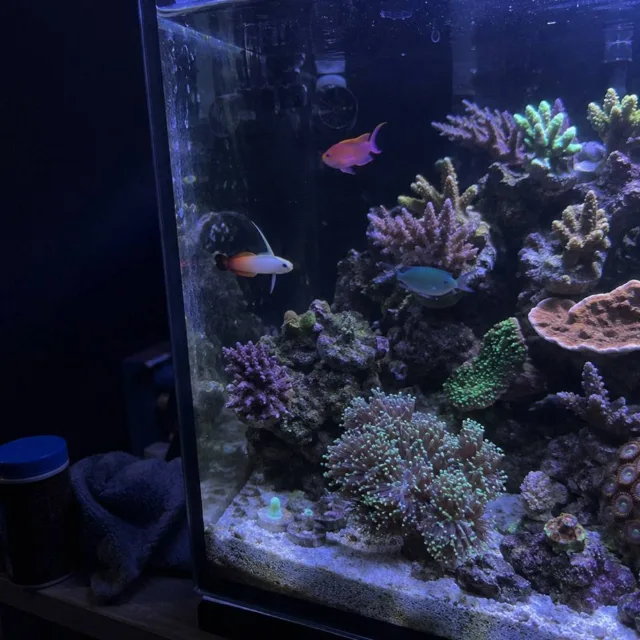
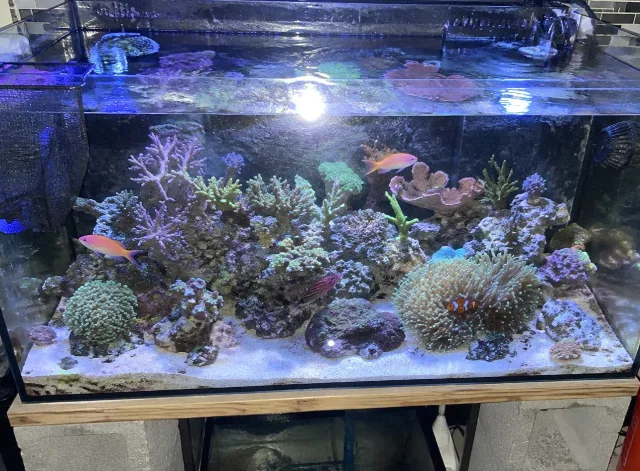
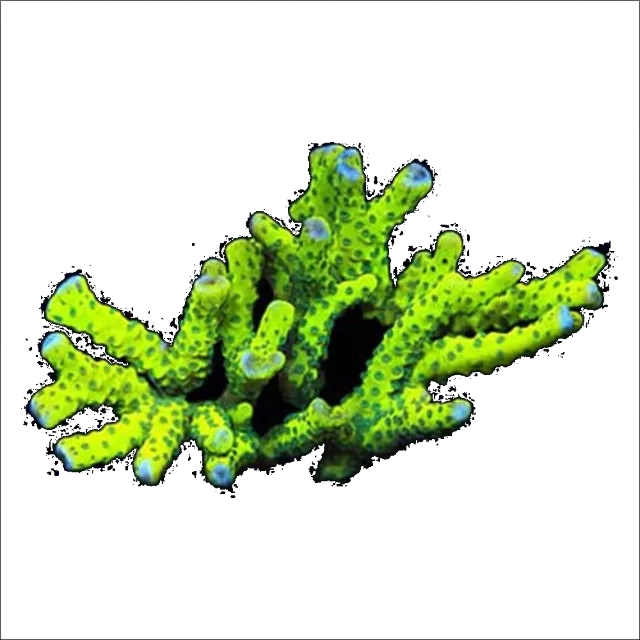
The JF Fox Flame Acropora is a premium SPS coral prized for its dramatic coloration and elegant branching growth. Under suitable reef conditions, it develops yellow-green to golden branches with intense pink, red, or magenta growth tips, creating its distinctive flame-like appearance. It requires strong lighting, vigorous water movement, and highly stable reef parameters.
Quick facts
Handling caution: Branches are sharp and can cause cuts; wear gloves when handling or fragging
Identity
- Also known as
- Fox Flame Acro
- Environment
- Saltwater
- Native to
- Indo-Pacific, Great Barrier Reef, Fiji, Tonga, Solomon Islands, Indonesia
- Habitat
- Shallow, high-energy reef crests and upper reef slopes with strong currents and intense sunlight
- Sourcing
- Aquacultured
- Conservation
- Not Evaluated
Care
- Care level
- Difficult
- Coral type
- SPS
- Temperament
- Aggressive
- Growth form
- Branching
- Adult size
- 1 – 12 in (2.5 – 30 cm)
- Spread
- 24 in (61 cm)
- Growth rate
- Fast
- Placement
- High
Water
- Temperature
- 74 – 80 °F (23 – 27 °C)
- pH
- 8.1 – 8.4
- dKH
- 8 – 11 dKH
- Salinity
- 1.025 – 1.026 SG
- PAR
- 200 – 400 PAR
- Flow
- High
- Light
- High
Reef care
- Nutrient preference
- Low
- Alk/Ca uptake
- High
- Target feeding
- Beneficial
- Give it room
- 6 in (15 cm)
- Colors
- Green, Purple, Yellow, Pink, Orange, Blue, Multicolor
Feeding & breeding
- Diet
- Photosynthetic
- Foods
- Coral food, Zooplankton, Phytoplankton
- Propagation
- Fragging
Something wrong or missing? Submit a correction
Care guide
Overview
Extends short polyps along golden-green branches that terminate in saturated pink to magenta tips, deepening as the colony matures under intense light. Growth is fast and outward-reaching, so it needs isolation from neighboring corals. Best suited to established SPS systems with tight calcium and alkalinity control.
Care
Acropora demands stable, mature reef chemistry with tight control over calcium, alkalinity, and magnesium, since fluctuations quickly cause tissue recession or bleaching. Strong, turbulent, ideally multidirectional flow paired with intense lighting keeps polyps extended and colors saturated. New colonies often brown out for a few weeks after introduction while adjusting to tank lighting, so gradual acclimation is important. This genus is best kept by reefers with established tanks and consistent dosing or a calcium reactor.
Placement & acclimation
Acclimate new frags to tank lighting gradually, starting lower in the water column or under shaded conditions before moving to the high-light zone Acropora prefers. Attach frags securely to rock or a plug using cyanoacrylate gel or two-part reef epoxy, ensuring the base is fully immobilized so tissue is not damaged by movement. Place colonies in the upper third of the tank where light and flow are strongest, leaving room for outward branch growth.
Feeding
Most nutrition comes from photosynthesis through zooxanthellae, but supplemental feeding of fine zooplankton or powdered coral food can support growth and coloration. Target feeding is optional rather than essential in a well-lit system with adequate flow to carry food to the polyps. Overfeeding or excess nutrients in the water column can dull coloration and promote nuisance algae on the skeleton.
Neighbors
Space colonies well apart since Acropora will sting and out-compete neighboring corals that grow into contact, and rapid branch growth can quickly close gaps. It pairs best with other SPS corals sharing similar high-light, high-flow requirements rather than with softies or LPS that prefer calmer conditions. Small gobies, crabs, and shrimp often shelter within the branches in both wild and aquarium settings without harming the coral.
Fragging
Fragging is done by cutting healthy branches with bone cutters or a coral saw and mounting the fragments on plugs or discs with cyanoacrylate glue or epoxy. Frags should be taken from vigorous, well-colored branch tips and allowed to heal in stable, lower-flow conditions before being moved to display placement. Regular pruning of outer branches also helps maintain colony shape and clear detritus that settles within the branch structure.
Pests & problems
Tissue necrosis (STN/RTN) can appear suddenly, often triggered by parameter swings, shipping stress, or poor water quality, and can spread rapidly across a colony if not addressed. Watch for red bugs, Acropora-eating flatworms, and nudibranchs, which can devastate a colony if left untreated. Browning after introduction is common and usually resolves as the coral adjusts to tank lighting over several weeks.
Sources
Varieties in the catalog
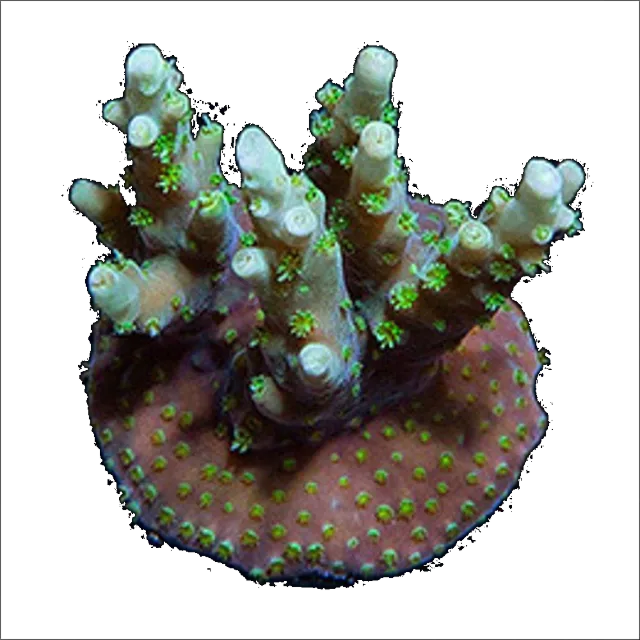 ORA Australian Orchid Berry
 ORA Green Marshall Island Gem Acropora Coral
 ORA Indo Purple Tip Acropora Coral
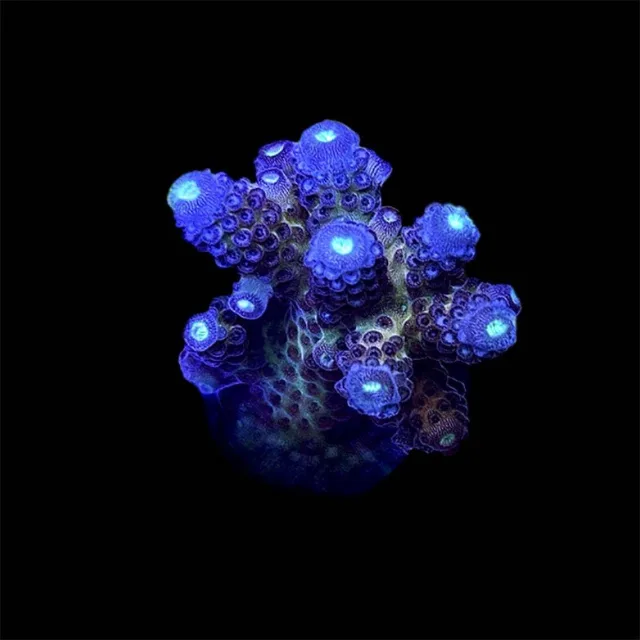 ORA Juicy Grape Acropora
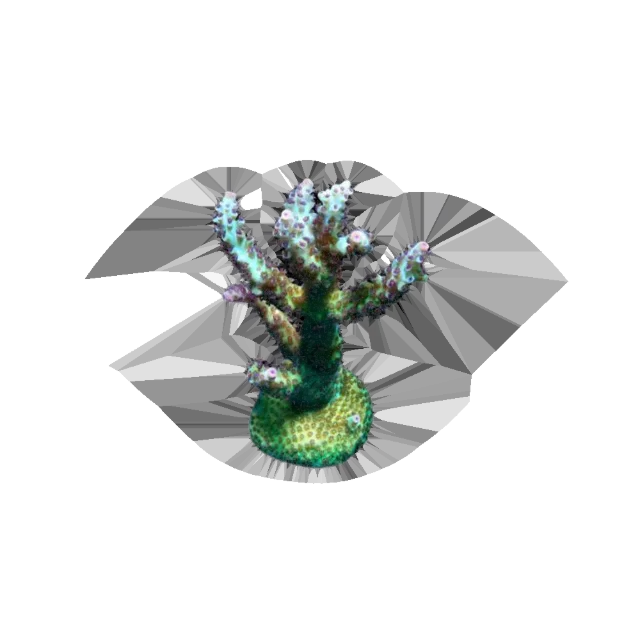 ORA Laura's Purple Polyp Acropora Coral
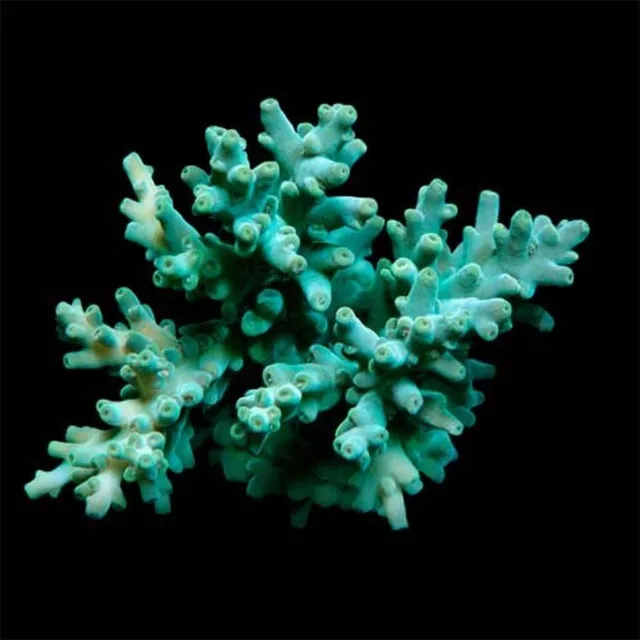 ORA Micronesian Assorted Green Acropora Coral
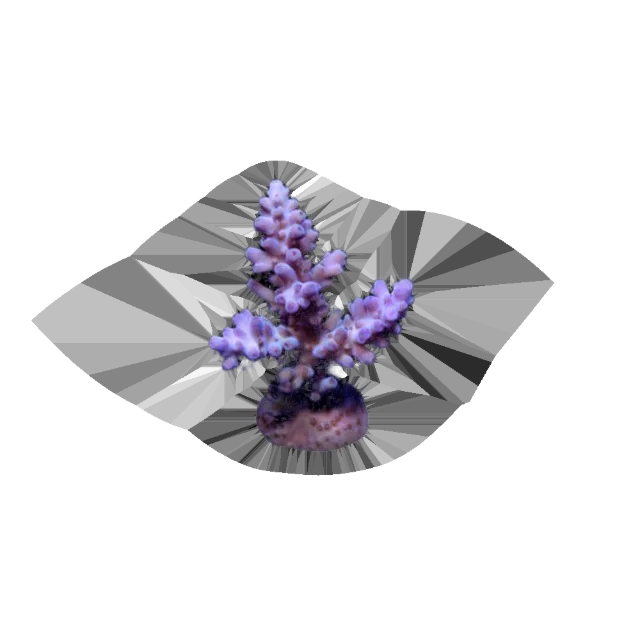 ORA Micronesian Assorted Purple Acropora CoralORA Micronesian Imperial Acropora Coral
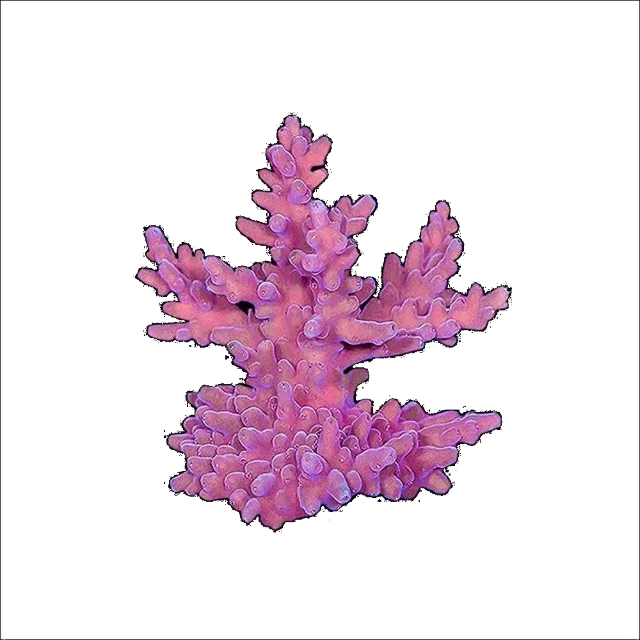 ORA Micronesian Pink Blush Acro
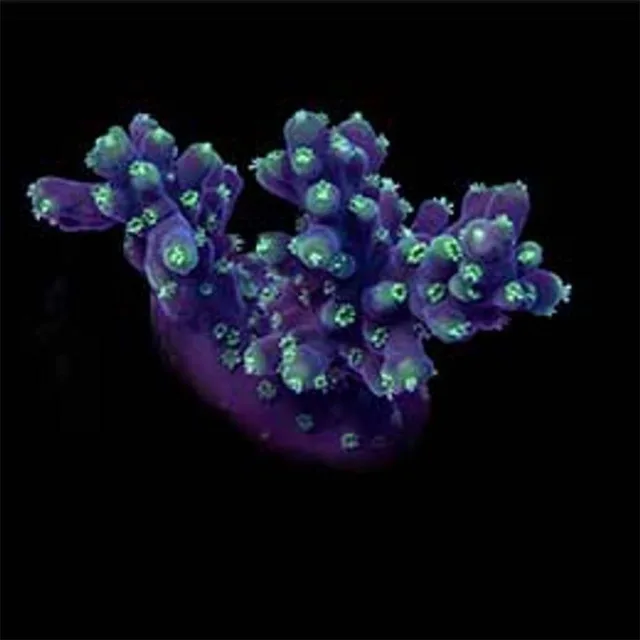 ORA Neon Green Polyp Acropora Coral
 ORA Purple & Green Micronesian Acropora Coral
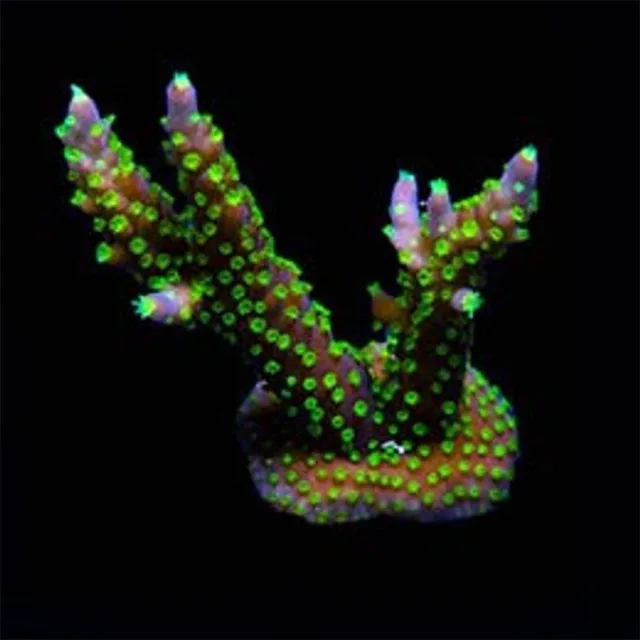 ORA Purple Jade Bonsai
More SPS corals
Something wrong or missing? Submit a correction
In the community