
Coral
ORA Hawkin's Blue Echinata Coral
Acropora echinataAcroporidaeSPS corals
Add from My tanks →1 photos
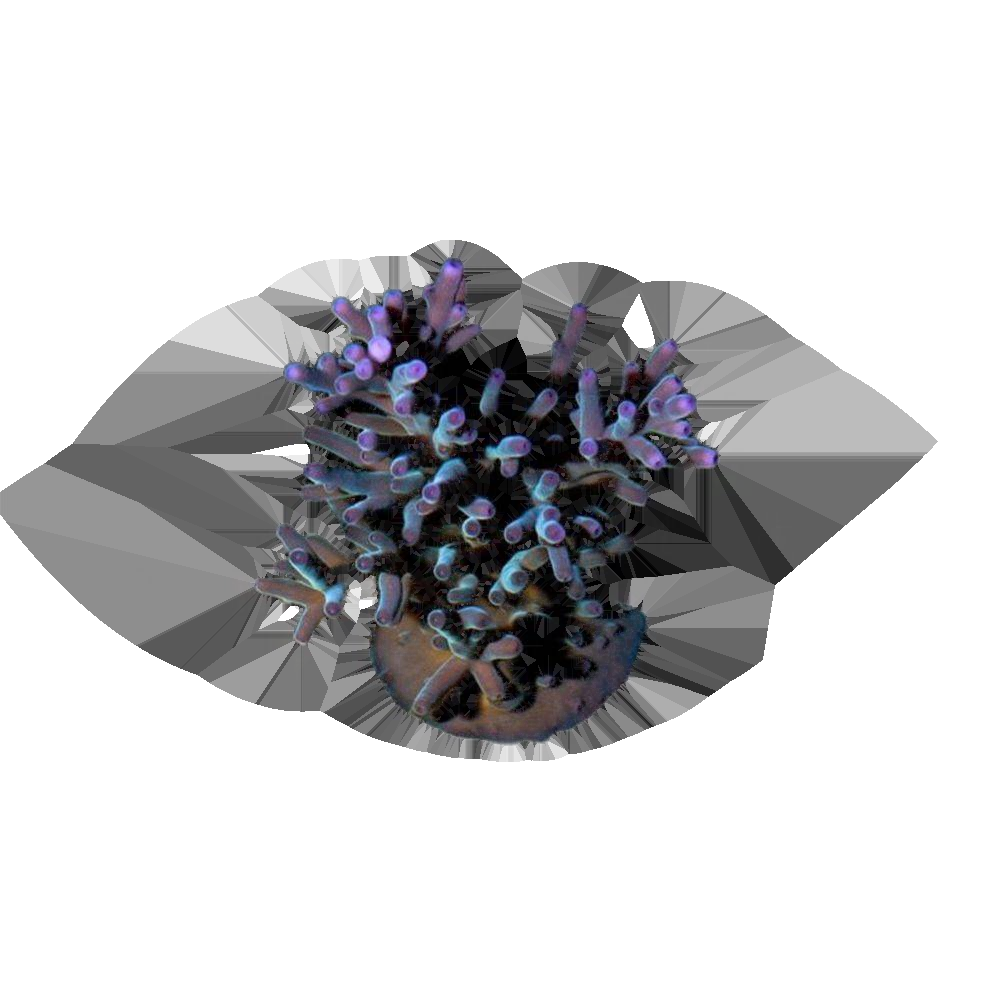
The ORA Hawkin's Blue Echinata is a delicate, short-branching aquacultured Acropora with turquoise to aquamarine coloration, developing an ultraviolet hue at its tips under strong lighting. Care level is moderate to difficult: it lacks a protective slime coat, so handle carefully, avoid air exposure and prolonged iodine dips, and provide strong light and flow.
Quick facts
Handling caution: Lacks a protective slime coat; sharp branches can cause minor cuts when handling frags
Identity
- Also known as
- Hawkin's Echinata; Bottlebrush Acropora; Bottle Brush Acro
- Synonyms
- Madrepora echinata
- Environment
- Saltwater
- Native to
- Indo-Pacific
- Habitat
- Shallow, sunlit reef crests and upper slopes with strong water movement
- Sourcing
- Aquacultured
- Conservation
- Not Evaluated
Care
- Care level
- Difficult
- Coral type
- SPS
- Temperament
- Peaceful
- Growth form
- Branching
- Adult size
- 1 – 8 in (2.5 – 20 cm)
- Spread
- 12 in (30 cm)
- Growth rate
- Moderate
- Placement
- High
Water
- Temperature
- 74 – 80 °F (23 – 27 °C)
- pH
- 8.1 – 8.4
- dKH
- 8 – 12 dKH
- Salinity
- 1.024 – 1.026 SG
- PAR
- 150 – 350 PAR
- Flow
- High
- Light
- High
Reef care
- Nutrient preference
- Low
- Alk/Ca uptake
- High
- Target feeding
- Beneficial
- Give it room
- 6 in (15 cm)
- Colors
- Blue, Teal, Purple
Feeding & breeding
- Diet
- Photosynthetic
- Foods
- Zooplankton, Phytoplankton, Coral food
- Propagation
- Fragging
Something wrong or missing? Submit a correction
Care guide
Overview
Turquoise to aquamarine branches taper into fine, bottlebrush-like projections that flush ultraviolet at the tips under strong lighting. This aquacultured Hawkin's Echinata demands high PAR, turbulent flow, and stable calcium and alkalinity, and its tissue lacks a slime coat, so frags need brief, careful handling and minimal air exposure during placement.
Care
This bottlebrush-form Acropora needs strong, turbulent flow and moderate to high PAR to hold its turquoise base color and develop ultraviolet tips. It lacks a protective slime layer over its tissue, so it dries out quickly if exposed to air and reacts poorly to iodine-based dips, so handle it minimally and briefly during acclimation or fragging. Success depends on rock-solid alkalinity, calcium, and magnesium levels maintained through regular dosing or water changes, since even short-term swings can trigger tissue loss or bleaching. It is best placed in a mature, well-established reef system rather than a newly cycled tank.
Placement & acclimation
Acclimate new frags to tank lighting gradually over one to two weeks to avoid bleaching, starting them lower in the water column or under shade before moving them to their final high position. Mount using coral glue or epoxy on a stable piece of rock in the upper third of the tank, angling the frag plug to allow future branch growth without shading itself. Avoid moving established colonies once encrusted, since Acropora often resents relocation and may recess tissue in response.
Feeding
Most of its energy comes from the photosynthetic zooxanthellae housed in its tissue, so lighting quality matters more than direct feeding. Occasional target feeding of fine zooplankton, phytoplankton, or reef roids-type foods can boost growth rate and coloration over time. Broadcast dosing of amino acids or coral-specific foods after lights-out, when polyps extend, tends to be more effective than daytime feeding.
Neighbors
Give this coral generous clearance from neighboring corals, since its sweeper tentacles and nematocyst-laden filaments can damage adjacent tissue during growth. It pairs well with other SPS corals and peaceful reef fish such as tangs, wrasses, and anthias under similar high-light, high-flow conditions. Keep it away from butterflyfish and some angelfish species that are known to nip at Acropora tissue.
Fragging
Fragging is done by cutting healthy branches with bone cutters or a coral saw, then gluing the cut pieces to frag plugs or rubble rock. Cuts should be made through solid branch material rather than at the base to reduce stress, and fresh frags should be kept in lower, more stable flow and light until tissue recovers over the cut edge. Dipping frags after cutting helps prevent introduction of pests to the main display.
Pests & problems
This species is prone to a range of pests including red bug copepods, Acropora-eating flatworms, Drupella and vermetid snails, and certain Asterina starfish, so new frags should be dipped and inspected before entering the display. Rapid tissue necrosis can appear suddenly and spread across a colony if water parameters shift or flow becomes stagnant in a branch's interior. Browning of tissue usually signals elevated nitrate or phosphate, while paling or bleaching points to light stress or unstable calcium and alkalinity.
Sources
More SPS corals
Something wrong or missing? Submit a correction
In the community
Popular tanks using ORA Hawkin's Blue Echinata Coral
No public tanks are showcasing ORA Hawkin's Blue Echinata Coral yet.