
Coral
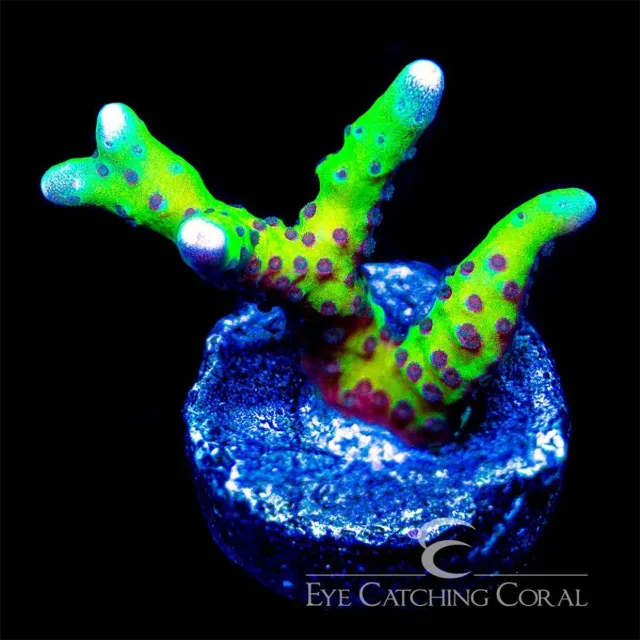
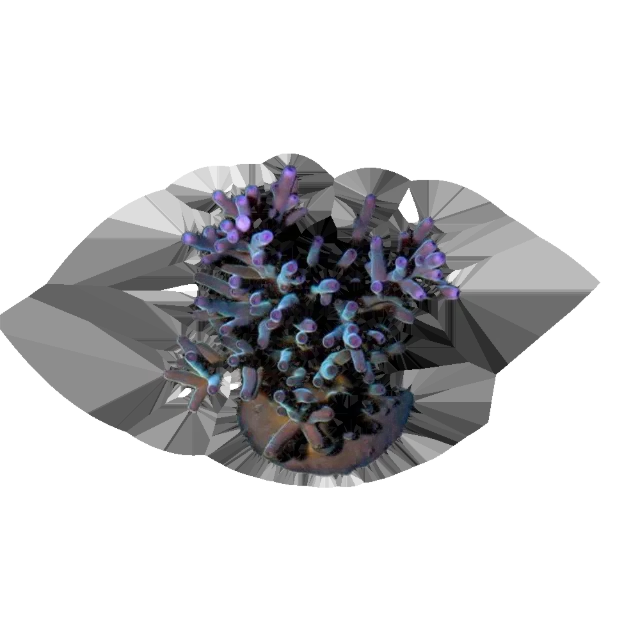
ORA Marshall Island Green Subulata Acropora
Acropora subulataAcroporidaeSPS corals
Add from My tanks →0 photos
A captive-bred variation of the Maroon clownfish (Amphiprion biaculeatus) displaying three gold stripes instead of white; the gold color develops around 9-12 months of age. One of the largest clownfish species, best kept one per tank unless a mated pair.
Quick facts
Identity
- Also known as
- Table Acropora; Green Subulata Acropora
- Environment
- Saltwater
- Native to
- Indo-Pacific, Great Barrier Reef, Red Sea, Fiji, Papua New Guinea, Ryukyu Islands
- Habitat
- Shallow reef slopes and protected lagoons with high Acropora diversity, generally sheltered from strong wave action, at depths of roughly 15-80 feet
- Sourcing
- Aquacultured
- Conservation
- Not Evaluated
Care
- Care level
- Difficult
- Coral type
- SPS
- Temperament
- Peaceful
- Growth form
- Plating
- Adult size
- 1.5 – 24 in (3.8 – 61 cm)
- Spread
- 78 in (198 cm)
- Growth rate
- Fast
- Placement
- High
Water
- Temperature
- 76 – 80 °F (24 – 27 °C)
- pH
- 8.1 – 8.4
- dKH
- 8 – 12 dKH
- Salinity
- 1.024 – 1.026 SG
- PAR
- 200 – 350 PAR
- Flow
- High
- Light
- High
Reef care
- Nutrient preference
- Low
- Alk/Ca uptake
- High
- Target feeding
- Beneficial
- Give it room
- 6 in (15 cm)
- Colors
- Green, Orange, Blue, Purple, Brown
Feeding & breeding
- Diet
- Photosynthetic
- Foods
- Coral food, Zooplankton, Phytoplankton
- Propagation
- Fragging
Something wrong or missing? Submit a correction
Care guide
Overview
ORA Marshall Island Green Subulata Acropora is an aquacultured tabling SPS coral prized for its green branching colonies that flatten into broad horizontal plates. It demands intense, stable lighting, strong turbulent flow, and closely maintained calcium, alkalinity, and magnesium levels. Mount high in the tank with clearance from neighbors, as growth is fast and colonies can spread widely.
Care
This tabling Acropora needs intense, stable lighting and strong, turbulent flow to develop good color and dense branching. Water chemistry must be kept close to natural seawater values, with steady calcium, alkalinity, and magnesium, since Acropora species react poorly to swings in these parameters. New colonies should be light-acclimated gradually over several weeks to avoid bleaching, and placed high in the tank near the light source once established.
Placement & acclimation
Mount frags or colonies on rock rubble or a frag plug using cyanoacrylate gel or reef epoxy, positioning them in high flow near the top of the tank. New arrivals should be acclimated to light gradually, starting under moderate intensity and increasing over three to four weeks to prevent bleaching. Leave adequate open space around the piece since mature colonies form wide horizontal tables.
Feeding
Most of its energy comes from zooxanthellae under strong lighting, but growth and polyp extension improve with supplemental feeding of fine zooplankton or commercial SPS coral foods. Target feeding is not required but can be beneficial during lights-out or low-flow periods when polyps are extended. Avoid overfeeding, since excess nutrients can dull coloration and promote nuisance algae.
Neighbors
Keep several inches of clearance from neighboring corals, since Acropora branches grow quickly and can overtop or contact slower species. It is not particularly aggressive but can be stung by more chemically active soft corals and LPS, so spacing and flow direction matter more than direct aggression. Small commensal shrimp, crabs, and gobies often take up residence within the branches without harming the colony.
Fragging
Fragging is straightforward: branches are cut or snapped with bone cutters and mounted on plugs or rubble, where they heal and continue growing. Frags should be kept in stable, established systems until healed before moving them to lower-flow recovery areas if needed. This species is widely propagated in aquaculture, including by ORA in the Marshall Islands.
Pests & problems
Watch for tissue recession at the base or branch tips, which usually signals unstable water chemistry, insufficient flow, or a lighting change introduced too quickly. Common pests include red bugs, Acropora-eating flatworms, and coral-eating nudibranchs, all of which can spread rapidly through an SPS-dominated tank if not caught early. Brown jelly infections can follow physical damage from fragging or shipping and should be addressed promptly with isolation and flow adjustment.
Sources
More SPS corals
Something wrong or missing? Submit a correction
In the community
Popular tanks using ORA Marshall Island Green Subulata Acropora
No public tanks are showcasing ORA Marshall Island Green Subulata Acropora yet.