Aquatic Plant
Hygrophila Pinnatifida 'UK'
Hygrophila pinnatifida 'UK'AcanthaceaeStem plants
Price: $11.99 USD
Add from My tanks →1 photos
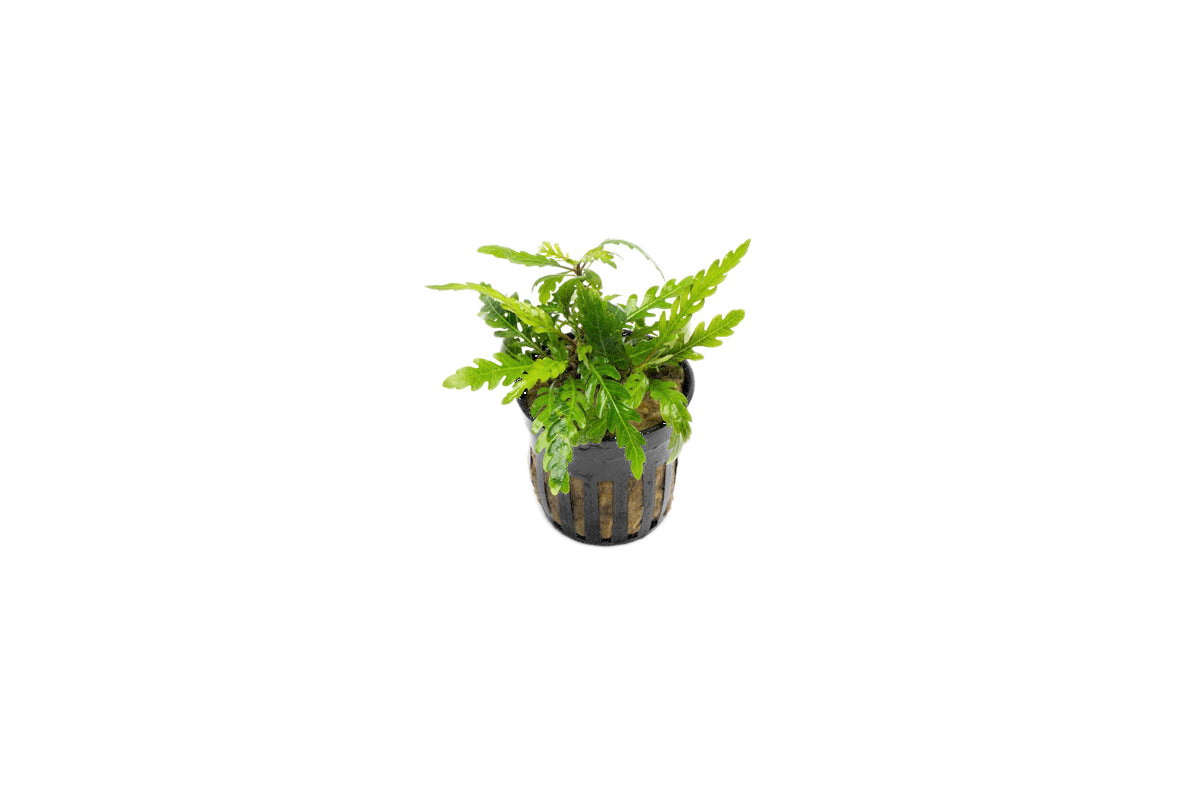
Hygrophila pinnatifida 'UK' hails from Uttara Kannada district in Karnataka, India, showing more intense red coloration and deeper, more defined leaf lobes than the original. Medium care, it does best under high lighting with CO2 and fertilization, and can develop small holes in older leaves if potassium-deficient.
Quick facts
Identity
- Also known as
- UK Hygro pinnatifida; Uttara Kannada hygro
- Environment
- Freshwater
- Native to
- India (Western Ghats: Karnataka, Maharashtra, Goa, Tamil Nadu)
- Habitat
- Grows on rocks along streams and rivers in the Western Ghats, emersed during monsoon and submersed in flowing water the rest of the year
- Sourcing
- Aquacultured
- Conservation
- Not Evaluated
Care
- Care level
- Moderate
- Growth form
- Stem
- Max height
- 4 – 12 in (10 – 30 cm)
- Spread
- 10 in (25 cm)
- Growth rate
- Moderate
- Placement
- Midground, Epiphyte
Water
- Temperature
- 64 – 82 °F (18 – 28 °C)
- pH
- 5.5 – 8.0
- GH
- 2 – 15 dGH
- Flow
- Moderate
- Light
- High
- CO₂
- Beneficial
Planting
- Substrate
- Any
- Feeds from
- Both
- Fertilizer needs
- Medium
- Colors
- Brown, Red, Green, Purple
Feeding & breeding
- Propagation
- Cuttings, Runners, Plantlets
Something wrong or missing? Submit a correction
Care guide
Overview
Collected from the Uttara Kannada district of Karnataka, this locality form carries deeper leaf lobing and richer red-burgundy tones than typical stock. It attaches to rock or wood via creeping runners and colors up best under medium-high light with CO2 and steady fertilization. Small perforations in older leaves signal potassium deficiency rather than yellowing.
Care
This UK locality form of Hygrophila pinnatifida shows deeper leaf lobing and more intense red-burgundy tones than the standard form. It grows well either rooted lightly in substrate or tied to rock and wood, where its creeping runners pin themselves to the hardscape over time. Medium to high light with CO2 injection keeps growth compact and colorful; in low light it stretches out, turns greener, and becomes leggy. Regular tip pinching encourages side shoots and produces the dense, textured mats the plant is grown for.
Planting & trimming
Attach runners or crowns to rock or driftwood with thread, cotton, or a dab of cyanoacrylate glue, or plant lightly in substrate since the root system stays shallow and small. Because it climbs steadily toward the surface, trim stems before they break through the waterline to avoid emersed flowering and leggy growth. Pinching the growing tips regularly forces side shoots and builds the dense, patchwork look the plant is prized for.
Fertilizing
Consistent macro- and micronutrient dosing supports steady coloration and compact growth, since this plant draws nutrients through both its roots and the water column. Potassium deficiency shows up as small, needle-prick-like holes in older leaves, so root tabs or a balanced liquid fertilizer with adequate potassium is worth maintaining. Iron supplementation can help intensify the reddish underside coloring in higher-light setups.
Propagation
Propagation is easiest from the runner-like lateral shoots and the plantlets they set along hardscape, which root readily once separated. Top cuttings from upright stems are less reliable and tend to establish poorly compared with runner sections. Once a mat is established, sections can simply be cut away and reattached elsewhere on rock or wood.
Problems
Emersed nursery-grown stock frequently melts after submersion, so sourcing already-submersed cuttings avoids the difficult conversion period. Potassium deficiency is the most commonly reported issue, producing small perforations in older leaves rather than the more typical yellowing seen in other deficiencies. If left unpruned near the surface, growth can become sparse and leggy as the plant races upward instead of branching out.
Sources
More Stem plants
Something wrong or missing? Submit a correction
In the community