
Aquatic Plant
Alternanthera Lilacina
Alternanthera reineckii 'Lilacina'AmaranthaceaeStem plants
Price: $19.54 USD
Add from My tanks →1 photos
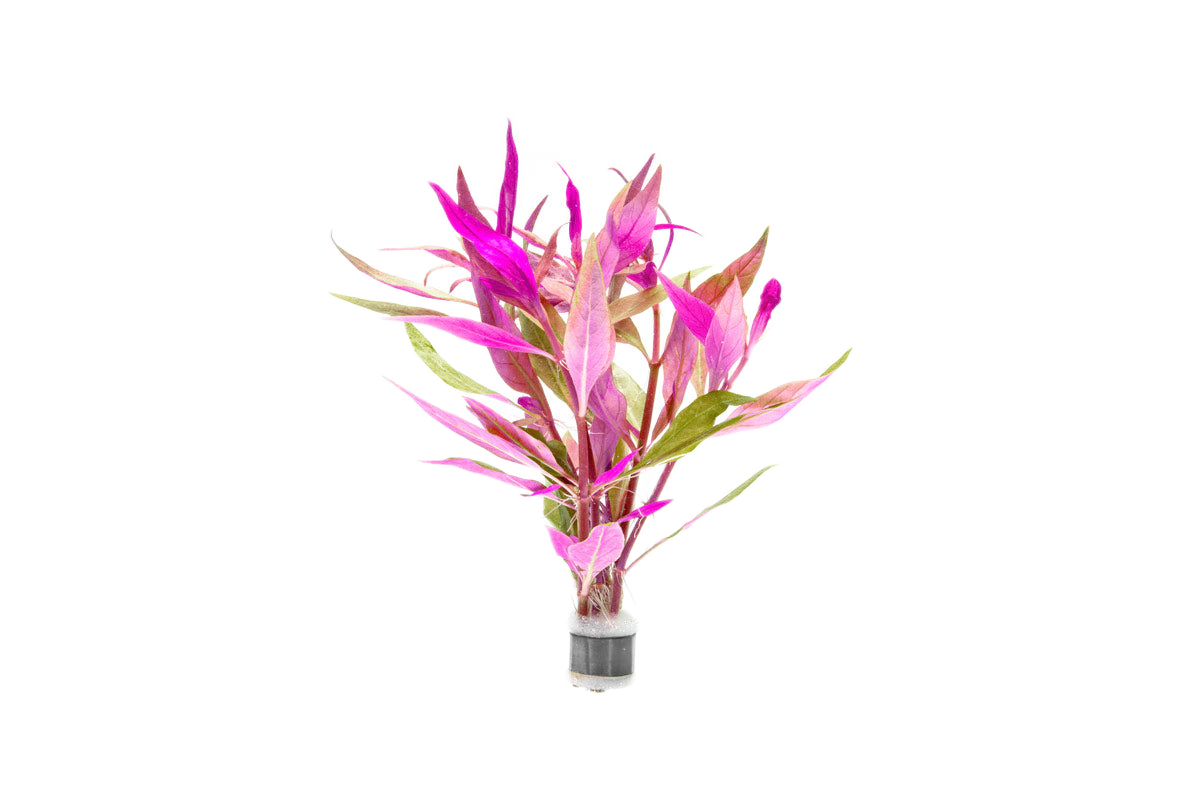
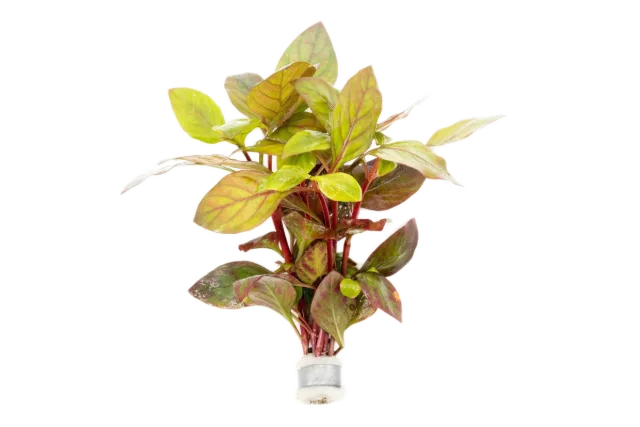
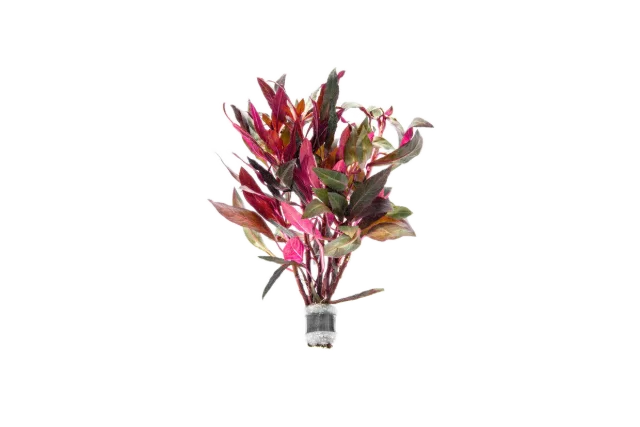
Alternanthera reineckii 'Lilacina' is a color-rich aquatic stem plant from Central and South America with reddish-purple stems and narrow, elongated leaves whose undersides turn deep purple to ruby, reaching 4-12 inches. It needs medium to high light with CO2 for maximum coloration and propagates from cuttings.
Quick facts
Identity
- Also known as
- AR Lilacina
- Synonyms
- Alternanthera reineckii var. rosanervig; AR Rosanervig; AR Pink
- Environment
- Freshwater
- Native to
- Captive-bred variety
- Habitat
- Cultivar of a South American marsh plant found on riverbanks and floodplains that grow emersed on damp banks or submersed when water rises; the cultivar itself does not occur in the wild
- Sourcing
- Captive-bred
- Conservation
- Not Evaluated
Care
- Care level
- Moderate
- Growth form
- Stem
- Max height
- 4 – 12 in (10 – 30 cm)
- Spread
- 6 in (15 cm)
- Growth rate
- Moderate
- Placement
- Midground, Foreground
Water
- Temperature
- 72 – 82 °F (22 – 28 °C)
- pH
- 6.0 – 7.4
- GH
- 2 – 12 dGH
- PAR
- 30 – 60 PAR
- Flow
- Moderate
- Light
- High
- CO₂
- Beneficial
Planting
- Substrate
- Nutrient-rich preferred
- Feeds from
- Both
- Fertilizer needs
- High
- Colors
- Pink, Cream, Purple
Feeding & breeding
- Propagation
- Cuttings
Something wrong or missing? Submit a correction
Care guide
Overview
Reddish-purple stems carry narrow, elongated leaves whose undersides deepen to purple or ruby, giving Lilacina a slimmer profile than bushier red Alternanthera types. It reaches 4 to 12 inches and depends on medium to high light with CO2 to hold its purple-toned coloration rather than fading toward green. Root-focused fertilizing supports steady, upright growth.
Care
Rosanervig is a selected culture form of Alternanthera reineckii, distinguished by pale, light-colored veins running through pink to magenta leaves and a more compact, less robust stem than the standard species. It grows at a medium pace and holds a tidy shape with only occasional trimming, making it more forgiving than many other red stem plants. Strong, even lighting brings out the best coloration, but the plant tolerates medium light and still colors up reasonably well, just less intensely.
Planting & trimming
Plant stems in small groups of three to seven, spaced roughly two to three inches apart, in the midground or toward the front once trimmed low, leaving room for lateral shoots to fill in. Anchor cuttings a short distance into the substrate rather than burying the lower leaves, and avoid placing taller neighbors where they would shade it. Top the stems every one to three weeks in higher-energy setups to keep growth compact and to encourage branching from the base.
Fertilizing
This is a notable root feeder, so a nutrient-rich substrate or root tabs placed beneath the stems support steady growth and full leaf color. Liquid fertilizer supplying iron and other micronutrients is equally important, since the pink pigment depends on anthocyanins that fade quickly when iron runs low. Pale or washed-out leaves with weak veining usually point to a nutrient deficiency rather than disease, and can be corrected by increasing dosing and light together.
Propagation
Propagation is straightforward: cut a few inches off the top of a healthy stem and replant the cutting directly into the substrate, where it roots quickly under active substrate and stable conditions. The remaining rooted base will typically resprout with new side shoots, allowing a single stem to be repeatedly divided over time. Dense stands can also be lifted and re-spaced to keep individual stems from shading each other out.
Problems
Some lower leaves melting or dropping after planting is a normal adjustment as the stems switch from emersed nursery growth to fully submersed life, and new growth typically follows once conditions stabilize. Algae on the leaves is the most frequent complaint and generally traces back to excess light relative to nutrient levels or weak flow rather than a fault of the plant. Leggy, stretched stems with wide internodes signal insufficient light or CO2 and can be corrected by trimming harder and raising light intensity gradually.
Sources
More Stem plants
Something wrong or missing? Submit a correction
In the community
Popular tanks using Alternanthera Lilacina
No public tanks are showcasing Alternanthera Lilacina yet.