
Aquatic Plant
Alternanthera Amabilis Tricolor
Alternanthera amabilis 'Tricolor'AmaranthaceaeStem plants
Price: $7.99 USD
Add from My tanks →1 photos
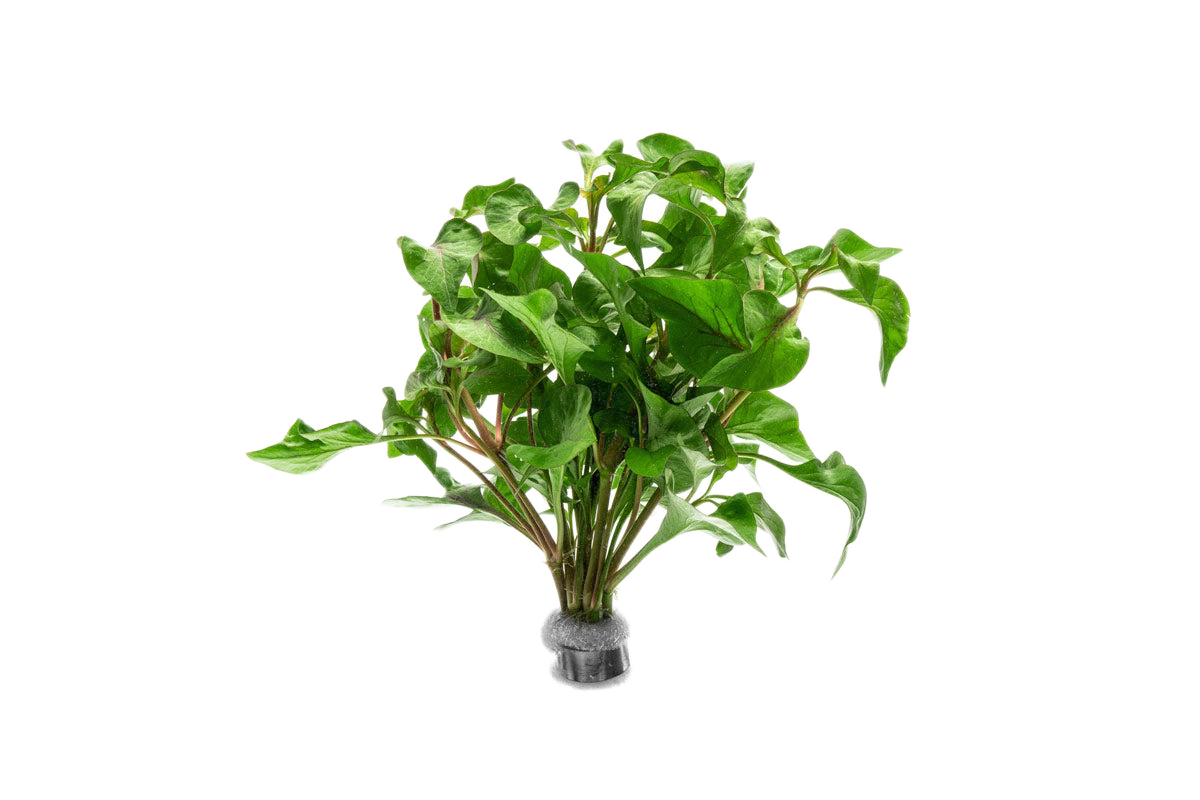
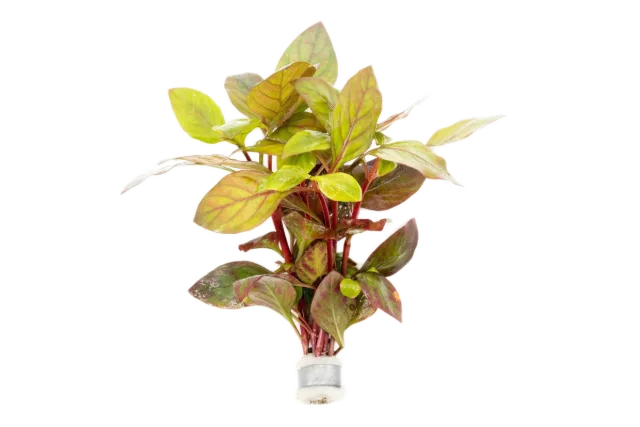
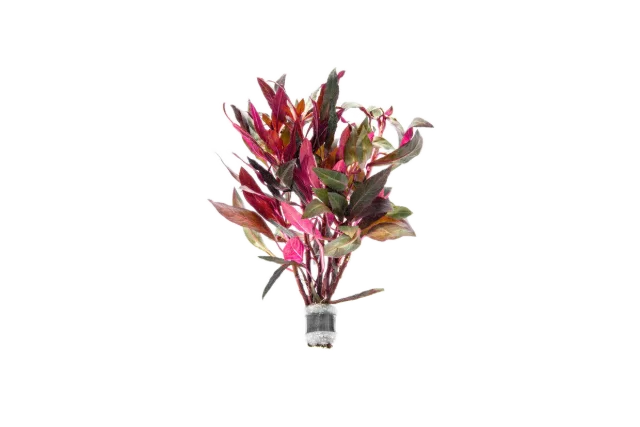
Alternanthera amabilis 'Tricolor' is an aquatic stem plant from Central and South America that develops a tricolor blend of rosy pink, crimson red, and golden-yellow foliage, reaching 4-12 inches. It is easy to moderate to care for, needs medium to high light with CO2 for best coloration, and propagates from stem cuttings.
Quick facts
Identity
- Also known as
- Alternanthera Tricolor; Amabilis Tricolor
- Environment
- Freshwater
- Native to
- Brazil, Central America, South America
- Habitat
- Marginal and wetland areas along streams and riverbanks in tropical regions, growing emersed along muddy banks or submerged in slow-moving water.
- Sourcing
- Both
- Conservation
- Not Evaluated
Care
- Care level
- Moderate
- Growth form
- Stem
- Max height
- 4 – 16 in (10 – 41 cm)
- Spread
- 4 in (10 cm)
- Growth rate
- Moderate
- Placement
- Midground, Background
Water
- Temperature
- 72 – 82 °F (22 – 28 °C)
- pH
- 6.0 – 7.5
- Flow
- Low-Moderate
- Light
- High
- CO₂
- Required
Planting
- Substrate
- Nutrient-rich preferred
- Feeds from
- Both
- Fertilizer needs
- High
- Colors
- Green, Pink, Red, Yellow
Feeding & breeding
- Propagation
- Cuttings
Something wrong or missing? Submit a correction
Care guide
Overview
Alternanthera amabilis 'Tricolor' is a lance-leaved stem plant that colors in rosy pink, crimson, and golden-yellow tones under strong light. Reaching roughly 4 to 12 inches, it suits midground to background placement in nutrient-rich, CO2-injected setups. Regular trimming and replanting of cuttings keeps stems full and prevents the base from thinning.
Care
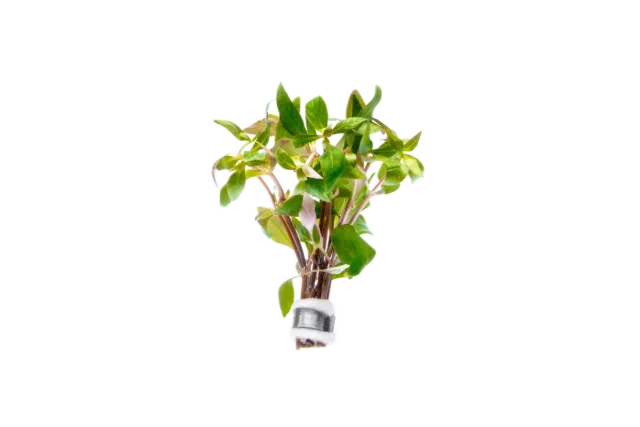
This stem plant grows upright with lance-shaped leaves that shift between green, pink, red, and yellow depending on light intensity and nutrient availability. It performs best in medium to high light with CO2 injection, which brings out the deepest color contrast and keeps growth compact rather than leggy. Under lower light it still survives but tends toward a plainer green with looser internode spacing. Regular trimming and replanting of the top cuttings keeps the stand full and prevents bare lower stems.
Planting & trimming
Plant stems in small groups directly into a nutrient-rich substrate, burying the lower node while keeping most of the leaves above the substrate line. Trim the tops regularly once the stand reaches the desired height and replant the cuttings to maintain density and prevent the base from thinning out. It can also be grown emersed in paludariums or as a terrarium accent before being transitioned to fully submerged conditions.
Fertilizing
Root tabs pushed near the base help support the heavier feeding this species does through its roots, while a complete liquid fertilizer supplies the micronutrients needed for coloration. Iron and other micronutrients in particular influence how strongly the pink and red tones develop in new growth. Pale or washed-out leaves usually point to insufficient light or a lack of iron rather than a nitrogen problem.
Propagation
Propagation is done by cutting a healthy top section of stem and replanting it directly into the substrate, where it typically roots within a week under good conditions. The original stem will often branch and send out new side shoots below the cut, allowing repeated harvesting over time.
Problems
Sudden changes in water parameters or a rough transition from emersed to submerged growth can cause older leaves to melt or drop, so newly planted stems should be given a stable, undisturbed period to root in. Algae can build up on slower-growing lower leaves in low-light setups, so trimming away shaded or declining foliage helps keep the stand clean. Once established with adequate light and CO2, the plant is fairly resilient and recovers well from light pruning.
Sources
More Stem plants
Something wrong or missing? Submit a correction
In the community
Popular tanks using Alternanthera Amabilis Tricolor
No public tanks are showcasing Alternanthera Amabilis Tricolor yet.