
Marine Invertebrates
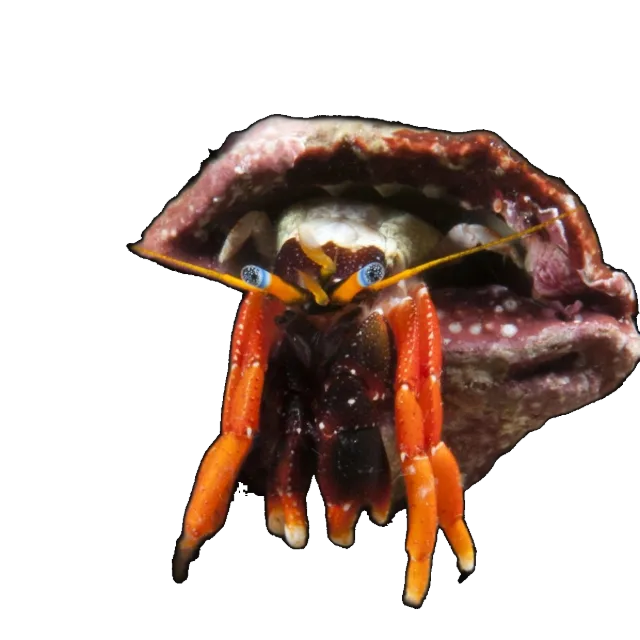
White claw Hermit Crab
Calcinus laevimanusDiogenidaeHermit crabs
Price: $4.23 USD
Add from My tanks →1 photos
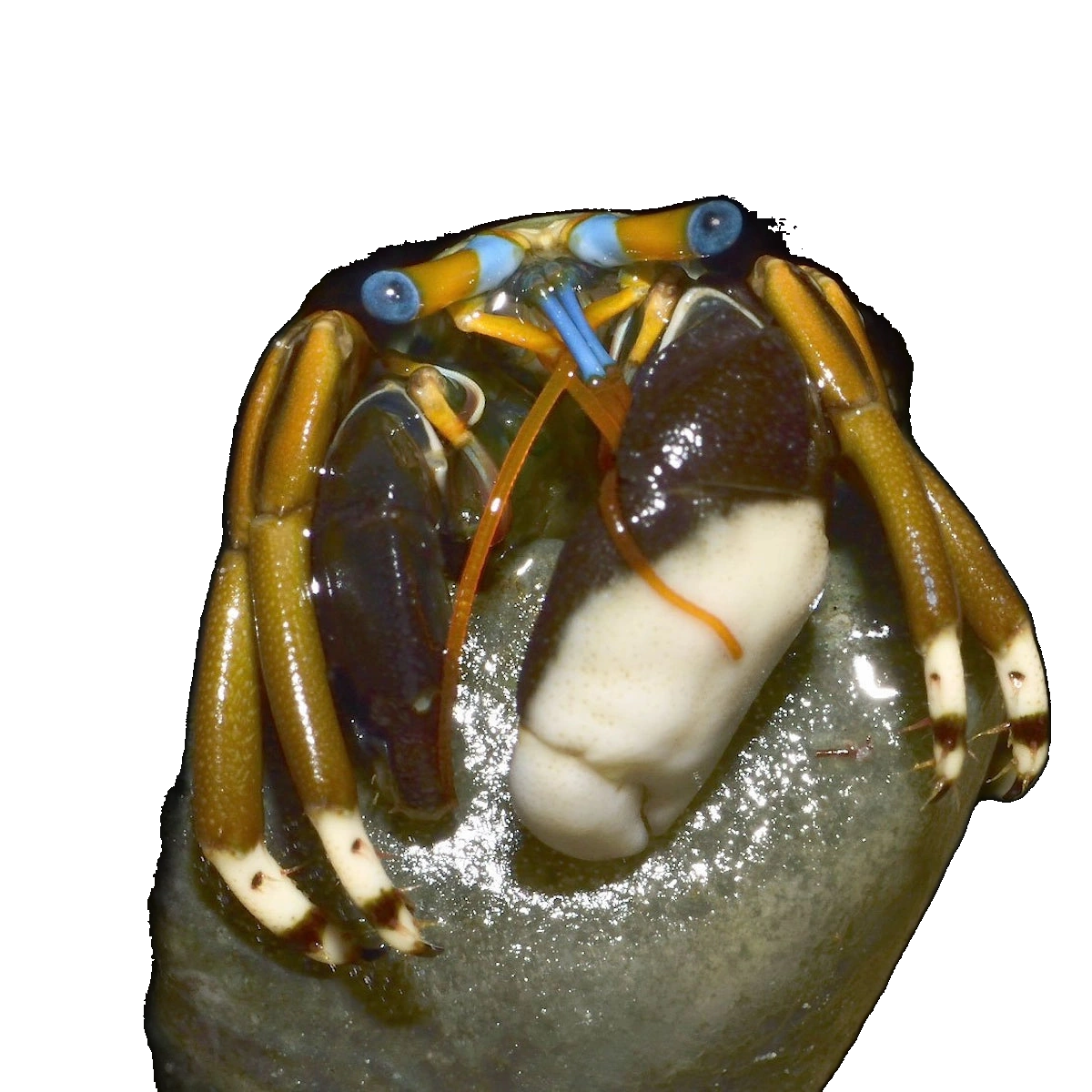
The White Claw Hermit Crab (Calcinus laevimanus) is a small interesting cleaner that grows to only about 2 cm and is often part of the first cleanup crew entering an aquarium. Because it has no protection of its own, it lives in a snail shell and always seeks a larger house as it grows, so keep a supply of larger shells available.
Quick facts
Identity
- Also known as
- Dwarf Zebra Hermit Crab; Blue Eye Hermit Crab; Hawaiian Reef Hermit; Left-Handed Hermit Crab; Zebra Hermit Crab; Orange and Black Hermit Crab
- Synonyms
- Calcinus laevimanus var. typica
- Environment
- Saltwater
- Native to
- East Africa, Red Sea, Indo-Pacific, Philippines, Australia, Japan, Hawaii, French Polynesia
- Habitat
- Shallow tropical coastal waters including rocky tide pools, reef flats, intertidal zones, and sandy beach shores
- Sourcing
- Wild-caught
- Conservation
- Not Evaluated
Care
- Care level
- Easy
- Temperament
- Peaceful
- Adult size
- 0.3 – 1.4 in (0.6 – 3.6 cm)
- Lifespan
- 3 – 5 yrs
- Min tank
- 10 gal (38 L)
- Growth rate
- Slow
- Placement
- Bottom
Water
- Temperature
- 73 – 82 °F (23 – 28 °C)
- pH
- 8.1 – 8.4
- dKH
- 8 – 12 dKH
- Salinity
- 1.023 – 1.026 SG
- Flow
- Moderate
Behavior & compatibility
- Social
- Solitary
- Aggression to own kind
- Moderate
- Active
- Daytime
- Reef safe
- Yes
- Invert safe
- With caution
- Shrimp safe
- With caution
- Clean-up role
- Algae, Detritus, Leftover food
- Population boom risk
- Low
Feeding & breeding
- Diet
- Omnivore
- Foods
- Algae, Pellets, Frozen, Vegetables, Wafers, Biofilm
- Breeding type
- Broadcast spawner
- Breeding difficulty
- Not bred in captivity
- Sexing
- Not externally distinguishable without close examination; sexes are similar in size and coloration
- Target feeding
- Beneficial
Something wrong or missing? Submit a correction
Care guide
Overview
Populations across the Indo-Pacific and Hawaii supply this small hermit for the trade, collected from tide pools and reef flats rather than bred. Pale claws contrast with a banded body as it forages over rock and glass for algae and leftovers. Keep spare shells on hand for molts and expect slow, steady growth to about an inch.
Care
This hermit crab spends most of its time picking over live rock, sand, and glass for algae and organic debris, making it one of the more active members of a cleanup crew. It tolerates a fairly wide range of reef parameters but is intolerant of copper-based medications and sensitive to elevated nitrate. A steady supply of empty snail shells in graduated sizes should always be on hand, since a crab without a suitable upgrade will resort to attacking live snails or other hermits for their shells.
Feeding
Left to its own devices it grazes on hair algae, film algae, and cyanobacteria growing on rock and glass, but in a well-established tank this natural food source can run out quickly. Supplement with sinking algae wafers, dried seaweed, spirulina-based foods, and occasional bits of frozen mysis or brine shrimp. Feeding a varied diet keeps the crab from turning to snails or corals as an alternative protein source.
Tank mates
Peaceful toward fish and most sessile invertebrates, and considered fully compatible with corals in a reef system. The main caution concerns snails and other hermit crabs, since this species will evict or kill them for their shells if replacements are not readily available. Keep alongside other cleanup crew animals such as snails and small shrimp as long as shell competition is minimized.
Breeding
Captive reproduction has not been achieved with any regularity in home aquariums. Like most hermit crabs, larvae pass through a planktonic zoea stage in the open ocean before settling, a life cycle that is impractical to replicate in a closed system. Home hobbyists should not expect to breed this species intentionally.
Health
Generally hardy and long-lived when water quality is stable, with molting being the main physically demanding event in its life cycle. Adequate calcium and trace elements support successful molts and healthy new shell growth. The most common cause of decline is a shell that is too small or the wrong shape, which causes chronic stress and can eventually be fatal.
Sources
More Hermit crabs
Something wrong or missing? Submit a correction
In the community
Popular tanks using White claw Hermit Crab
No public tanks are showcasing White claw Hermit Crab yet.