
Marine Invertebrates
Dwarf Red Tip Hermit Crab
Paguristes cadenatiDiogenidaeHermit crabs
Price: $4.23 USD
Add from My tanks →2 photos
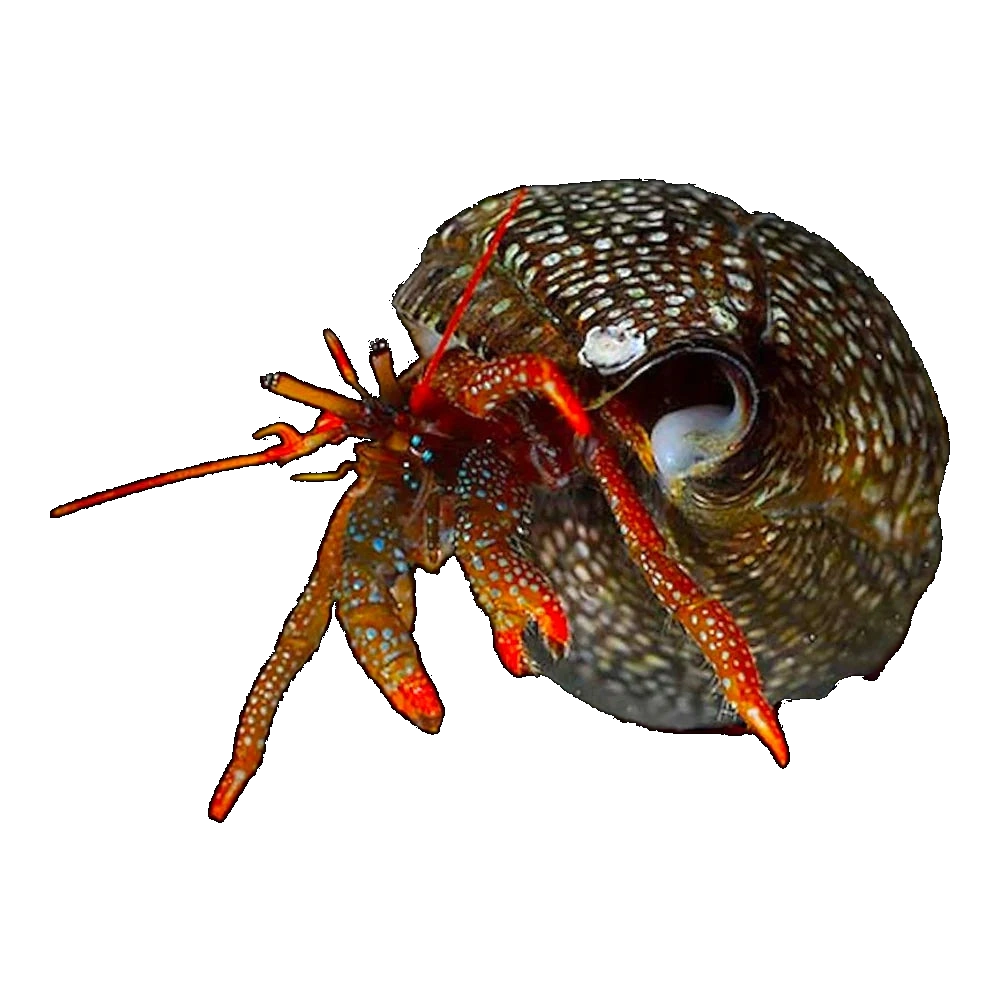
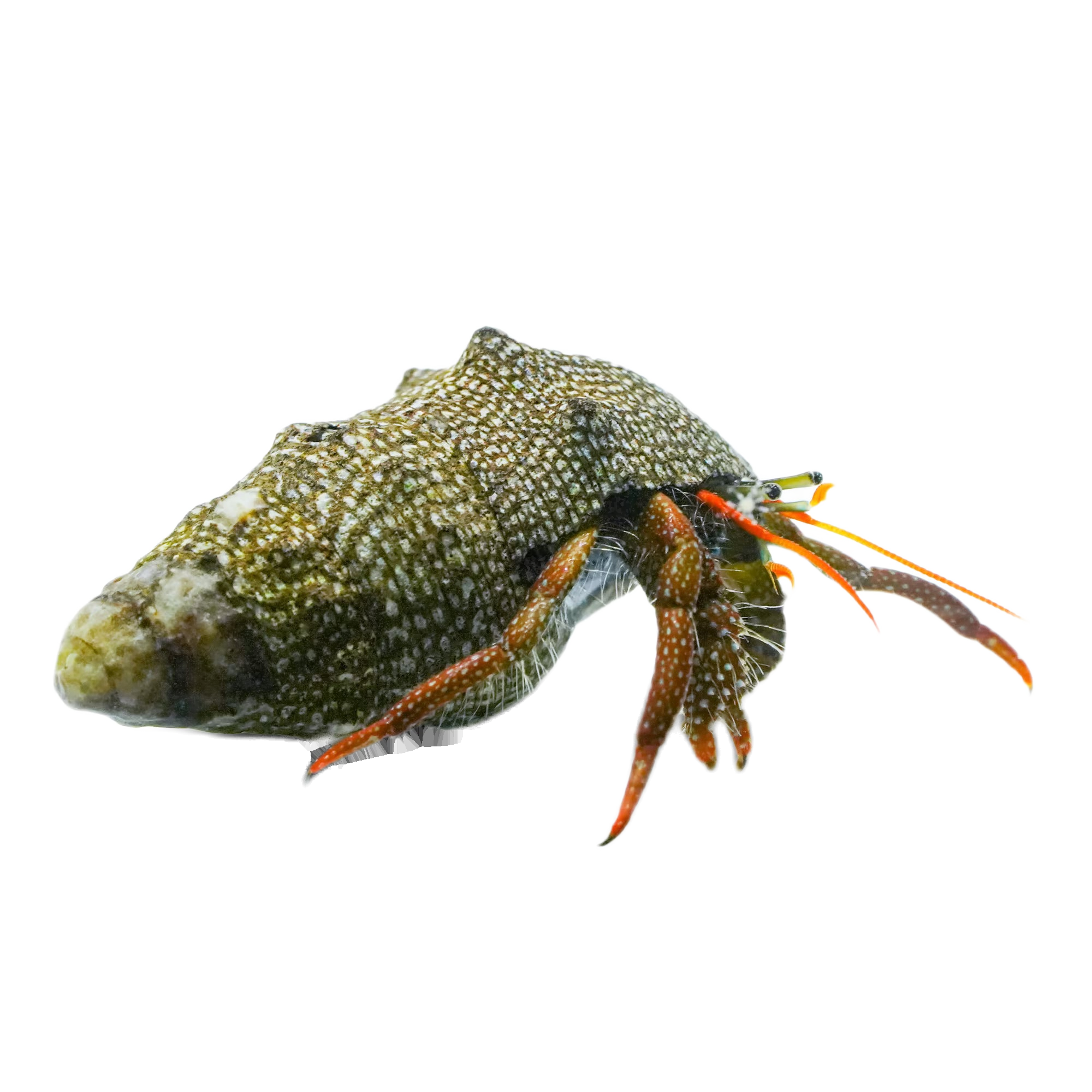
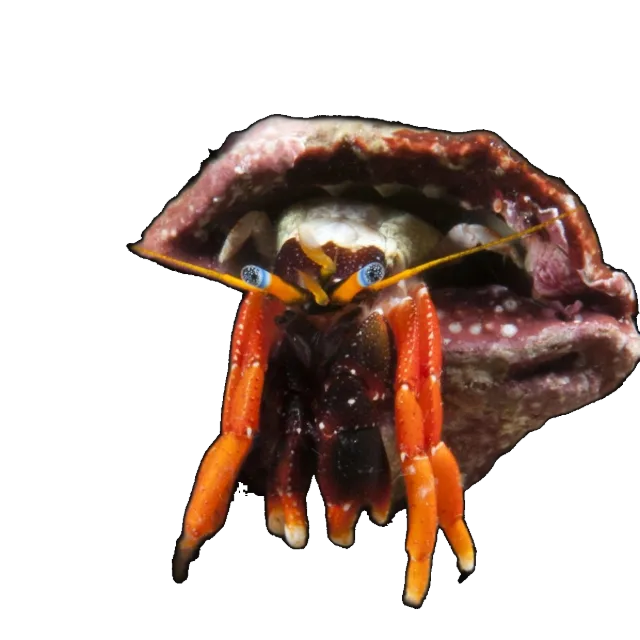
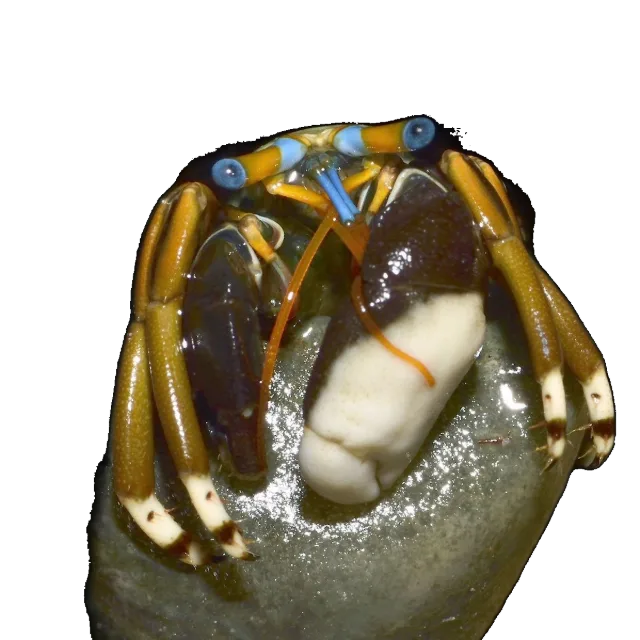
The Dwarf Red Tip Hermit Crab, also known as the Red Tip Hermit Crab, is a highly active and efficient scavenger, an excellent addition to any marine or reef aquarium cleanup crew; closely related to the Blue Leg Hermit Crab, this small omnivore explores live rock and sand beds to consume algae, detritus, and leftover food, and is recognized by its bright red legs and face. Native to the coastal waters of Mexico, it thrives in well-established reef or fish-only systems with sandy substrates; it lives in empty snail shells, so provide extra shells to support growth; keep in a mature aquarium with stable conditions, plenty of live rock and algae for grazing, acclimate slowly, keep only in copper-free systems, avoid predatory tankmates; offer dried seaweed or algae-based foods if natural food sources are limited.
Quick facts
Identity
- Also known as
- Red Tip Hermit Crab; Red Reef Hermit Crab; Scarlet Hermit Crab
- Environment
- Saltwater
- Native to
- Caribbean Sea, Gulf of Mexico, southern Florida, West Indies
- Habitat
- Coral reefs and rubble zones, from the intertidal zone down to about 80 m depth
- Sourcing
- Wild-caught
- Conservation
- Not Evaluated
Care
- Care level
- Easy
- Temperament
- Peaceful
- Adult size
- 0.8 – 1.5 in (1.9 – 3.8 cm)
- Lifespan
- 2 – 4 yrs
- Min tank
- 10 gal (38 L)
- Growth rate
- Slow
- Placement
- Bottom
Water
- Temperature
- 75 – 79 °F (24 – 26 °C)
- pH
- 8.1 – 8.4
- dKH
- 8 – 12 dKH
- Salinity
- 1.023 – 1.026 SG
- Flow
- Moderate
Behavior & compatibility
- Social
- Group
- Aggression to own kind
- Low
- Active
- Night
- Reef safe
- With caution
- Invert safe
- With caution
- Shrimp safe
- With caution
- Clean-up role
- Algae, Detritus, Leftover food, Biofilm, Sand sifting
- Population boom risk
- Low
Feeding & breeding
- Diet
- Omnivore
- Foods
- Algae, Biofilm, Frozen, Freeze-dried, Pellets
- Breeding type
- Larval (brackish)
- Breeding difficulty
- Not bred in captivity
- Sexing
- Sexes are separate but not externally distinguishable without dissection
- Target feeding
- Beneficial
Something wrong or missing? Submit a correction
Care guide
Overview
Bright red legs and a matching red face mark this small hermit crab, which occupies discarded gastropod shells rather than growing its own. It forages nocturnally over live rock and sand for algae, biofilm, and leftover food, settling well into mature reef or fish-only systems. Keep copper out of the water and stock plenty of spare shells to prevent conflict with tankmates.
Care
This small scavenger settles in quickly once a tank has matured, spending most of its time working over rock and sand for algae and leftover food. It tolerates a wide range of reef parameters but is sensitive to copper and sudden salinity swings, so top off with fresh RODI water rather than saltwater. Because it periodically molts and outgrows its shell, keep a rotating supply of empty gastropod shells of varying sizes on hand at all times.
Feeding
In a well-stocked reef system this crab forages mostly on hair algae, film algae, cyanobacteria, and detritus, needing little direct feeding. When natural algae growth is scarce, supplement with dried seaweed, sinking pellets, or bits of frozen seafood so it does not turn to grazing on coral tissue or snail shells. Feed a small amount several times a week rather than large infrequent portions to avoid fouling the water.
Tank mates
Generally peaceful toward fish and corals, though it may walk over polyps and occasionally pick at LPS food, and it will compete with or bully snails and smaller hermits for shells if none are spare. Avoid keeping it with aggressive shell-collecting hermit species or predatory fish such as triggerfish, larger wrasses, or puffers that will eat it. Providing abundant empty shells reduces conflict with tankmates considerably.
Breeding
Breeding occurs year-round in the wild, with females carrying orange eggs that hatch into planktonic larvae before settling and seeking their first shell. This larval stage makes captive breeding essentially unfeasible in a home aquarium, and no reliable aquarium breeding protocols exist. Specimens in the trade are collected as adults rather than raised from larvae.
Health
Most losses trace back to poor acclimation, unstable salinity, or a lack of suitable shells rather than disease. Molting is a normal but vulnerable period during which the crab may hide and become inactive, and it should not be disturbed or removed at this time. Watch for repeated shell abandonment, prolonged lethargy, or failure to right itself, which can signal stress or a shell that no longer fits.
Sources
Varieties in the catalog
More Hermit crabs
Something wrong or missing? Submit a correction
In the community
Popular tanks using Dwarf Red Tip Hermit Crab
No public tanks are showcasing Dwarf Red Tip Hermit Crab yet.