
Marine Invertebrates
ECC White Leg Hermit Crabs
Clibanarius sp.DiogenidaeHermit crabs
Add from My tanks →1 photos
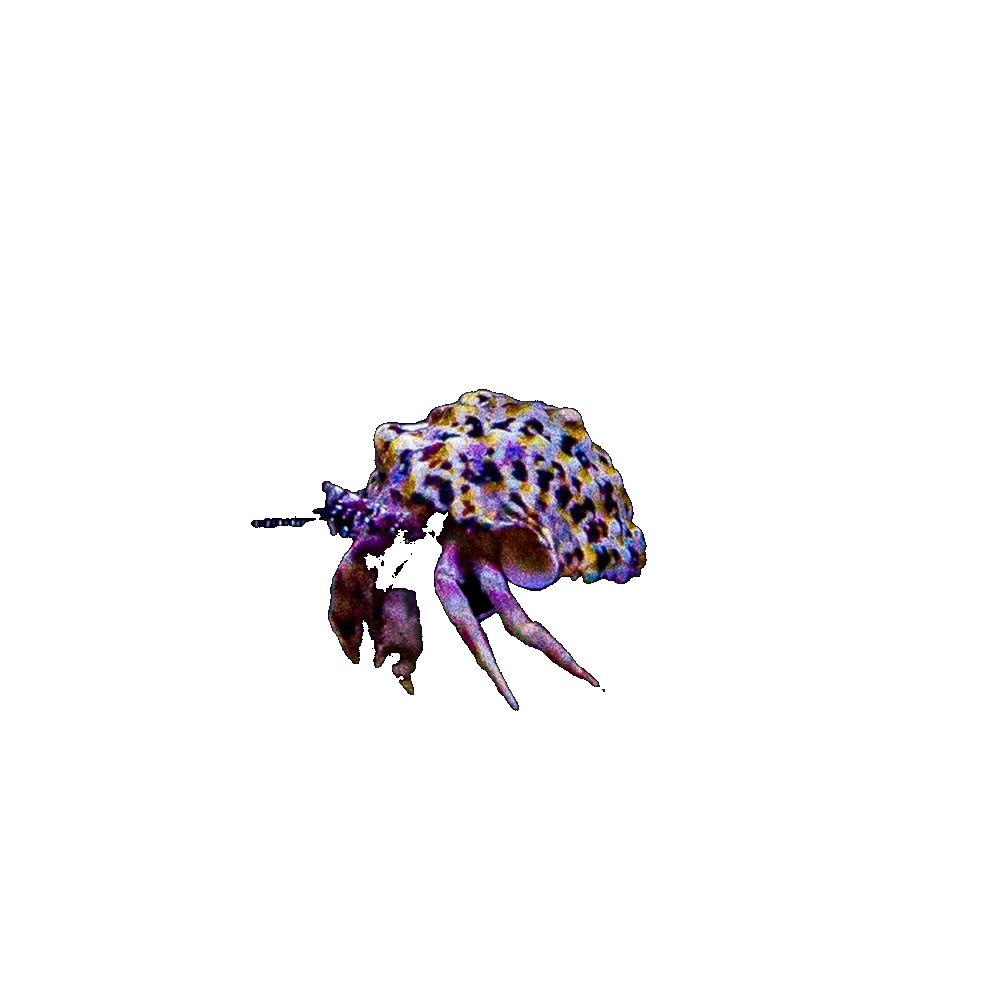
A small hardworking scavenger hermit crab (Clibanarius sp.) reaching about 1 inch; grazes algae, leftover food and detritus across rockwork and sand, and is mostly peaceful though it may steal shells from other crabs or snails.
Quick facts
Handling caution: Can pinch with claws if handled carelessly
Identity
- Also known as
- Yellow Legged Hermit Crab; Yellow Tip Hermit Crab; Dwarf Yellow Tip Hermit Crab
- Synonyms
- Clibanarius virescens
- Environment
- Saltwater
- Native to
- Indo-Pacific
- Habitat
- Intertidal rocky shores, tide pools, and shallow reef flats where it grazes algae-covered rock and sand
- Sourcing
- Wild-caught
- Conservation
- Not Evaluated
Care
- Care level
- Easy
- Temperament
- Peaceful
- Adult size
- 0.5 – 1 in (1.3 – 2.5 cm)
- Lifespan
- 1 – 2 yrs
- Min tank
- 10 gal (38 L)
- Growth rate
- Slow
- Placement
- Bottom
Water
- Temperature
- 72 – 78 °F (22 – 26 °C)
- pH
- 8.1 – 8.4
- dKH
- 8 – 12 dKH
- Salinity
- 1.023 – 1.025 SG
- Flow
- Low-Moderate
Behavior & compatibility
- Social
- Group
- Aggression to own kind
- Moderate
- Active
- Night
- Reef safe
- Yes
- Invert safe
- With caution
- Shrimp safe
- With caution
- Clean-up role
- Algae, Biofilm, Detritus, Leftover food
- Population boom risk
- Low
Feeding & breeding
- Diet
- Omnivore
- Foods
- Algae, Biofilm, Pellets, Wafers, Frozen
- Breeding type
- Broadcast spawner
- Breeding difficulty
- Not bred in captivity
- Sexing
- Not externally distinguishable without close examination; not typically sexed in the hobby
- Target feeding
- Beneficial
Something wrong or missing? Submit a correction
Care guide
Overview
Pale legs tipped in white distinguish this compact scavenger, which rarely exceeds an inch and moves slowly over rock and sand hunting algae and scraps. It suits reef systems with established biofilm and a spare stock of empty shells to prevent squabbles. Peaceful toward tankmates overall, it may pilfer shells from weaker crabs or snails when housing runs short.
Care
This small scavenging hermit crab does best in an established reef tank with plenty of live rock to graze on and a mixed sand and rubble substrate to forage through. Stable calcium, magnesium, and alkalinity levels support smooth molting, and a handful of extra empty shells in various sizes should always be on hand so the crab can upgrade without stealing a shell from a snail. It tolerates a wide range of reef conditions but, like most crustaceans, will not survive exposure to copper-based medications.
Feeding
Most of its diet comes from grazing film algae, hair algae, cyanobacteria, and detritus directly off rock and glass surfaces, along with scavenged leftover fish food. In very clean, well-established systems where algae growth is limited, supplement with sinking algae wafers, pellets, or occasional frozen meaty foods to keep it well fed. It readily accepts dried seaweed clipped to the glass if natural grazing sources run low.
Tank mates
Generally peaceful toward fish and corals, making it a reliable reef cleanup crew member, though it will compete with other hermits and snails over shells if extras are not kept on hand. It can occasionally prey on slow or weakened snails when shells are scarce, so shrimp and snail compatibility should be considered with caution. Avoid keeping it with predatory fish such as puffers, triggers, hawkfish, or wrasses that will readily eat small crustaceans.
Breeding
Females carry fertilized eggs beneath the abdomen until they hatch into planktonic larvae released into open water. These larvae pass through several zoeal and megalopa stages that require specific plankton feeds and controlled currents to survive, conditions almost impossible to replicate in a home aquarium. As a result, hermit crabs are essentially never bred in captivity and all trade specimens are wild-collected.
Health
Molting is the main health event to watch for; the crab will bury in the sand or hide for a period of days while its exoskeleton hardens and should not be disturbed during this time. Stable calcium, magnesium, and alkalinity reduce molt failures and shell damage. Sudden salinity or pH swings during acclimation, along with any copper exposure, are the most common causes of stress or death in this species.
Sources
Varieties in the catalog
More Hermit crabs
Something wrong or missing? Submit a correction
In the community
Popular tanks using ECC White Leg Hermit Crabs
No public tanks are showcasing ECC White Leg Hermit Crabs yet.