
Marine Invertebrates
Spiny Star Astraea
Astraea phoebiaAstraeinaeSnails
Price: $4.23 USD
Add from My tanks →1 photos
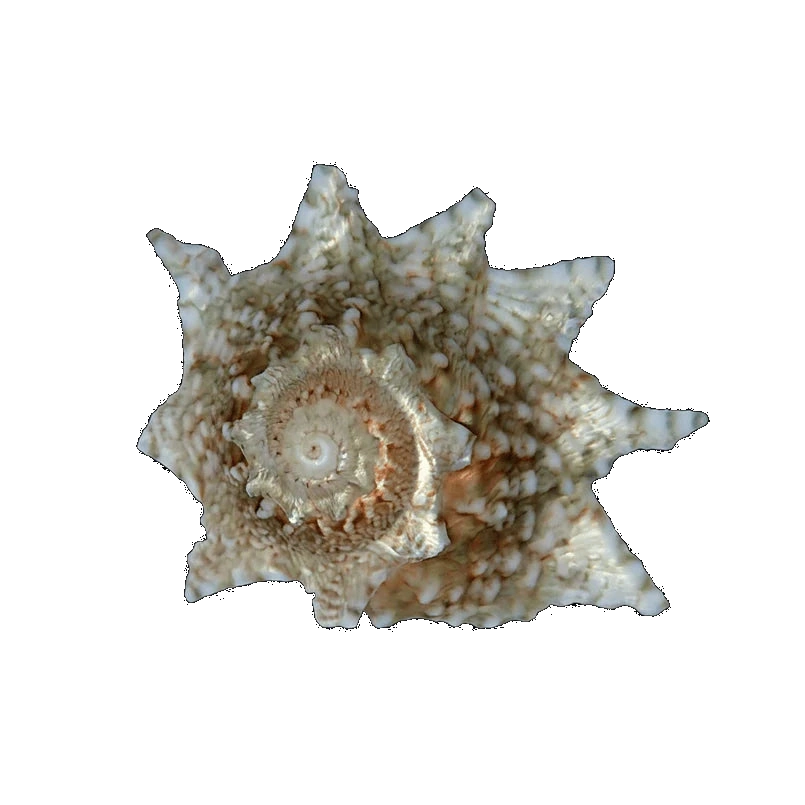
The Spiny Star Astraea Snail (Astraea phoebia) has a pyramid-shaped shell with green, yellow, and tan coloration and pronounced sculptured spiral star projections. It has a ravenous appetite for nuisance hair algae, cyanobacteria, and diatoms, cleaning algae-covered live rock and aquarium glass; it cannot tolerate copper medications or minute water parameter changes, needs drip acclimation, has difficulty righting itself if flipped, and should be supplemented with blanched spinach, lettuce, or vegetable tablets if food is insufficient.
Quick facts
Identity
- Also known as
- Spiny Star Snail; Star Astraea Snail
- Synonyms
- Lithopoma phoebia
- Environment
- Saltwater
- Native to
- Gulf of Mexico, Caribbean, western Atlantic
- Habitat
- Shallow intertidal and nearshore rocky areas where algae and diatom-covered rock and rubble accumulate
- Sourcing
- Wild-caught
- Conservation
- Not Evaluated
Care
- Care level
- Easy
- Temperament
- Peaceful
- Adult size
- 0.5 – 1 in (1.3 – 2.5 cm)
- Lifespan
- 2 – 5 yrs
- Min tank
- 20 gal (76 L)
- Growth rate
- Slow
- Placement
- Bottom, Rock & glass
Water
- Temperature
- 72 – 78 °F (22 – 26 °C)
- pH
- 8.1 – 8.4
- dKH
- 8 – 12 dKH
- Salinity
- 1.023 – 1.025 SG
- Flow
- Low-Moderate
Behavior & compatibility
- Social
- Solitary
- Aggression to own kind
- Low
- Active
- Night
- Reef safe
- Yes
- Invert safe
- Yes
- Shrimp safe
- Yes
- Clean-up role
- Algae, Biofilm
- Population boom risk
- Low
Feeding & breeding
- Diet
- Herbivore
- Foods
- Algae, Vegetables, Wafers
- Breeding type
- Broadcast spawner
- Breeding difficulty
- Not bred in captivity
- Sexing
- Sexes cannot be distinguished externally; not practical to sex in the aquarium trade
- Target feeding
- Beneficial
Something wrong or missing? Submit a correction
Care guide
Overview
A pyramid-shaped shell with green, yellow, and tan tones bears pronounced sculptured spiral ridges that flare into star-like points. This slow, nocturnal grazer patrols rock and glass for hair algae, cyanobacteria, and diatoms in reef and fish-only tanks alike. It needs stable water quality, copper-free medication, and a substrate it can right itself on if flipped.
Care
This snail is a hardy, easy-to-keep grazer suited to established reef and fish-only marine tanks with rockwork to patrol. It spends most of its time moving over live rock and glass rather than climbing, so it is best kept in tanks with a sandbed or solid substrate it can right itself on if it falls. Sudden shifts in salinity, pH, or nitrate are poorly tolerated, so stable, mature water conditions matter more than with many other snails. Copper-based medications will kill it, so it should be removed before any copper treatment is dosed in the system.
Feeding
Diet consists mainly of hair algae, cyanobacteria, and diatom films grazed from rock and glass surfaces. In tanks without enough natural algae growth, supplement with blanched spinach, lettuce, dried seaweed, or algae wafers so the snail does not starve. A single individual per five gallons is a reasonable stocking guideline to keep the algae supply matched to the population.
Tank mates
Peaceful and unable to harm corals, fish, or other invertebrates, making it compatible with nearly any reef or fish-only community. Its small size and slow movement mean it rarely knocks over frags, unlike some larger snail or hermit crab species. Avoid pairing it with aggressive crabs or large predatory fish that may attack or flip it, since it struggles to right itself once overturned.
Breeding
Not known to reproduce in home aquariums, as this species requires a planktonic larval stage that develops in open ocean conditions. Any offspring seen in captivity are essentially unheard of, so ongoing stocking relies entirely on wild collection. No sexual dimorphism has been documented that would allow hobbyists to pair breeders even if spawning were attempted.
Health
The main risk is a snail flipping upside down and being unable to right itself, which can lead to starvation or death if not noticed and corrected promptly. High nitrate levels are poorly tolerated and can shorten lifespan even though the snail is otherwise considered hardy. Any exposure to copper-based medications used to treat fish disease is lethal and should be strictly avoided.
Sources
More Snails
Something wrong or missing? Submit a correction
In the community
Popular tanks using Spiny Star Astraea
No public tanks are showcasing Spiny Star Astraea yet.