
Snail
Orange Poso Rabbit Snails
Tylomelania gemmifera 'Orange'PachychilidaeSnails
Price: $55.99 USD
Add from My tanks →1 photos
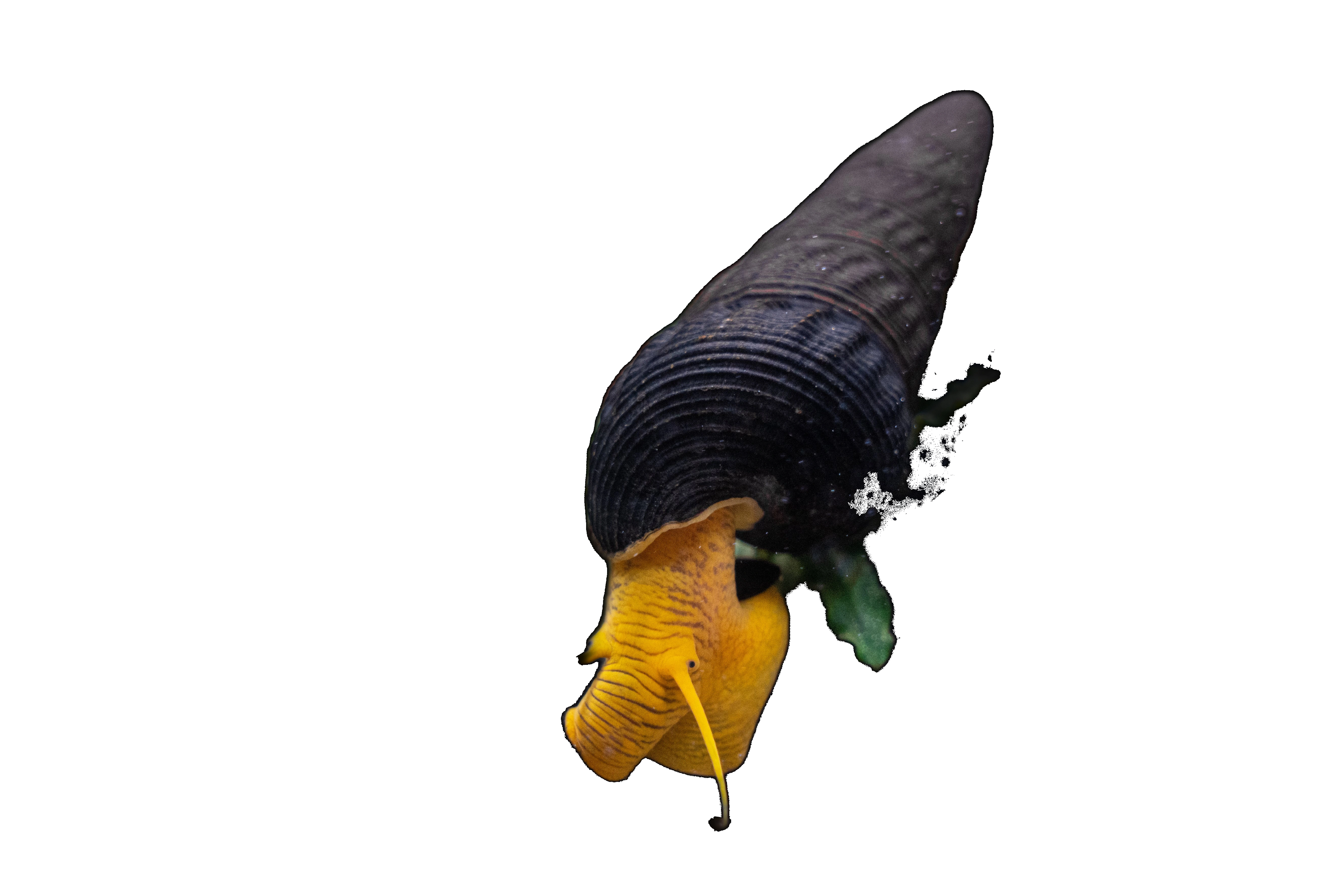
The Orange Poso Rabbit Snail (Tylomelania gemmifera 'Orange'), from Sulawesi, is one of the most attractive snails in the hobby with a yellowish-orange body and long spiraled shell. Peaceful scavenger for leftover food and algae; reproduces very slowly, requires both sexes, and prefers warm, stable water with hiding places.
Quick facts
Identity
- Also known as
- Gold Rabbit Snail; Elephant Snail; Orange Sulawesi Snail
- Environment
- Freshwater
- Native to
- Indonesia (Sulawesi, Lake Poso and Malili Lakes system)
- Habitat
- Warm, clear, oxygenated, hard alkaline lake and shoreline waters over sand, mud, or volcanic substrate in the Sulawesi lake system
- Sourcing
- Wild-caught
- Conservation
- Not Evaluated
Care
- Care level
- Moderate
- Temperament
- Peaceful
- Adult size
- 1.5 – 3 in (3.8 – 7.6 cm)
- Lifespan
- 2 – 4 yrs
- Min tank
- 20 gal (76 L)
- Growth rate
- Slow
- Placement
- Bottom
Water
- Temperature
- 78 – 84 °F (26 – 29 °C)
- pH
- 7.0 – 8.5
- GH
- 6 – 15 dGH
- TDS
- 150 – 400 ppm
- dKH
- 2 – 15 dKH
- Flow
- Low-Moderate
Behavior & compatibility
- Social
- Solitary · groups of 2+
- Aggression to own kind
- Low
- Active
- Night
- Invert safe
- Yes
- Plant safe
- With caution
- Shrimp safe
- Yes
- Clean-up role
- Algae, Biofilm, Detritus, Leftover food
- Population boom risk
- Low
Feeding & breeding
- Diet
- Omnivore
- Foods
- Pellets, Wafers, Vegetables, Algae, Biofilm
- Breeding type
- Livebearer
- Breeding difficulty
- Difficult
- Sexing
- Sexes are separate but not visually distinguishable; a group is needed for breeding since individual sex cannot be determined by sight
- Target feeding
- Beneficial
Something wrong or missing? Submit a correction
Care guide
Overview
A yellowish-orange body extends from a long, spiraled shell as this snail cruises the substrate snout-down, probing sand and gravel for biofilm. It grows slowly to about 3 inches and needs warm, hard, alkaline water to keep its shell intact. Keep a mixed group of two or more, since sexes cannot be told apart, and avoid copper-based medications.
Care
This snail does best in a warm, well-established aquarium with hard, alkaline water and a soft sand or fine gravel substrate that will not injure its foot or trap its large shell. It spends most of its time slowly grazing along the substrate and hardscape, foraging for biofilm and leftover food rather than climbing glass or plants. Stable parameters matter more than precision here, since sudden swings in temperature or pH can stress a species adapted to the constant conditions of deep tropical lakes.
Feeding
Its diet is largely made up of algae, biofilm, and detritus grazed from surfaces, supplemented with sinking wafers, blanched vegetables such as zucchini or spinach, and occasional protein-based foods. Feeding should be offered daily since these are fairly large-bodied snails with a correspondingly bigger appetite than typical nano snails. In algae-poor tanks, supplemental feeding becomes essential to keep the shell and body in good condition.
Tank mates
Peaceful and non-aggressive toward fish, shrimp, and other snails, making it a suitable addition to most community setups that share its warm water requirements. It ignores tankmates entirely and is itself defenseless, so aggressive or nippy fish should be avoided. Good companions include other Sulawesi-compatible shrimp and peaceful community fish that tolerate warmer, harder water.
Breeding
Reproduction is ovoviviparous, with females releasing individual egg pods that quickly hatch into fully formed miniature snails rather than free-floating eggs or larvae. Only one or a few young are produced roughly every several weeks, so a mixed-sex group is required and population growth remains very slow. This slow rate means overstocking from breeding is essentially never a concern in home aquariums.
Health
Shell erosion and pitting can occur in water that is too soft or acidic, since the species requires calcium-rich, alkaline conditions to maintain healthy shell growth. It is highly sensitive to copper-based medications, which are lethal even in small trace amounts. Lethargy or refusal to feed often signals water that is too cool or parameters that have drifted outside its preferred hard, alkaline range.
Sources
More Snails
Something wrong or missing? Submit a correction
In the community
Popular tanks using Orange Poso Rabbit Snails
No public tanks are showcasing Orange Poso Rabbit Snails yet.