
Marine Invertebrates
ORA Trochus Snail
Rochia niloticaTrochidaeSnails
Add from My tanks →1 photos
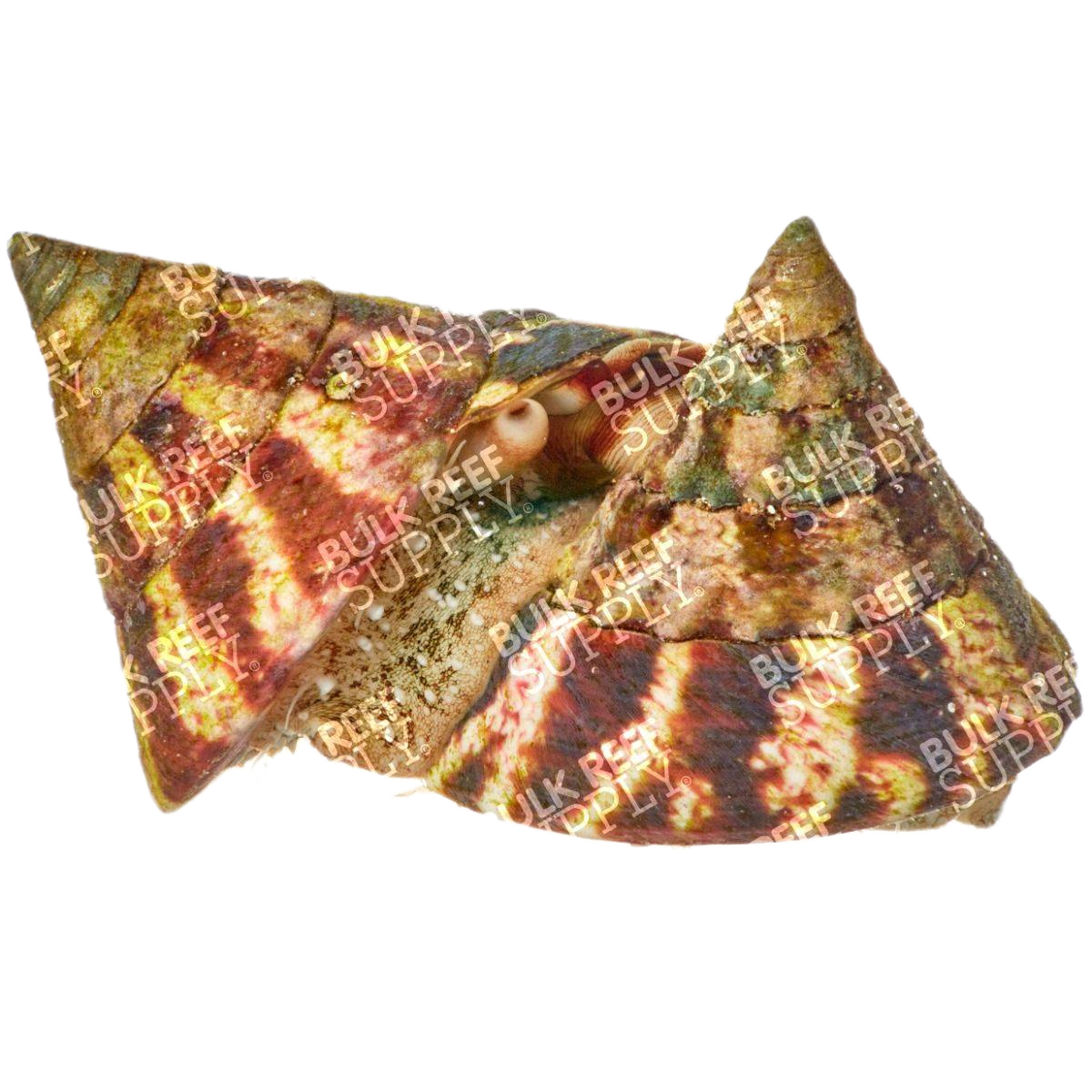
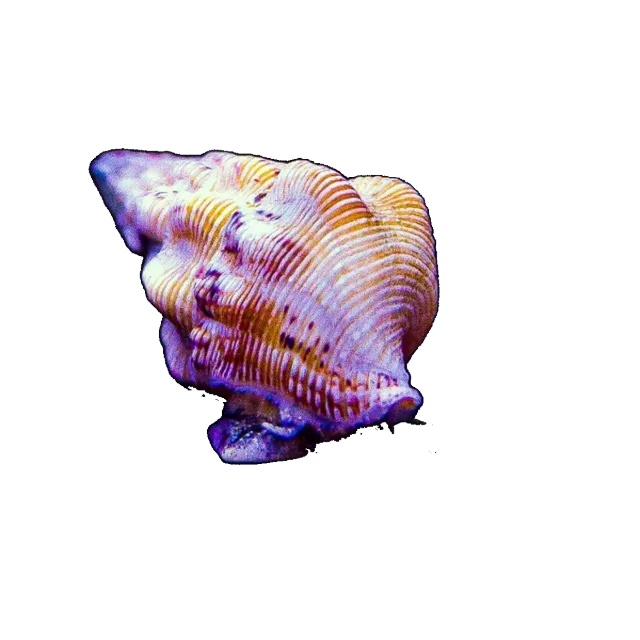
A captive-bred Trochus snail (Rochia nilotica) from ORA's Marshall Island mariculture farm; a voracious algae grazer that can right itself when flipped and will reproduce in a stable aquarium, sustaining a self-replenishing cleanup crew.
Quick facts
Identity
- Also known as
- Banded Trochus Snail; Top Shell Snail; Commercial Trochus
- Synonyms
- Trochus niloticus
- Environment
- Saltwater
- Native to
- Indo-Pacific (introduced to Marshall Islands and other Pacific islands)
- Habitat
- Shallow coral reefs, rocky intertidal zones, and lagoons with hard substrate and algae-covered rock and glass surfaces
- Sourcing
- Aquacultured
- Conservation
- Not Evaluated
Care
- Care level
- Easy
- Temperament
- Peaceful
- Adult size
- 0.5 – 2 in (1.3 – 5.1 cm)
- Lifespan
- 3 – 5 yrs
- Min tank
- 20 gal (76 L)
- Growth rate
- Slow
- Placement
- Rock & glass
Water
- Temperature
- 75 – 80 °F (24 – 27 °C)
- pH
- 7.7 – 8.5
- dKH
- 8 – 12 dKH
- Salinity
- 1.023 – 1.026 SG
- Flow
- Moderate
Behavior & compatibility
- Social
- Solitary
- Aggression to own kind
- Low
- Active
- Night
- Reef safe
- Yes
- Invert safe
- Yes
- Shrimp safe
- Yes
- Clean-up role
- Algae, Biofilm
- Population boom risk
- Low
Feeding & breeding
- Diet
- Herbivore
- Foods
- Algae, Biofilm, Vegetables
- Breeding type
- Broadcast spawner
- Breeding difficulty
- Not bred in captivity
- Sexing
- Dioecious with no external morphological differences; sexes distinguishable only by gonad color under microscopy (male pale brown/cream, female dark green)
- Target feeding
- Beneficial
Something wrong or missing? Submit a correction
Care guide
Overview
The ORA Trochus Snail is a mariculture-raised form of Rochia nilotica, produced on Marshall Island grow-out farms rather than wild-harvested. Its conical, brown-and-cream shell houses a strong foot that flips it upright when knocked over, a trait that distinguishes it from more delicate cleanup-crew snails. It grazes film algae and diatoms off rock and glass and needs an established tank, not a freshly cycled one.
Care
This snail is one of the hardier members of a reef cleanup crew, tolerating the swings in water quality that sink more delicate invertebrates. It needs an established tank with live rock and glass already coated in film algae and diatoms, since it will not do well in a freshly cycled aquarium with bare surfaces. Its conical shell and strong foot let it right itself quickly if knocked onto its back, a trait that sets it apart from many other reef snails.
Feeding
Feeding centers on grazing film algae, diatoms, and biofilm off rock and glass rather than the long hair algae that turbo snails prefer. Most established reef tanks supply enough natural grazing material without extra feeding, but if surfaces stay too clean the snail can starve over time. When algae is scarce, offering algae wafers or dried seaweed occasionally helps sustain the population.
Tank mates
It coexists peacefully with reef fish, corals, and other cleanup crew members such as cerith and nassarius snails, and does not bother sessile invertebrates. Predatory fish like puffers, triggers, and large wrasses will crack and eat it, so these should be avoided. Hermit crabs sharing the tank sometimes evict it from its shell to claim the shell for themselves, so keeping spare shells available reduces that risk.
Breeding
Spawning is possible in a stable, mature reef aquarium, with eggs and sperm released into the water column for external fertilization. Larvae are planktonic and rarely survive to settle in a closed aquarium system due to filtration and lack of appropriate microhabitat, so captive reproduction to replace losses is inconsistent despite occasional reports of natural spawning events. Commercial supply instead relies on dedicated mariculture facilities that rear juveniles to marketable size over several months.
Health
Well-acclimated specimens are generally trouble free, with most losses tied to starvation from insufficient algae rather than disease. Sudden salinity or temperature swings during introduction can stress or kill snails, so slow acclimation is important. A snail that stays flipped for an extended period or shows a receding body from the shell opening is usually failing and should be checked.
Sources
More Snails
Something wrong or missing? Submit a correction
In the community
Popular tanks using ORA Trochus Snail
No public tanks are showcasing ORA Trochus Snail yet.