
Aquatic Plant
Nymphaea Zenkeri Tiger Lotus
Nymphaea zenkeriNymphaeaceaeBulb plants
Price: $12.99 USD
Add from My tanks →1 photos
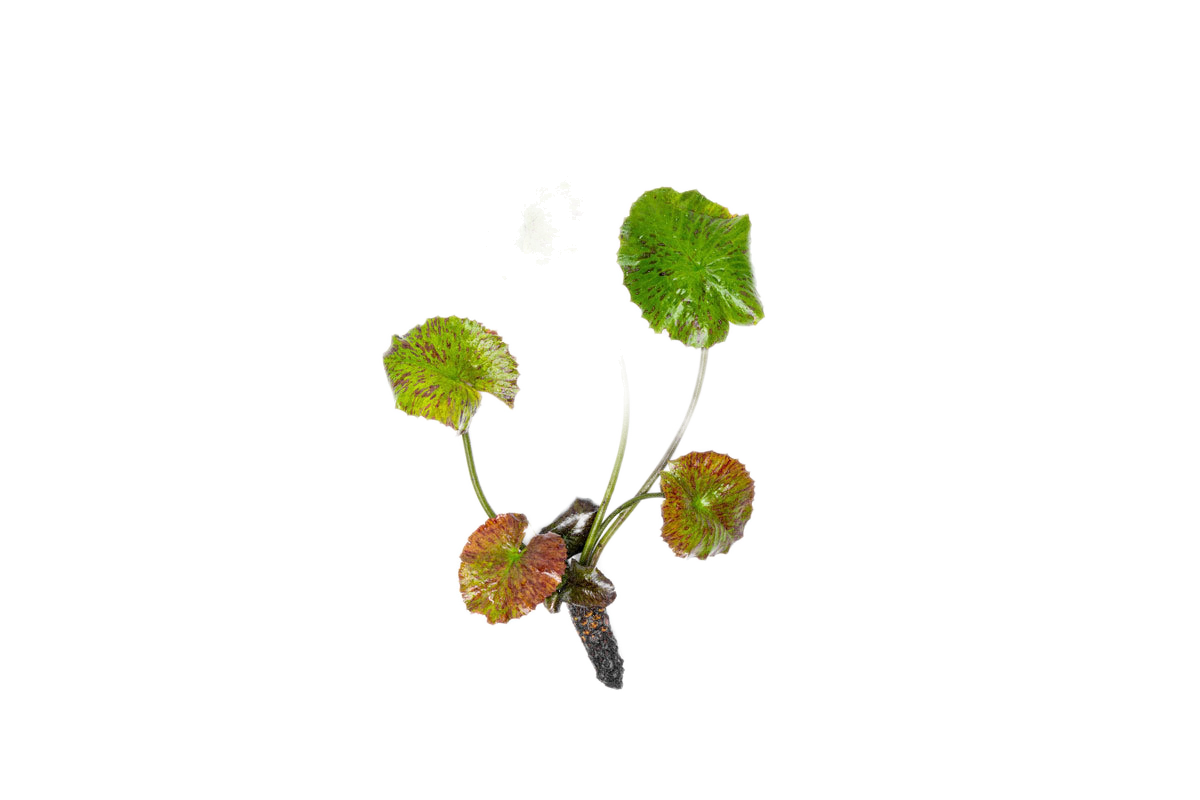
Nymphaea zenkeri (Red Tiger Lotus) is an easy African water lily sold as a bulb, with bright red leaves that turn deep red speckled with orange and brown under high light, CO2 and fertilization. It can reach the surface like other water lilies, does not need CO2, and propagates from cut side shoots.
Quick facts
Identity
- Also known as
- Zenker's Water Lily; Zenker Lily
- Synonyms
- Nymphaea lotus var. zenkeri
- Environment
- Freshwater
- Native to
- Nigeria, Cameroon, Ghana, West Africa
- Habitat
- Still and slow-moving freshwater such as ponds, lakes, river margins, and seasonal flood pools in tropical West Africa
- Sourcing
- Aquacultured
- Conservation
- Not Evaluated
Care
- Care level
- Easy
- Growth form
- Bulb
- Max height
- 5 – 20 in (13 – 51 cm)
- Spread
- 24 in (61 cm)
- Growth rate
- Fast
- Placement
- Midground, Background
Water
- Temperature
- 72 – 82 °F (22 – 28 °C)
- pH
- 6.0 – 7.5
- GH
- 3 – 15 dGH
- Flow
- Low
- Light
- Medium
- CO₂
- Beneficial
Planting
- Substrate
- Nutrient-rich preferred
- Feeds from
- Roots
- Fertilizer needs
- High
- Colors
- Red, Green, Orange, Brown
Feeding & breeding
- Propagation
- Rhizome division
Something wrong or missing? Submit a correction
Care guide
Overview
Bulbs of this water lily come from the slow rivers and floodplains of West Africa, where the species grows across Nigeria, Cameroon, and Ghana. Aquarium-grown stock sprouts submerged leaves that redden with orange and brown mottling under stronger light and root feeding. Expect fast growth, a heavy appetite for root tabs, and regular trimming to stop petioles from reaching the surface.
Care
Tiger lotus is planted from a bulb rather than a rooted cutting, and it tolerates a wide swing of temperature, pH, and hardness once established. Under medium to high light the emerging leaves take on the deep red color with dark mottling that gives the plant its common name, while in dimmer tanks the foliage stays mostly green. Because it is a heavy root feeder, regular root tab dosing or a nutrient-rich substrate makes a noticeable difference in both growth rate and coloration.
Planting & trimming
Set the bulb on top of or partially into the substrate with roughly the top third to half exposed; burying it completely usually leads to rot. Once the root system is established it can be pushed deeper if desired, or simply left resting on the substrate weighted by a rock or piece of driftwood. Trim any leaf stem that starts heading toward the surface at its base to keep the plant compact and fully submerged, since surface leaves will otherwise shade the rest of the tank.
Fertilizing
Root tabs pushed near the bulb are the most effective way to feed this plant, since it draws the bulk of its nutrition through its root system rather than the water column. Iron supplementation in particular deepens the red and purple pigmentation of new leaves. In nutrient-poor inert substrate without supplementation, growth slows and leaves tend to stay small and pale green.
Propagation
The mother bulb produces daughter bulbs or lateral side shoots over time, which can be cut away once they have a few roots or leaves of their own and replanted elsewhere in the substrate. Mature plants may also flower and set seed, but this is uncommon in aquarium conditions and propagation is almost always done through bulb division.
Problems
A bulb planted too deep or fully buried is prone to rot instead of sprouting, so only the bottom portion should be pressed into the substrate with the crown left exposed. Insufficient light or nutrients causes weak, undersized leaves that lose their red coloration and revert to green. If left untrimmed the plant will send long petioles to the surface to form floating lily pads, which can shade out other plants in the tank.
Sources
Varieties in the catalog
More Bulb plants
Something wrong or missing? Submit a correction
In the community
Popular tanks using Nymphaea Zenkeri Tiger Lotus
No public tanks are showcasing Nymphaea Zenkeri Tiger Lotus yet.