
Aquatic Plant
Crinum Thaianum
Crinum thaianumAmaryllidaceaeBulb plants
Price: $12.99 USD
Add from My tanks →1 photos
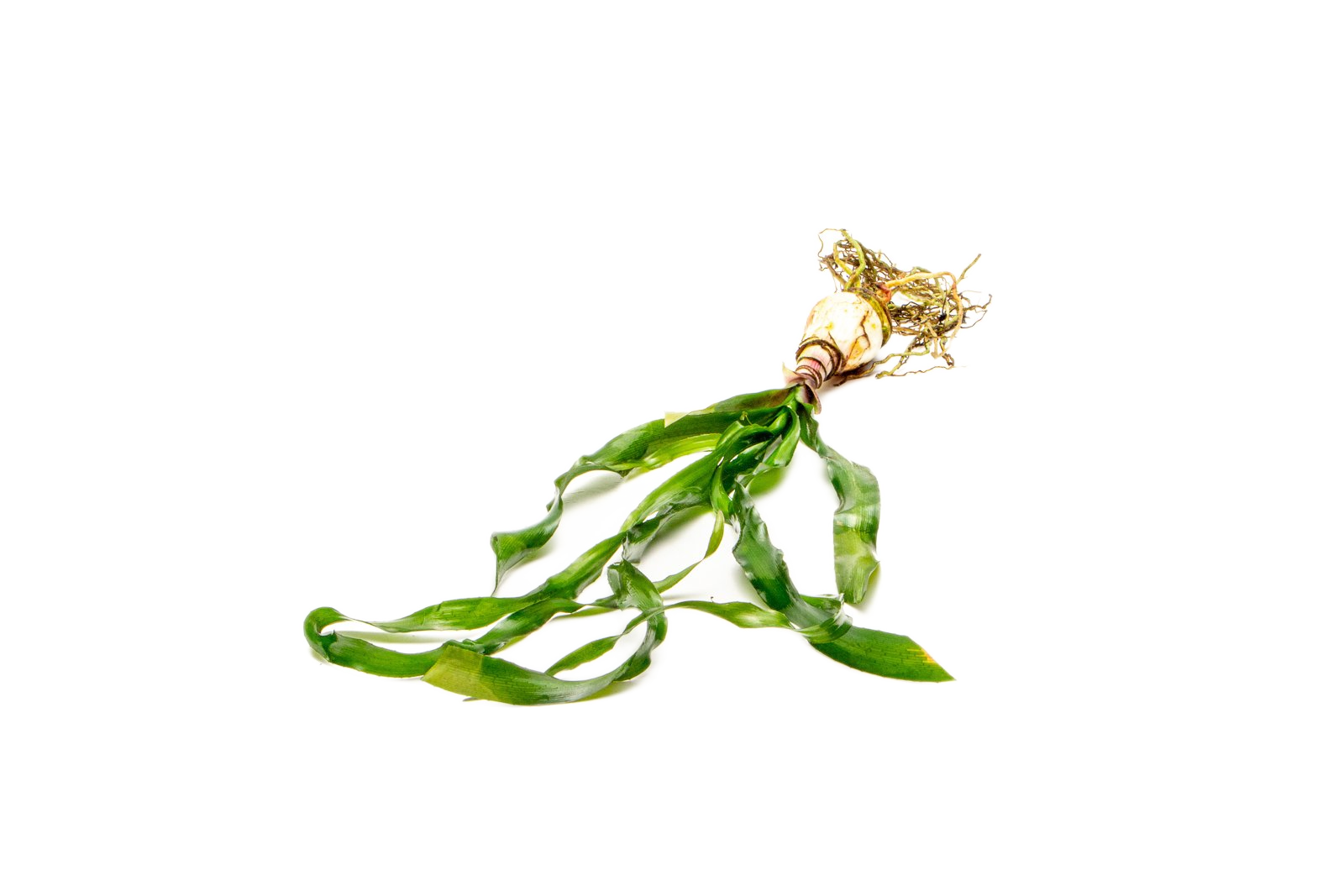
Crinum Thaianum (Thai Onion Plant) looks like an onion bulb with long green stalks in a rosette growing up to 60 inches. Keep 1/3 of the bulb above the substrate to prevent rot; heavy root feeder in nutrient-rich substrate, moderate to high light, CO2 beneficial, propagated from daughter bulbs.
Quick facts
Identity
- Also known as
- Water onion; Onion plant; Phlap Phueng Than
- Environment
- Freshwater
- Native to
- Thailand
- Habitat
- Banks and sediment of flowing, medium- to fast-running streams and shallow rivers in coastal Thailand, roots and bulb submerged while leaves reach the surface
- Sourcing
- Captive-bred
Care
- Care level
- Easy
- Growth form
- Rosette
- Max height
- 12 – 60 in (30 – 152 cm)
- Spread
- 24 in (61 cm)
- Growth rate
- Moderate
- Placement
- Midground, Background
Water
- Temperature
- 72 – 86 °F (22 – 30 °C)
- pH
- 6.5 – 7.5
- GH
- 4 – 18 dGH
- Flow
- Low-Moderate
- Light
- Medium
- CO₂
- Beneficial
Planting
- Substrate
- Nutrient-rich preferred
- Feeds from
- Roots
- Fertilizer needs
- High
- Colors
- Green
Feeding & breeding
- Propagation
- Rhizome division
Something wrong or missing? Submit a correction
Care guide
Overview
A bulbous base tapers into long, ribbon-like green leaves that spiral upward toward the surface, forming a loose rosette in the substrate. Given a spacious tank, it grows slowly but steadily into a tall background feature, drawing most of its nutrition through an extensive root system. Keep the bulb's upper third exposed to avoid rot, and expect occasional die-back of older leaves as part of its normal rest cycle.
Care
Water onion is a large bulb plant suited to spacious tanks where its long, ribbon-like leaves have room to spread without shading the whole aquascape. It tolerates a wide range of temperature, pH, and hardness, and adapts to both moderate and high lighting, though it settles in slowly after transplanting and grows at a measured pace. Older leaves are tough enough to resist grazing by herbivorous fish, while young growth is more tender and occasionally nibbled.
Planting & trimming
Plant the bulb in a thick layer of nutrient-rich substrate with roots spread widely, leaving the upper third of the bulb exposed to prevent rot. It is best placed toward the middle or back of the tank given its eventual height and spread, and once settled it dislikes being moved or replanted. Leaves that reach the surface and grow too long can be trimmed without harming the plant.
Fertilizing
The bulb develops a substantial root system and draws much of its nutrition from the substrate, so root tabs placed near the base or a naturally nutrient-rich substrate support steady growth. Liquid fertilizers supplying iron and micronutrients help maintain leaf color and prevent yellowing or translucent new growth, which usually signals a nutrient shortfall. CO2 injection is not mandatory but noticeably speeds growth and leaf length.
Propagation
Propagation is vegetative, through daughter bulbs that form at the base of the mature parent bulb. These offsets can be separated once they have developed their own root system, typically once they reach about a third of the parent bulb's size, and replanted elsewhere in the substrate.
Problems
Burying the bulb too deeply is the most common cause of failure, leading to rot at the base and loss of leaves, so roughly the top third should stay exposed above the substrate. The plant periodically enters a rest phase where some older leaves yellow and die back before new growth resumes, which is a normal cycle rather than a sign of disease. Persistent pale or translucent new leaves point to insufficient root feeding rather than an infection.
Sources
More Bulb plants
Something wrong or missing? Submit a correction
In the community
Popular tanks using Crinum Thaianum
No public tanks are showcasing Crinum Thaianum yet.