
Aquatic Plant
Aponogeton Boivinianus
Aponogeton boivinianusAponogetonaceaeBulb plants
Price: $14.99 USD
Add from My tanks →1 photos
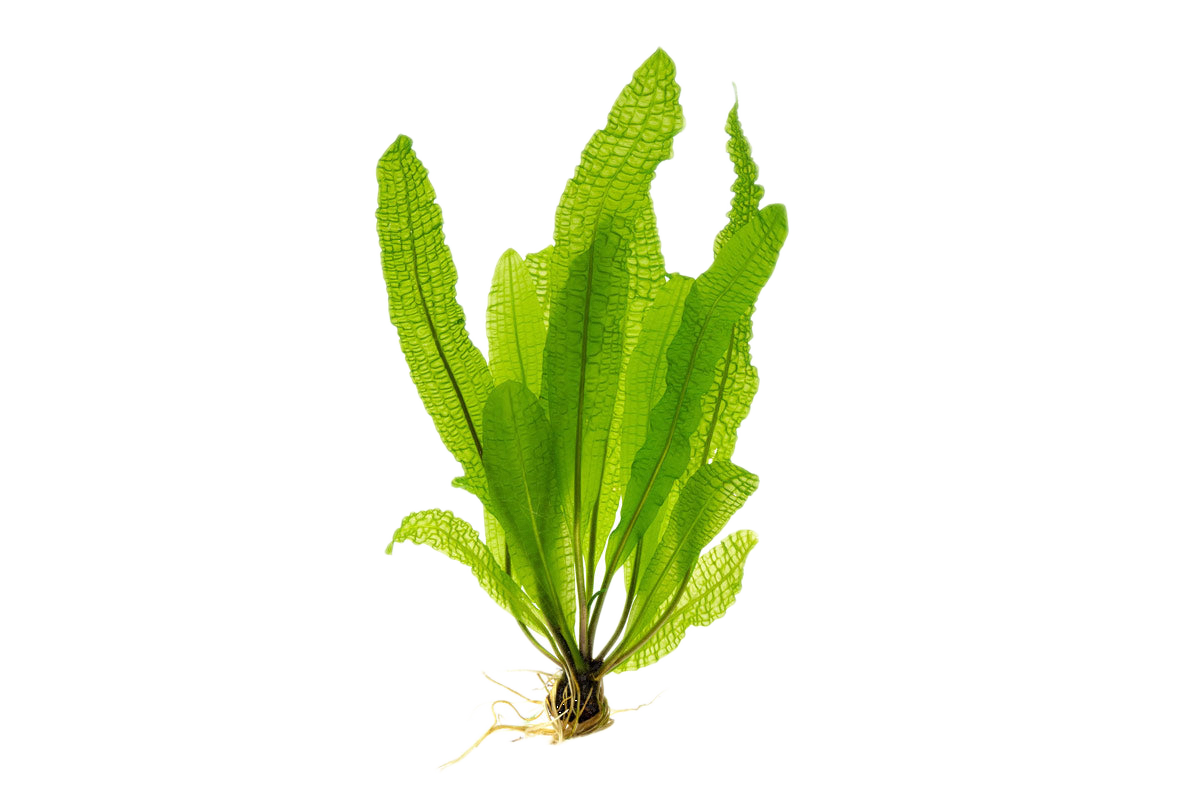
Aponogeton boivinianus is a tall-growing bulb plant from Madagascar with ruffled-textured leaves that emerge light green or red before maturing to darker olive. Its massive size makes it perfect for the background of larger tanks, and it thrives in easy care with moderate light.
Quick facts
Identity
- Also known as
- Crinkled Aponogeton
- Environment
- Freshwater
- Native to
- Madagascar
- Habitat
- Slow to moderately flowing freshwater streams and rivers in Madagascar
- Sourcing
- Aquacultured
- Conservation
- Not Evaluated
Care
- Care level
- Moderate
- Growth form
- Bulb
- Max height
- 12 – 31 in (30 – 79 cm)
- Spread
- 12 in (30 cm)
- Growth rate
- Moderate
- Placement
- Midground, Background
Water
- Temperature
- 68 – 77 °F (20 – 25 °C)
- pH
- 6.5 – 7.5
- GH
- 2 – 12 dGH
- dKH
- 2 – 10 dKH
- Flow
- Moderate-High
- Light
- Medium
- CO₂
- Beneficial
Planting
- Substrate
- Nutrient-rich preferred
- Feeds from
- Roots
- Fertilizer needs
- Medium
- Colors
- Green, Red, Brown
Feeding & breeding
- Propagation
- Rhizome division, Seeds
Something wrong or missing? Submit a correction
Care guide
Overview
Madagascar's slow-flowing streams are home to this large bulb plant, prized for its heavily puckered, bullate leaves that emerge light green or reddish before darkening to olive with age. Mature specimens exceed two feet in height, so a 40-gallon or larger tank with moderate to strong flow suits it best. Periodic dormancy is normal and precedes a fresh flush of growth.
Care
This large bulb plant develops heavily puckered, bullate leaves that emerge light green or reddish before darkening to olive or deep green with maturity. It grows best in a spacious tank of at least 40 gallons where its tall leaves have room to spread without shading out neighboring plants. Moderate to strong water flow keeps the broad leaves clean and helps prevent algae from settling on the textured surface, and the bulb periodically goes dormant, needing a rest period before it resprouts new growth.
Planting & trimming
Set the bulb on top of the substrate or bury it only partway, leaving the upper portion exposed so it does not soften and rot. Once roots establish, the plant anchors itself firmly and can be left undisturbed for long stretches. Give it generous spacing from other background plants since mature leaves can reach well over two feet and spread nearly a foot wide.
Fertilizing
As a root feeder, this Aponogeton draws most of its nutrition through a nutrient-rich substrate rather than the water column, so root tabs placed near the bulb make a noticeable difference in growth. A weekly liquid fertilizer with iron and trace elements supports leaf color and helps offset any water-column deficiencies. Yellowing leaves, pinholes, or stalled growth usually point to a lack of nutrients rather than disease or pests.
Propagation
Mature bulbs occasionally produce offset bulbs that can be separated and replanted once they have their own root system. The plant can also be grown from seed after it flowers above the waterline and is cross-pollinated, though this method is slow and rarely practiced by home hobbyists. Bulb division is the more practical and commonly used method in the aquarium trade.
Problems
Some leaf loss and thinner, more delicate new growth are normal for several weeks after planting as the bulb adjusts from emersed nursery conditions to fully submerged life. Algae on the older bullate leaves is common when light is too strong relative to available nutrients and flow, and usually clears up once light duration or intensity is reduced and fertilization is increased. Burying the bulb completely often leads to rot, so it should sit on or only partly in the substrate with its crown exposed.
Sources
More Bulb plants
Something wrong or missing? Submit a correction
In the community
Popular tanks using Aponogeton Boivinianus
No public tanks are showcasing Aponogeton Boivinianus yet.