
Aquatic Plant
Aponogeton Ulvaceus
Aponogeton ulvaceusAponogetonaceaeBulb plants
Price: $12.99 USD
Add from My tanks →1 photos
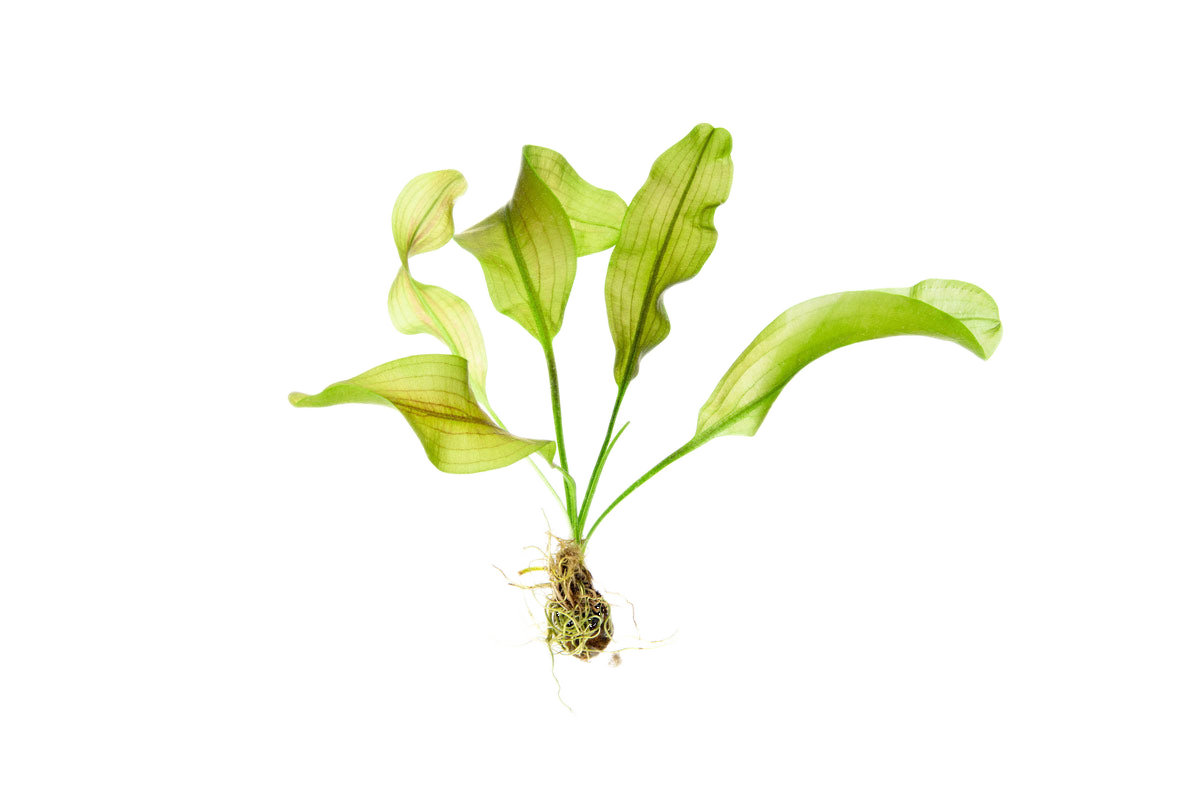
Aponogeton Ulvaceus (Giant Onion Plant) is a distinctive bulb plant native to Madagascar, apparently a hybrid of A. ulvaceus and A. madagascariensis, with wavy, lacy, slightly translucent light-green oblong leaves reaching 25-50 cm. It is a heavy root feeder needing nutrient-dense soil, good water circulation, and consistent maintenance, and is best suited as a solitary specimen plant.
Quick facts
Identity
- Also known as
- Giant Onion Plant; Wavy Aponogeton; Ulvaceus Aponogeton
- Environment
- Freshwater
- Native to
- Madagascar
- Habitat
- Fast-flowing streams and rivers as well as stagnant water bodies over muddy or sandy substrate, growing in sunny to partially shaded conditions
- Sourcing
- Aquacultured
- Conservation
- Not Evaluated
Care
- Care level
- Moderate
- Growth form
- Bulb
- Max height
- 28 in (71 cm)
- Spread
- 14 in (36 cm)
- Growth rate
- Fast
- Placement
- Background
Water
- Temperature
- 70 – 82 °F (21 – 28 °C)
- pH
- 6.0 – 7.5
- GH
- 2 – 15 dGH
- Flow
- Moderate
- Light
- Medium
- CO₂
- Beneficial
Planting
- Substrate
- Nutrient-rich preferred
- Feeds from
- Roots
- Fertilizer needs
- High
- Colors
- Green
Feeding & breeding
- Propagation
- Rhizome division, Seeds
Something wrong or missing? Submit a correction
Care guide
Overview
Unfurls dozens of long, wavy, translucent light-green leaves from a single bulb, filling the background of a tank as a solitary specimen rather than a filler plant. Growth is fast and root-driven, so it needs a nutrient-rich substrate, moderate flow, and room to spread before it inevitably cycles into a leafless dormancy and resprouts.
Care
A large bulb plant best kept as a solitary centrepiece or background specimen in tanks of at least 20-29 gallons, since a single bulb can produce forty or more long, ruffled leaves. It prefers medium to high lighting and appreciates supplemental CO2, though it can grow without it, and tolerates a wide range of water hardness and pH. After a growth flush the bulb often enters a dormancy period where leaf production stops; reducing light and temperature slightly, or storing the tuber in damp moss, helps it through this rest phase before it resprouts.
Planting & trimming
Rest the bulb on top of the substrate or bury only its lower two-thirds, keeping the narrower growing tip exposed, since fully burying it invites rot. Once roots establish the plant anchors itself, and it should be given generous open space around it (at least 8-12 inches) so its large leaf spread does not crowd neighboring plants. Regular trimming of aging or damaged leaves keeps the plant healthy and prevents it from overtaking the tank.
Fertilizing
As a heavy root feeder, it depends on a nutrient-rich substrate or root tabs pushed in near the bulb to support its rapid leaf production. A weekly all-in-one liquid fertilizer supplies additional iron and trace elements for the water column. Yellowing leaves, holes, or stalled growth are usually signs of nutrient deficiency rather than disease, and are best corrected by increasing root and liquid feeding.
Propagation
Propagated most reliably by dividing offset bulbs or side tubers that form on a mature plant. Seeds can also be produced by hand-pollinating the emergent flower spikes with a fine brush, then germinating them in fine sand or gravel, typically within one to two weeks.
Problems
Bulb rot is the main risk, usually caused by planting the tuber too deep or into an oxygen-poor substrate, so only the lower two-thirds should be buried. Algae on the leaves is common and typically signals excess light relative to nutrients or weak flow rather than a plant problem, and is corrected by trimming light duration and improving circulation and fertilization. Some leaf loss after planting or after a dormancy cycle is normal and is followed by fresh growth once conditions stabilize.
Sources
More Bulb plants
Something wrong or missing? Submit a correction
In the community
Popular tanks using Aponogeton Ulvaceus
No public tanks are showcasing Aponogeton Ulvaceus yet.