Shrimp
Amano Shrimp
Caridina multidentataAtyidaeDwarf shrimp
Price: $49.99 USD
Add from My tanks →1 photos
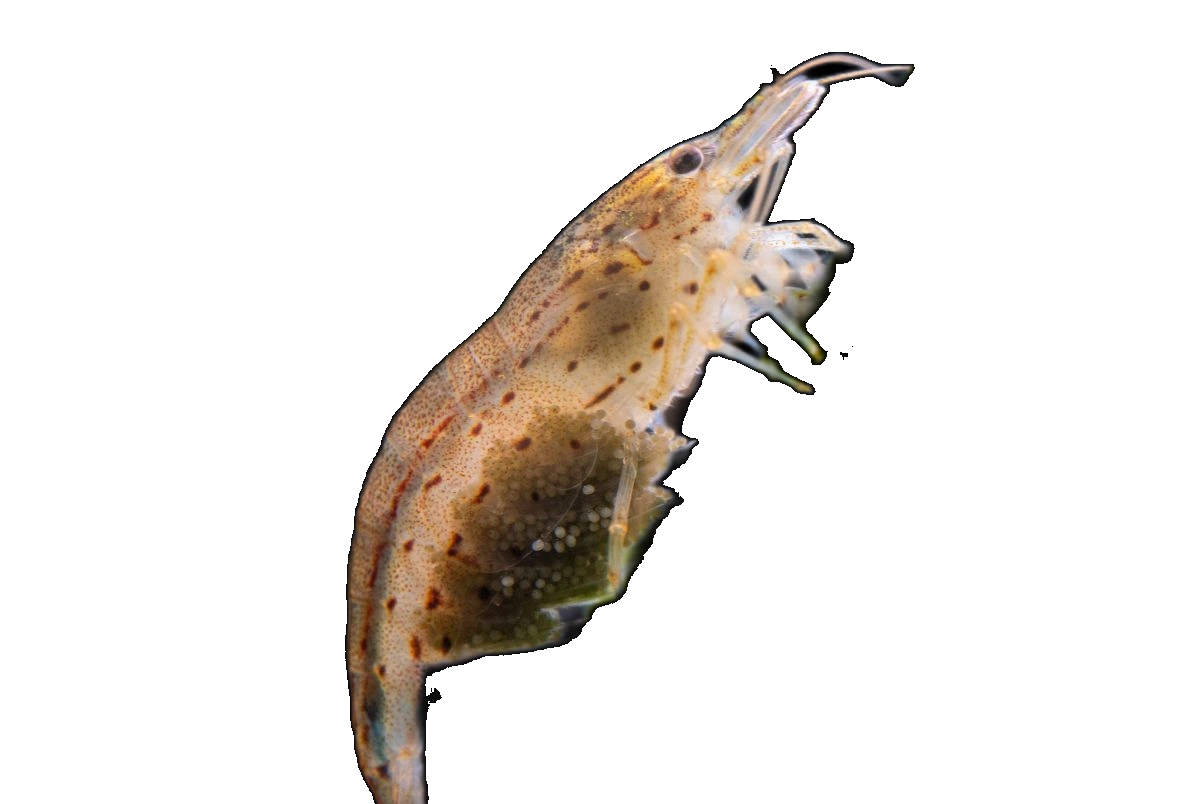
The Amano Shrimp (Caridina multidentata) is a hardy freshwater algae-eating shrimp popularized by aquascaper Takashi Amano, reaching over 2 inches with a translucent body marked by tan or brown lines. It is an easy-to-keep clean-up crew for a minimum 10-gallon tank, grazing hair and string algae, but will not overpopulate since larvae need brackish or saltwater to survive.
Quick facts
Identity
- Also known as
- Yamato shrimp; Japanese shrimp; Algae shrimp; Japonica shrimp
- Synonyms
- Caridina japonica
- Environment
- Freshwater
- Native to
- Japan, Taiwan, Korea
- Habitat
- Freshwater streams, rivers, and marshes with access to brackish estuaries for larval development
- Sourcing
- Wild-caught
- Conservation
- Not Evaluated
Care
- Care level
- Easy
- Temperament
- Peaceful
- Adult size
- 1.5 – 2.5 in (3.8 – 6.4 cm)
- Lifespan
- 2 – 3 yrs
- Min tank
- 10 gal (38 L)
- Growth rate
- Moderate
- Placement
- Bottom, Middle
Water
- Temperature
- 64 – 80 °F (18 – 27 °C)
- pH
- 6.5 – 7.5
- GH
- 4 – 14 dGH
- TDS
- 100 – 400 ppm
- dKH
- 2 – 10 dKH
- Flow
- Moderate
Behavior & compatibility
- Social
- Group · groups of 3+
- Aggression to own kind
- Low
- Active
- Daytime
- Invert safe
- Yes
- Plant safe
- Yes
- Shrimp safe
- Yes
- Clean-up role
- Algae, Biofilm, Detritus
- Population boom risk
- Low
Feeding & breeding
- Diet
- Omnivore
- Foods
- Algae, Biofilm, Pellets, Wafers, Vegetables, Frozen, Live, Flakes, Freeze-dried
- Breeding type
- Larval (brackish)
- Breeding difficulty
- Difficult
- Sexing
- Females are larger with a more rounded underbelly and have an elongated, broken line pattern along the sides; males show a straighter, more continuous line
- Target feeding
- Beneficial
Something wrong or missing? Submit a correction
Care guide
Overview
Reaching up to 2.5 inches, this is one of the largest dwarf shrimp kept in the hobby, with a translucent grey-brown body broken by a line of dashes along each flank. Wild-caught and long favored for algae control, it needs a mature tank with established biofilm before introduction and stable GH/KH rather than precise pH. Populations stay controlled since larvae require brackish water to develop.
Care
This shrimp is among the hardiest and most tolerant of the commonly kept dwarf shrimp, adapting to a fairly wide range of temperatures and pH values as long as ammonia and nitrite stay near zero. It should only go into an established, cycled tank with some algae and biofilm already present, since it is far more sensitive to poor water quality than most community fish despite its rugged reputation. Adequate general and carbonate hardness is important for smooth molting, and copper-based medications or fertilizers must be avoided entirely.
Feeding
Diet consists mainly of algae and biofilm grazed from surfaces, glass, and plant leaves, including hair and beard algae that many other species ignore. In tanks without enough natural growth, supplement with algae wafers, blanched vegetables, and occasional protein such as frozen daphnia or mysis. A stable source of calcium and a trace of iodine in the water supports proper shell formation during molts.
Tank mates
Peaceful toward tankmates and safe with other dwarf shrimp species since it does not interbreed with or prey on their young. Best paired with small, calm fish such as otocinclus, corydoras, small tetras, or rasboras that will not harass or eat it. Avoid larger or predatory fish, and be cautious with aggressive cichlids or anything known to hunt invertebrates.
Breeding
Breeding in a home aquarium is considered very difficult because the larvae hatch in freshwater but require brackish or full saltwater to complete their planktonic larval stages before returning to fresh water as juveniles. Most specimens sold in the trade are wild-caught rather than captive-bred, since replicating this migratory life cycle commercially is not economical. Because of this reproductive quirk, established colonies in freshwater aquariums pose no risk of overpopulation.
Health
Failed or incomplete molts are the most common health problem, usually traced to insufficient GH/KH or a lack of iodine and calcium in the water. Extreme sensitivity to copper means any trace from medications, tap water, or fertilizers can be lethal, so water sources should be checked carefully. New arrivals should be acclimated slowly, as sudden parameter swings can trigger stress-related mortality even though adults are otherwise resilient.
Sources
More Dwarf shrimp
Something wrong or missing? Submit a correction
In the community