
Shrimp
Black Pinto Shrimp
Caridina sp.AtyidaeDwarf shrimp
Price: $59.99 USD
Add from My tanks →1 photos
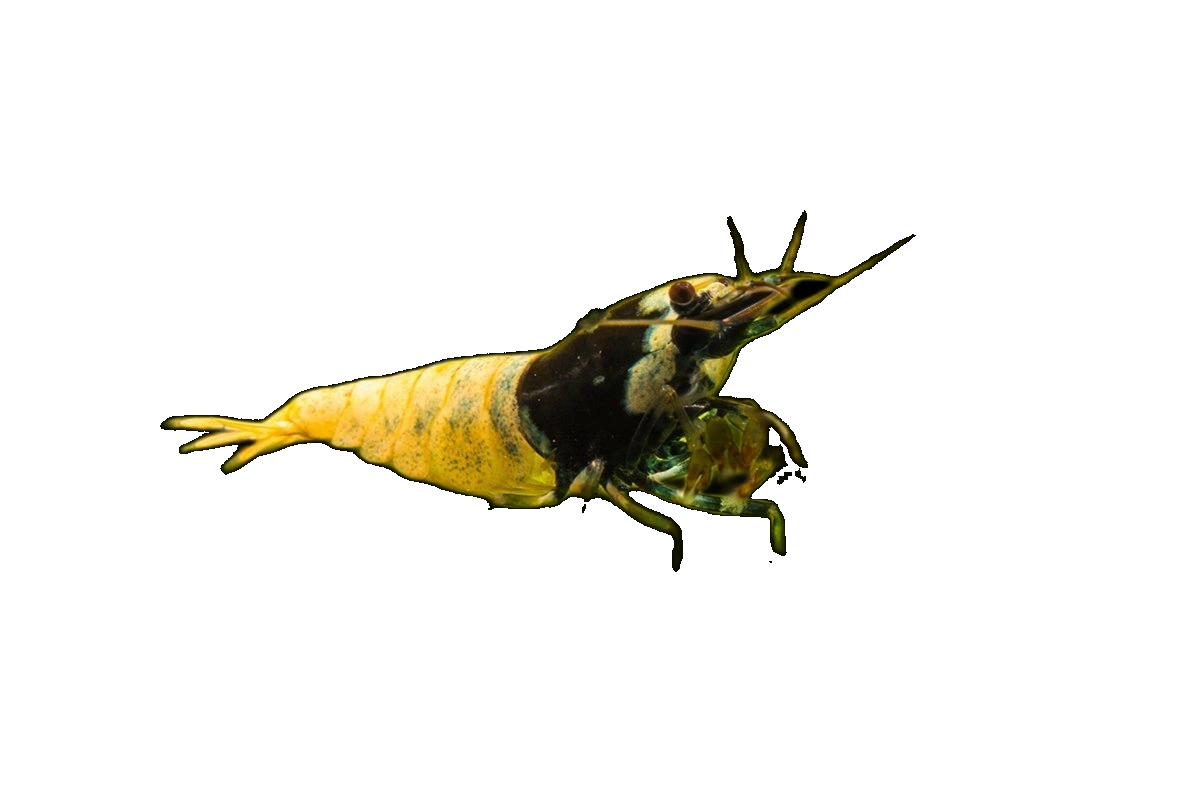
Black Pinto shrimp are a freshwater Caridina 'Taitibee' variety produced by crossing tiger shrimp with Taiwan Bee shrimp and stabilizing the striking black-and-white Zebra or Spotted Head pattern. They are more sensitive to water fluctuations than standard shrimp and need stable, soft, acidic water, making them best for intermediate keepers.
Quick facts
Identity
- Also known as
- Taitibee Pinto; Zebra Pinto; Spotted Head Pinto; Shadow Shrimp
- Synonyms
- Caridina cf. cantonensis; Taitibee
- Environment
- Freshwater
- Native to
- Captive-bred variety
- Habitat
- Man-made hybrid strain with no wild habitat; wild ancestor Caridina cantonensis inhabits cool, oxygen-rich, soft-water mountain streams in southern China and Taiwan
- Sourcing
- Captive-bred
- Conservation
- Not Evaluated
Care
- Care level
- Moderate
- Temperament
- Peaceful
- Adult size
- 0.8 – 1.2 in (2 – 3 cm)
- Lifespan
- 1 – 2 yrs
- Min tank
- 10 gal (38 L)
- Growth rate
- Slow
- Placement
- Bottom
Water
- Temperature
- 68 – 75 °F (20 – 24 °C)
- pH
- 5.8 – 6.8
- GH
- 4 – 6 dGH
- TDS
- 100 – 150 ppm
- dKH
- 0 – 2 dKH
- Flow
- Low-Moderate
Behavior & compatibility
- Social
- Group · groups of 10+
- Aggression to own kind
- Low
- Active
- Daytime
- Invert safe
- Yes
- Plant safe
- Yes
- Shrimp safe
- Yes
- Clean-up role
- Algae, Biofilm, Detritus
- Population boom risk
- Low
Feeding & breeding
- Diet
- Omnivore
- Foods
- Algae, Biofilm, Pellets, Micro-pellets, Vegetables, Freeze-dried
- Breeding type
- Direct development
- Breeding difficulty
- Moderate
- Sexing
- Females grow larger and stockier with a more rounded underside and visible saddle when carrying eggs; males are smaller and slimmer
- Target feeding
- Beneficial
Something wrong or missing? Submit a correction
Care guide
Overview
Black Pinto shrimp are a Taiwan Bee derivative bred from tiger and Taitibee lines, showing irregular black patches over a white body in Zebra or Spotted Head arrangements. Pattern varies shrimp to shrimp and is not genetically fixed, so offspring markings differ from parents. Best kept in a species-only setup with stable, soft, acidic water and minimal disturbance.
Care
Black Pinto shrimp are a Taiwan Bee derivative and need stable, soft, acidic water rather than the wide tolerances of Neocaridina varieties. An active buffering substrate is effectively mandatory to hold pH down and keep KH near zero, and RO or remineralized water is strongly recommended over tap water. Keepers should avoid frequent large water changes and instead favor small, gradual adjustments, since sudden parameter swings are the main cause of losses in this variety.
Feeding
These shrimp graze continuously on biofilm, algae, and decaying botanicals such as catappa leaves, which should be kept in the tank at all times. Supplement with quality shrimp-specific pellets or micro-pellets a few times a week, along with occasional blanched vegetables and mineral-rich powders to support molting. Overfeeding is a bigger risk than underfeeding, so leftovers should be removed within a few hours to protect water quality.
Tank mates
Best housed in a species-only shrimp tank since fish, crabs, and crayfish will prey on juveniles and stress the adults. Small, peaceful, acid-tolerant snails are about the only other livestock considered safe companions. Mixing with other Caridina color varieties should be avoided if maintaining pattern purity is a goal, since they interbreed freely.
Breeding
Breeding occurs readily once a stable colony is established, with females carrying 15-30 eggs under the abdomen for four to six weeks before releasing fully formed miniature shrimp. Because Pinto patterning is not fixed genetically, offspring are unpredictable and can vary widely from their parents in markings and pattern type. Keeping a larger group of ten or more improves breeding success and helps buffer genetic diversity in this selectively bred line.
Health
Sensitivity to copper and other heavy metals is high, so copper-based medications must never be used in a tank housing these shrimp. Because of their inbred lineage, sudden changes in TDS, GH, or temperature can trigger rapid die-offs, and nitrate accumulation is poorly tolerated. Regular molting problems or lethargy usually point to unstable water chemistry or mineral deficiency rather than disease.
Sources
- Pinto Taiwan Bee Care Guide: Parameters, Patterns & Breeding | ShrimpKeeper
- Black Pinto Shrimp: Tropical Fish, Invertebrates, and Amphibians for Freshwater Aquariums – LiveAquaria
- Black Pinto Shrimp (Caridina cf. cantonensis) - Dwarf Shrimp — Buce Plant
- Black Pinto Shrimp - Shadow Shrimp - Taiwan Bee - Caridina sp | Garnelio EN
More Dwarf shrimp
Something wrong or missing? Submit a correction
In the community
Popular tanks using Black Pinto Shrimp
No public tanks are showcasing Black Pinto Shrimp yet.