
Aquatic Plant
Salvinia Cucullata
Salvinia cucullataSalviniaceaeFloating plants
Price: $6.99 USD
Add from My tanks →1 photos
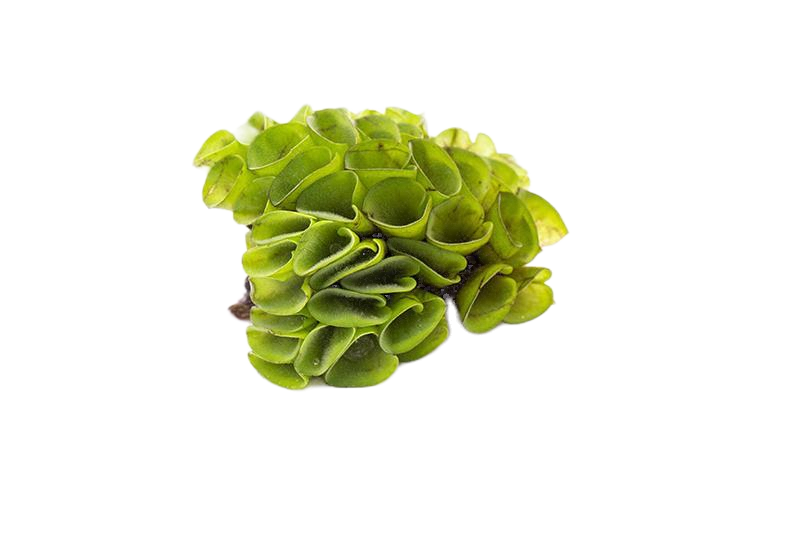
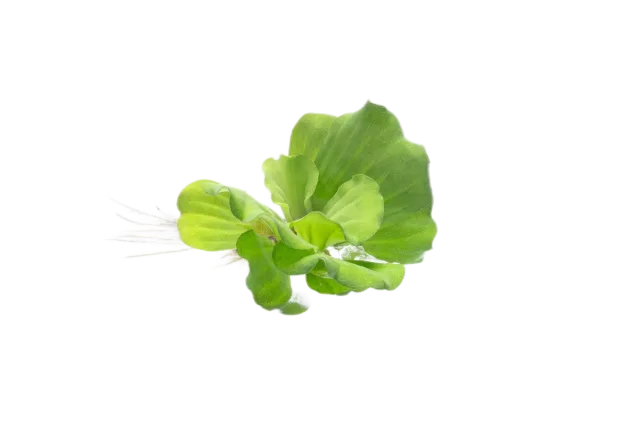
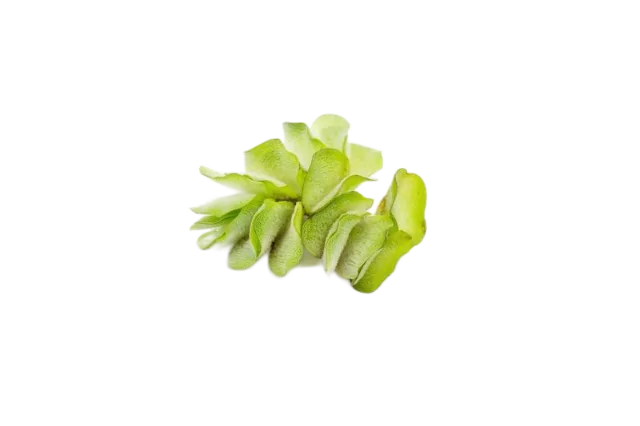
Salvinia Cucullata (Hooded Water Fern) is a less common floating plant with small, nickel-sized leaves featuring pouch-like hooded folds that trap air pockets to keep it buoyant. Unlike other floaters it has short, compact roots, rapidly forming dense mats that shade livestock and help control algae by absorbing excess nitrates.
Quick facts
Identity
- Also known as
- Asian Watermoss; Hooded Water Fern; Hooded Watermoss
- Synonyms
- Salvinia cuccullata Roxb.
- Environment
- Freshwater
- Native to
- South Asia, Southeast Asia
- Habitat
- Still and slow-moving freshwater such as ponds, rice paddies, ditches and wetland margins
- Sourcing
- Aquacultured
- Conservation
- Not Evaluated
Care
- Care level
- Easy
- Growth form
- Floating
- Max height
- 0.5 – 2 in (1.3 – 5.1 cm)
- Spread
- 4 in (10 cm)
- Growth rate
- Fast
- Placement
- Floating
Water
- Temperature
- 68 – 86 °F (20 – 30 °C)
- pH
- 5.5 – 8.0
- GH
- 2 – 15 dGH
- dKH
- 0 – 21 dKH
- Flow
- Low
- Light
- Medium
- CO₂
- Not needed
Planting
- Substrate
- Not needed
- Feeds from
- Water column
- Fertilizer needs
- Medium
- Colors
- Green
Feeding & breeding
- Propagation
- Runners, Plantlets
Something wrong or missing? Submit a correction
Care guide
Overview
Curls into small hooded, pouch-like leaves that trap air and keep the plant afloat, spreading quickly across the surface into a dense mat with short, compact roots trailing below. It stays flat and loses its hooded shape under weak light or lean water. Best kept under still conditions with regular thinning to prevent shading of plants beneath.
Care
A fast-growing floater that needs little more than warm, still water and bright light to look its best. The characteristic hooded, pouch-like leaves only roll up under strong light and nutrient-rich conditions; in dim tanks or lean water the leaves stay flat and the plant loses its trademark shape. Surface agitation is the main enemy, since constant splashing wets the water-repellent leaf hairs and causes rot, so it does best under a still or lightly moving surface. Weekly thinning is necessary once it establishes, as the mat thickens quickly and shades out anything growing beneath it.
Planting & trimming
No planting is required since this is a true floater; simply place a fragment carrying at least one node on the water surface and it will spread on its own. Keep the surface calm and free of drip lines from the tank lid, and leave enough open water surface for gas exchange since a dense mat can restrict oxygenation. Thin the mat by hand every one to two weeks once established to prevent it from shading rooted plants and to keep individual plants healthy.
Fertilizing
Roots are reduced to fine, root-like submerged leaves that pull nutrients directly from the water column, so liquid fertilizer dosed to the water is far more useful than root tabs. It responds strongly to nitrate and phosphate levels, making it an effective nutrient export tool in a heavily stocked or overfed tank. No injected CO2 is needed since the floating leaves draw carbon from the air above the surface, and pale, flattened leaves usually signal insufficient light or nutrients rather than a specific deficiency.
Propagation
Propagation happens naturally through fragmentation, with daughter plants budding off along the horizontal stem at each node and separating without assistance. A single node with an attached leaf pair is enough to regrow a full colony, so surplus plants removed during thinning can be used to start new tanks or discarded.
Problems
Leaf rot is the most common problem, usually triggered by water droplets or splashing sitting on the hairy upper leaf surface. Left untrimmed, the mat can thicken to the point where lower leaves and rooted plants beneath it are deprived of light. Growth that stays flat rather than forming hoods is not disease but simply a sign of low light or lean water rather than a health issue.
Sources
More Floating plants
Something wrong or missing? Submit a correction
In the community
Popular tanks using Salvinia Cucullata
No public tanks are showcasing Salvinia Cucullata yet.