
Aquatic Plant
Azolla Caroliniana
Azolla carolinianaSalviniaceaeFloating plants
Price: $8.99 USD
Add from My tanks →1 photos
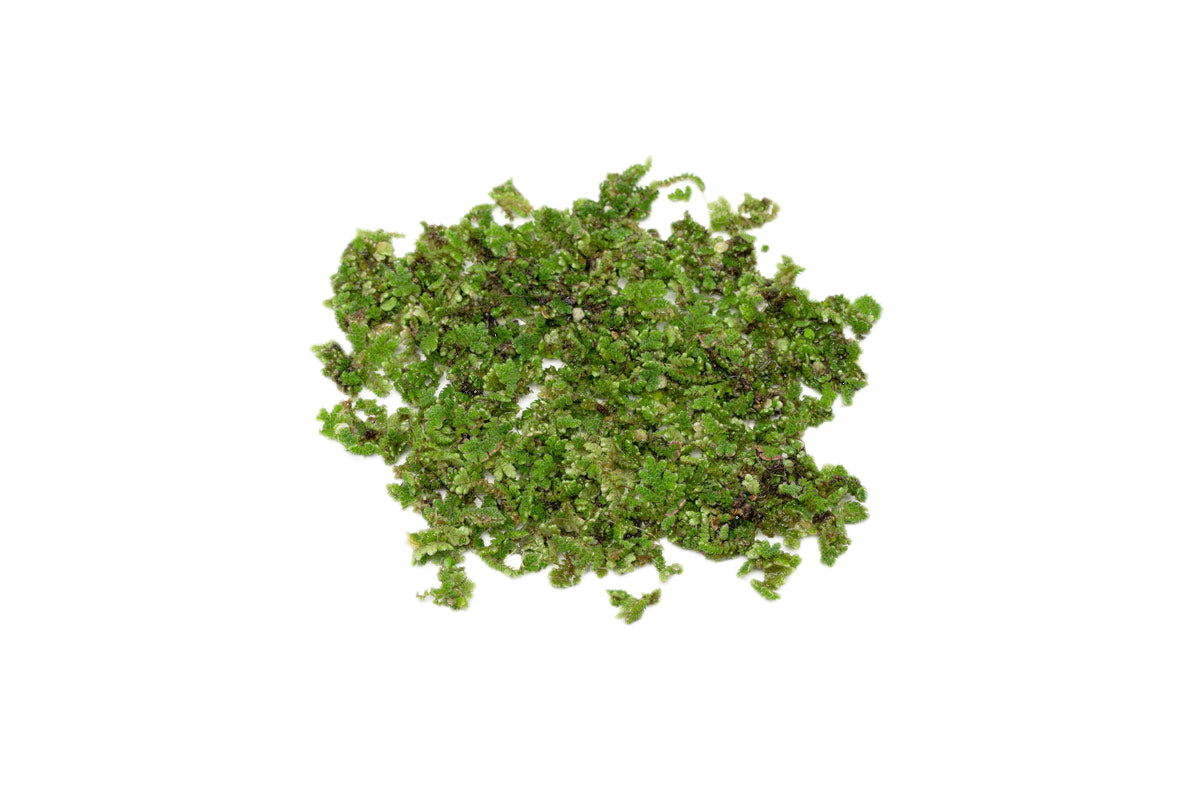
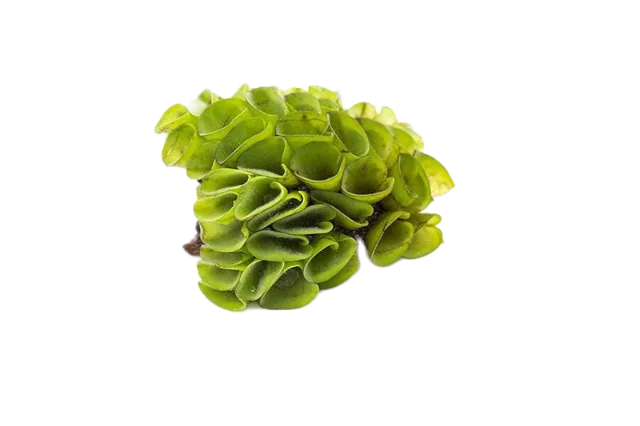
Azolla caroliniana, commonly known as Carolina Water Fern or Fairy Moss, is a tiny, hardy floating fern that forms a micro-textured emerald-green surface carpet. Its fronds blush pink, orange, or crimson under medium to high lighting, and it competes against nuisance algae while providing shade and cover for timid fish, shrimplets, and fry.
Quick facts
Identity
- Also known as
- Mosquito fern; Fairy moss; Carolina mosquito fern; Water fern
- Synonyms
- Azolla cristata
- Environment
- Freshwater
- Native to
- United States, Central America, South America
- Habitat
- Still or slow-moving fresh water such as ponds, ditches, sluggish streams, and swamps
- Sourcing
- Aquacultured
- Conservation
- Not Evaluated
Care
- Care level
- Easy
- Growth form
- Floating
- Max height
- 0.4 in (1 cm)
- Spread
- 0.8 in (2 cm)
- Growth rate
- Fast
- Placement
- Floating
Water
- Temperature
- 60 – 82 °F (16 – 28 °C)
- pH
- 6.0 – 7.5
- GH
- 0 – 15 dGH
- Flow
- Low
- Light
- Medium
- CO₂
- Not needed
Planting
- Substrate
- Not needed
- Feeds from
- Water column
- Fertilizer needs
- Medium
- Colors
- Green, Red, Orange, Brown
Feeding & breeding
- Propagation
- Runners
Something wrong or missing? Submit a correction
Care guide
Overview
Suited to low-flow community and shrimp tanks looking for surface cover, this floater forms a dense micro-textured mat of fronds under half an inch across. Colour shifts from gray-green to orange and red under stronger light, staying plain green when dim. Fast-growing and undemanding, it needs regular thinning and still water to avoid sinking and rot.
Care
A tiny free-floating fern that forms a dense, textured mat across the water's surface, with individual fronds barely reaching half an inch across. Under bright light the pinnate fronds shift from gray-green to shades of orange and red, while lower light keeps them a plain green. It tolerates a wide range of temperatures and water chemistry, making it one of the more forgiving floaters for both tropical tanks and cooler setups, but it needs still or very gently moving water since strong surface agitation from filter output will push it under and cause it to rot.
Planting & trimming
Simply scatter portions across the water's surface; it is never planted in substrate and needs a calm or very slow-flow area to stay in place. Because it multiplies so quickly, regular thinning with a net is necessary to keep enough open water surface for gas exchange and to prevent shading of submerged plants. It can also be grown emersed in damp, humid conditions outside the main display.
Fertilizing
Roots dangle freely in the water column and absorb nutrients directly, so no substrate feeding is involved. Good growth and reddening depend on adequate phosphorus, potassium, and iron in the water column; a lack of phosphorus can stall growth almost immediately. Liquid fertilization suited to floating plants works better here than root tabs, and the fern's rapid nutrient uptake makes it a useful tool for pulling excess nitrate and phosphate out of a tank.
Propagation
Propagation is almost entirely vegetative: lateral branches break away from the parent mat and form new independent colonies. A small portion moved to a new container with suitable light and nutrients will quickly establish and spread on its own. Sexual reproduction via spores occurs in nature but is rarely relevant in aquarium culture.
Problems
Left unchecked it multiplies quickly and can blanket the entire surface, cutting off light to plants below and, in stagnant water, contributing to nighttime oxygen depletion. Fronds trapped under filter outflow or strong current tend to sink and rot rather than recovering. Aside from overgrowth and current sensitivity, it has few disease issues and is not usually eaten by fish.
Sources
More Floating plants
Something wrong or missing? Submit a correction
In the community
Popular tanks using Azolla Caroliniana
No public tanks are showcasing Azolla Caroliniana yet.