
Moss
Peacock Moss
Taxiphyllum sp.HypnaceaeMosses
Price: $28.99 USD
Add from My tanks →1 photos
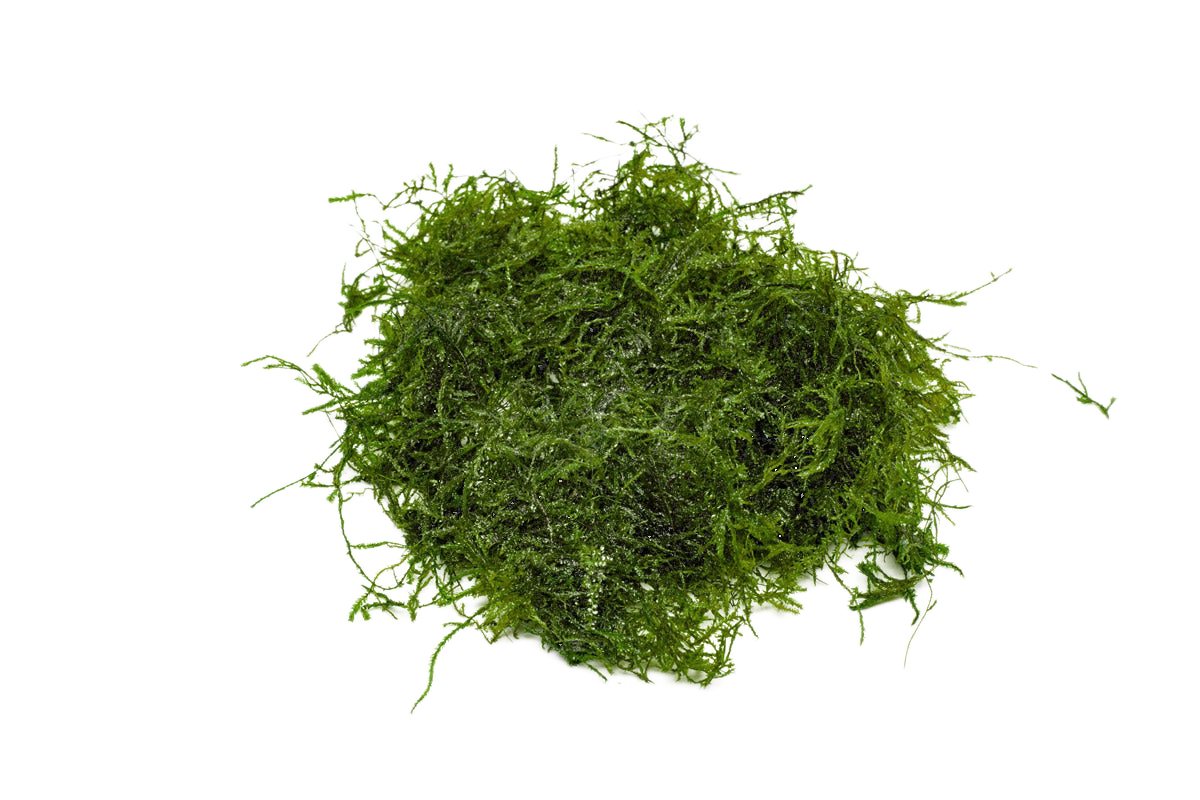
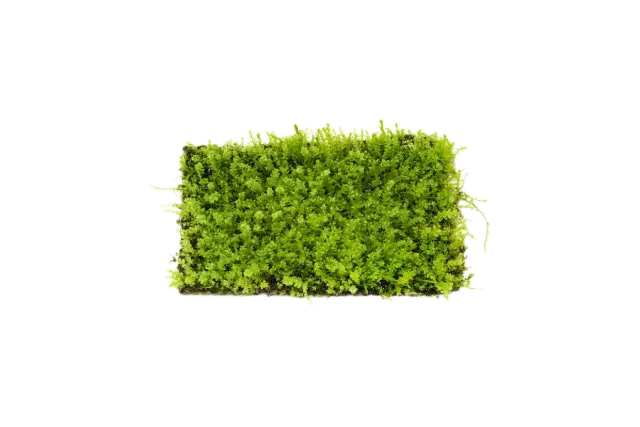
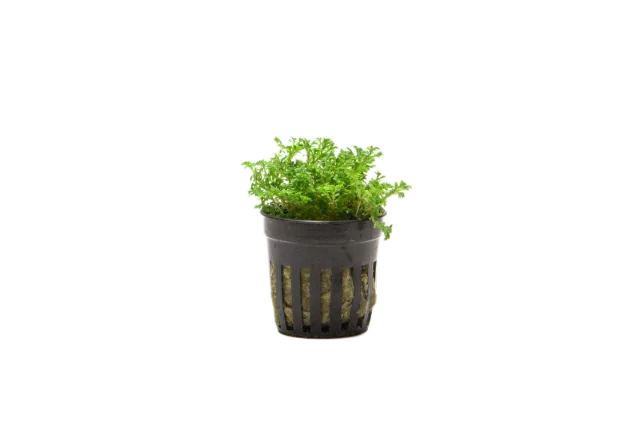
Peacock Moss is a spectacular way to show off some serious natural style, giving your aquascape a velvety look. Its bright green, dense, triangular-shaped fronds grow in flat, horizontal tufts mimicking a peacock's tail; once settled it becomes a lush, dense bush sheltering shy fish and shrimp.
Quick facts
Identity
- Also known as
- null
- Synonyms
- Taxiphyllum sp. 'Spiky Moss'; Taxiphyllum sp. 'Peacock Moss'; Taxiphyllum sp. 'Flame'; Taxiphyllum sp. 'Mini Christmas Moss'
- Environment
- Freshwater
- Native to
- Southeast Asia, China, Singapore
- Habitat
- Grows submersed and emersed on wood, rock, and damp banks along slow streams and ponds in shaded, humid forest environments
- Sourcing
- Captive-bred
- Conservation
- Not Evaluated
Care
- Care level
- Easy
- Growth form
- Moss
- Max height
- 1 – 4 in (2.5 – 10 cm)
- Spread
- 12 in (30 cm)
- Growth rate
- Moderate
- Placement
- Epiphyte, Foreground, Midground, Background, Carpet
Water
- Temperature
- 59 – 82 °F (15 – 28 °C)
- pH
- 5.5 – 7.5
- GH
- 2 – 15 dGH
- dKH
- 0 – 14 dKH
- Flow
- Low-Moderate
- Light
- Low
- CO₂
- Beneficial
Planting
- Substrate
- Not needed
- Feeds from
- Water column
- Fertilizer needs
- Low
- Colors
- Green
Feeding & breeding
- Propagation
- Splitting, Rhizome division
Something wrong or missing? Submit a correction
Care guide
Overview
Growing to a modest spread of several inches, Peacock Moss produces flat, triangular fronds arranged in horizontal tufts that fan outward like a tail. It stays low and bushy once anchored to hardscape, offering cover for shrimp and small fish. Growth is moderate under low to moderate light.
Care
This moss group tolerates a wide range of water conditions and low light, making it forgiving for beginners while still rewarding higher light and CO2 with denser, more compact growth. It should be tied or glued to driftwood, rock, or mesh rather than planted in substrate, since the rhizoids need a hard surface to grip. Periodic trimming keeps the cushion tidy and prevents the shaded inner layers from thinning and trapping detritus.
Planting & trimming
Attach small portions to driftwood, rock, or mesh using cotton thread, fishing line, or aquarium-safe cyanoacrylate glue, spacing tufts to allow room for lateral spread. Do not bury the rhizoids in substrate, since this promotes rot rather than attachment. Once it has anchored itself after a few weeks, trim the outer fronds to maintain the desired shape and encourage denser branching.
Fertilizing
As a moss it draws most nutrients directly from the water column rather than roots, so a liquid or all-in-one fertilizer dosed regularly is more effective than root tabs. Iron and micronutrient deficiency can show up as pale or yellowing tips, especially under higher light without supplementation. In a well-stocked tank with regular water changes, additional feeding is often unnecessary since fish waste provides ample nutrients.
Propagation
Propagate by cutting or splitting off sections of established moss and re-attaching them to new hardscape with thread or glue. Trimmed clippings can also be scattered loosely over a surface where they will eventually attach on their own. Growth is slow to medium, so it takes several weeks to months for fragments to establish into a full cushion.
Problems
Detritus and diatoms can accumulate within dense inner sections if the cushion is not trimmed and flow is poor, leading to brown or blackened patches. Melt is uncommon in this group compared to true aquatic plants, but portions that were kept dry too long during shipping may brown and need to be cut away. New growth typically fills in within a few weeks once the moss is established on its anchor material.
Sources
Varieties in the catalog
More Mosses
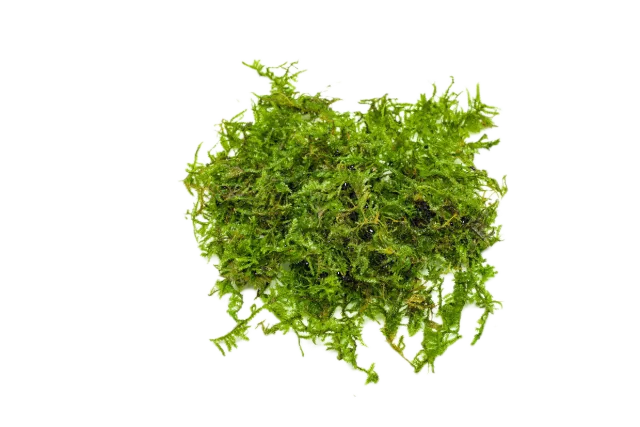
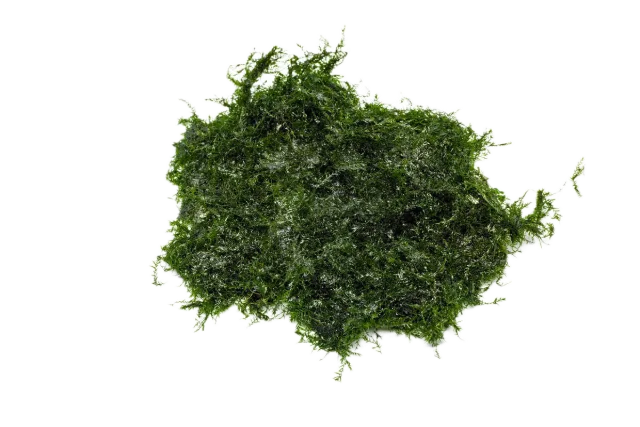
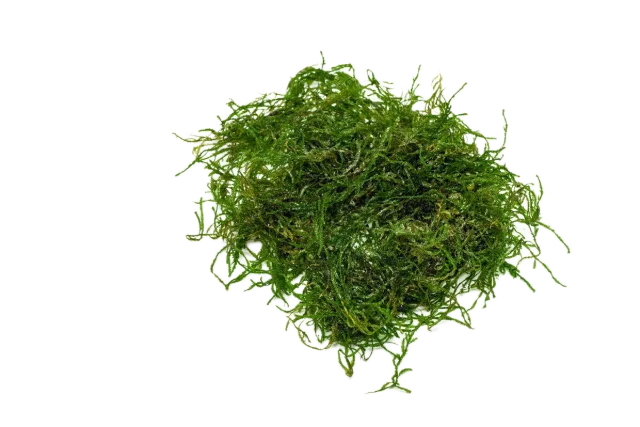
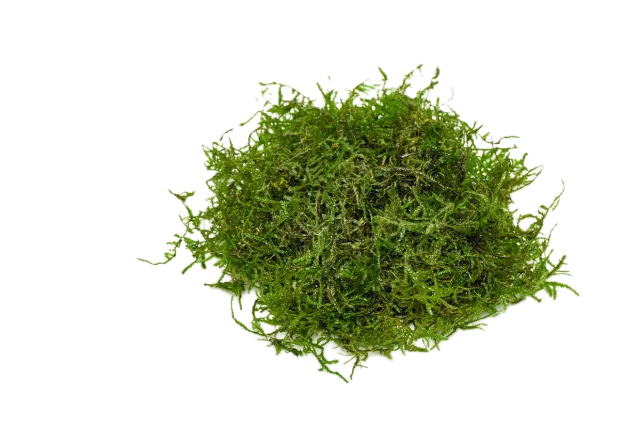
Something wrong or missing? Submit a correction
In the community
Popular tanks using Peacock Moss
No public tanks are showcasing Peacock Moss yet.