Aquatic Plant
Amazon Sword
Echinodorus bleheriAlismataceaeSword plants
Price: $12.99 USD
Add from My tanks →1 photos
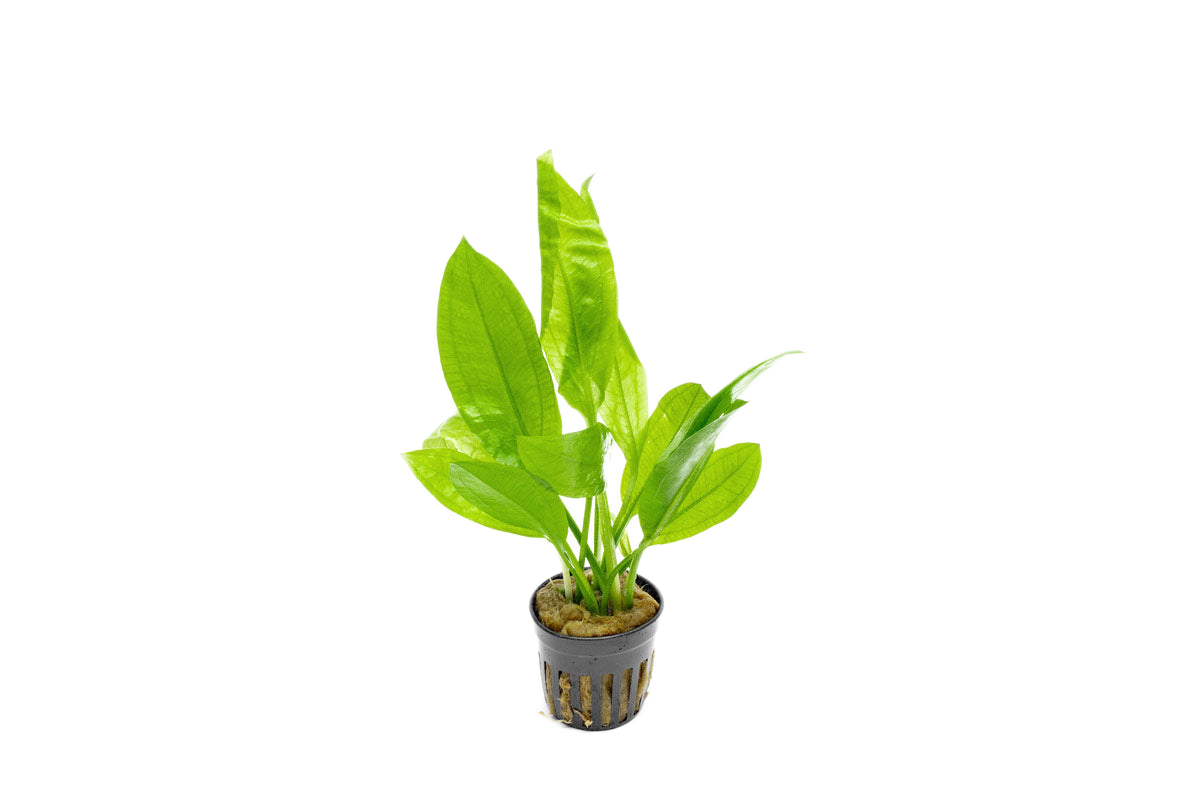
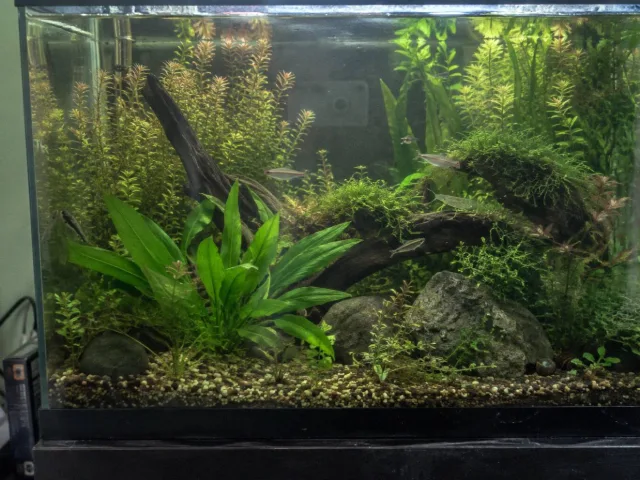
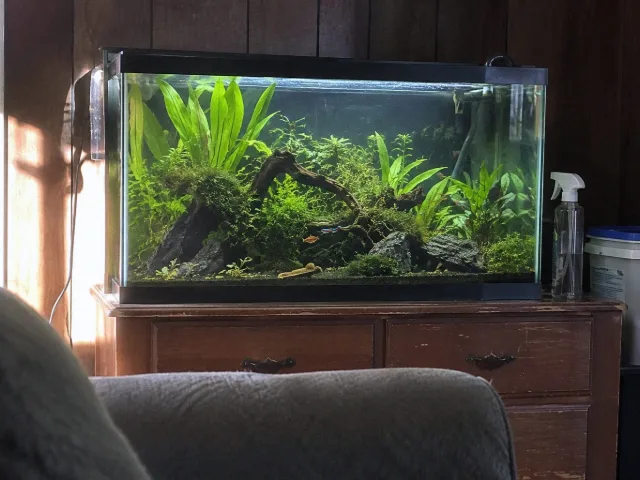
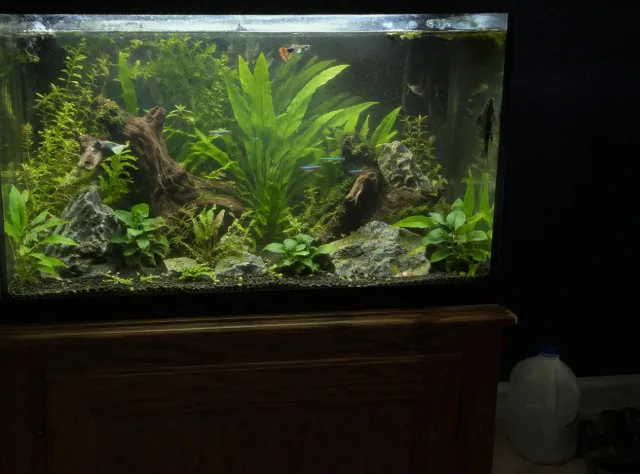
Echinodorus Bleheri (Amazon Sword) is beautiful and easy to care for, offering excellent background coverage. Short stems grow in a rosette of long, ovoid, pointed leaves, dark or bright green with prominent veins; grows submersed or emersed in nutrient-rich substrate, no CO2 required.
Quick facts
Identity
- Also known as
- Broad Leaf Amazon Sword; Amazonicus Sword
- Synonyms
- Echinodorus paniculatus; Echinodorus pangeri
- Environment
- Freshwater
- Native to
- Brazil, Peru, Colombia
- Habitat
- Shallow, nutrient-rich rivers, streams, and boggy margins in tropical South America, growing both submerged and emersed along riverbanks
- Sourcing
- Aquacultured
- Conservation
- Not Evaluated
Care
- Care level
- Easy
- Growth form
- Rosette
- Max height
- 6 – 20 in (15 – 51 cm)
- Spread
- 18 in (46 cm)
- Growth rate
- Moderate
- Placement
- Midground, Background
Water
- Temperature
- 72 – 82 °F (22 – 28 °C)
- pH
- 6.5 – 7.5
- GH
- 4 – 18 dGH
- dKH
- 3 – 8 dKH
- PAR
- 30 – 50 PAR
- Flow
- Low-Moderate
- Light
- Medium
- CO₂
- Beneficial
Planting
- Substrate
- Nutrient-rich preferred
- Feeds from
- Roots
- Fertilizer needs
- High
- Colors
- Green
Feeding & breeding
- Propagation
- Rhizome division, Plantlets, Adventitious plantlets, Seeds
Something wrong or missing? Submit a correction
Care guide
Overview
Background and midground tanks of 29 gallons or more suit this rosette plant well, since its long, ovoid leaves eventually reach up to 20 inches. Medium light and a nutrient-rich substrate with regular root tabs keep growth compact and leaves full. Its crown must stay above the substrate line to avoid rot.
Care
Amazon sword adapts to a wide range of water chemistry and is considered one of the more forgiving background plants for freshwater tanks. Medium lighting produces the best leaf color and compact growth, though it tolerates lower light with slower, less dense growth. Because of its eventual size, give it plenty of clearance from other plants and prune older outer leaves as they yellow or become tattered.
Planting & trimming
Plant with roots buried but the crown resting at or just above the substrate surface, since covering it causes rot within weeks. Space plants roughly 10-12 inches apart to allow for its mature spread, and anchor newly planted specimens for the first few days as they may float before rooting. Older outer leaves can be trimmed at the base as they die back to keep the rosette tidy.
Fertilizing
This is a heavy root feeder that draws most of its nutrition through a substantial root system rather than the water column. Root tabs pushed into the substrate near the roots every 4-8 weeks, or a nutrient-rich aquasoil, keep growth steady and leaves full-sized. Iron deficiency shows up as yellowing new leaves, which is corrected with chelated iron dosing or iron-rich root tabs.
Propagation
Propagates readily through adventitious plantlets that form at the base of the parent rosette or on runners; these can be separated once they have developed a few roots and replanted. When grown emersed it may send up a flower stalk that produces plantlets at the nodes, which root once they contact substrate or water. Seed propagation via hand pollination of emersed flowers is possible but rarely practiced by hobbyists.
Problems
Leaves that pale or yellow, especially new growth, usually indicate iron or micronutrient deficiency rather than disease. Burying the crown is the most common cause of rot and plant loss, so the point where leaves emerge should always stay above the substrate line. Algae can accumulate on the broad, long-lived leaves under high light with insufficient fertilization, so nutrient balance should be matched to light intensity.
Sources
More Sword plants
Something wrong or missing? Submit a correction
In the community