
Aquatic Plant
Echinodorus Grandifolius
Echinodorus grandiflorusAlismataceaeSword plants
Price: $7.99 USD
Add from My tanks →1 photos
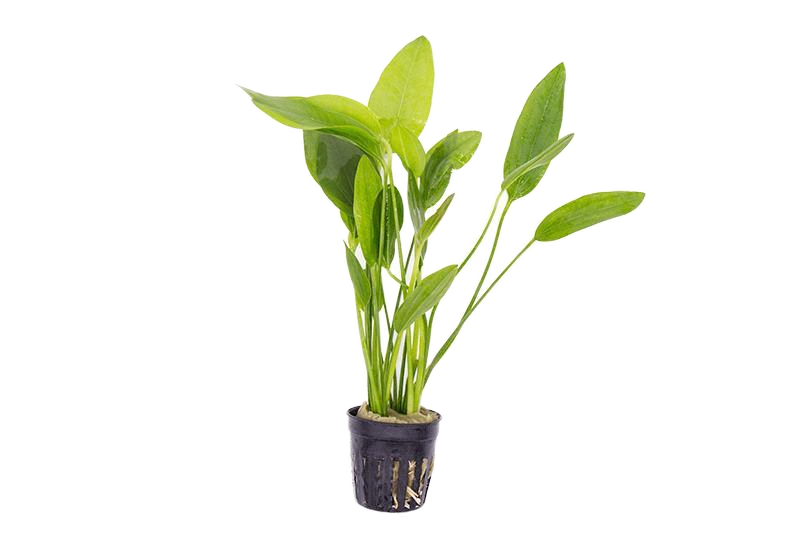
Echinodorus Grandifolius is a rare Amazon Sword with large growth and beautiful green coloration; a slow grower that can reach over 20 inches in nutrient-rich substrate. Plant directly into substrate, supplementing root tabs in inert substrates as heavy root feeders; easy and undemanding, suited for larger tanks.
Quick facts
Identity
- Also known as
- Large-flowered sword; Amazon sword
- Synonyms
- Echinodorus floribundus; Echinodorus argentinensis; Echinodorus floridanus
- Environment
- Freshwater
- Native to
- Brazil, Uruguay, Argentina, Paraguay
- Habitat
- Rivers, riverbanks, and marshy river deltas along the southeastern South American coast, often in sticky mud in seasonally flooded areas
- Sourcing
- Captive-bred
- Conservation
- Not Evaluated
Care
- Care level
- Easy
- Growth form
- Rosette
- Max height
- 6 – 40 in (15 – 102 cm)
- Spread
- 20 in (51 cm)
- Growth rate
- Slow
- Placement
- Background
Water
- Temperature
- 70 – 82 °F (21 – 28 °C)
- pH
- 6.0 – 7.5
- GH
- 3 – 15 dGH
- Flow
- Low-Moderate
- Light
- High
- CO₂
- Beneficial
Planting
- Substrate
- Nutrient-rich preferred
- Feeds from
- Roots
- Fertilizer needs
- High
- Colors
- Green
Feeding & breeding
- Propagation
- Runners, Seeds
Something wrong or missing? Submit a correction
Care guide
Overview
Mature specimens can top 20 inches, with broad green rosette leaves that eventually breach the surface in tall or open-top tanks. It suits large background plantings in 55-gallon-plus setups with deep, nutrient-rich substrate and bright light. New leaves often emerge with a reddish-gold flush before turning green, a normal trait rather than a sign of deficiency.
Care
A large background rosette plant best reserved for tanks with real depth and height, since mature leaves readily reach the surface and beyond. Bright lighting and a nutrient-rich substrate bring out its best growth, and it tolerates a fairly broad range of pH and hardness once established. Because it pushes leaves above the waterline given the chance, an open-top setup or regular trimming of the tallest leaves keeps it manageable in a closed aquarium.
Planting & trimming
Plant the rhizome and root crown directly into a deep, nutrient-rich substrate, leaving the crown itself unburied so new leaves can emerge freely. Space it well away from other plants given its eventual size, and expect it to need a substrate depth of several inches to accommodate its extensive root system. Regularly trim the largest, oldest leaves that reach the surface to keep growth submerged and prevent shading of other plants.
Fertilizing
This species is a heavy root feeder and benefits from root tabs or a nutrient-rich substrate layer, especially in inert gravel or sand setups. Supplemental iron helps maintain leaf color and prevents pale or chlorotic new growth. Liquid fertilization can support the water column but should not replace substrate feeding for this plant.
Propagation
Propagates mainly by runners that produce plantlets at their tips, which can be separated once they have developed their own root systems and replanted in substrate. Seed propagation is possible but rarely used in aquarium culture. Division of offshoots from the mother rhizome is another option as the plant matures.
Problems
New leaves may emerge with a reddish-golden tint before greening up, which is normal rather than a deficiency. Yellowing or pale leaves under insufficient light or nutrient shortage indicate a need for more iron or root tabs. Emersed growth above the waterline can shade out submerged plants below it if left unchecked, so trimming tall leaves helps maintain balance in the tank.
Sources
More Sword plants
Something wrong or missing? Submit a correction
In the community
Popular tanks using Echinodorus Grandifolius
No public tanks are showcasing Echinodorus Grandifolius yet.