
Aquatic Plant
Vallisneria Gigantea 'Rubra'
Vallisneria gigantea 'Rubra'HydrocharitaceaeVallisneria
Price: $20.97 USD
Add from My tanks →1 photos
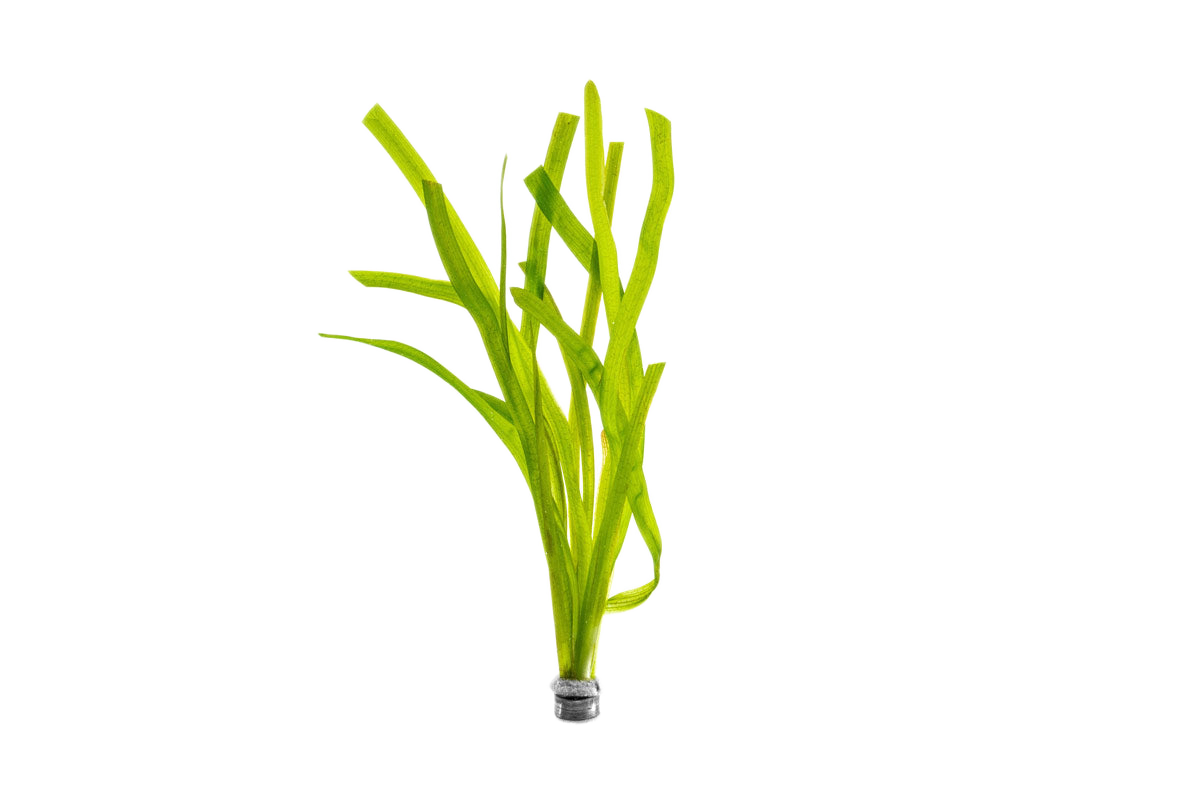
Vallisneria Gigantea Rubra (Giant Val Rubra) is a variant of giant vals whose leaves can develop a reddish hue. It grows tall and fast as a perfect background plant creating a jungle-like appearance, spreading along side shoots as a nutrient-loving plant that anchors deep into the substrate.
Quick facts
Identity
- Also known as
- Red Jungle Vallisneria; Giant Red Vallisneria; Rubra Giant Red; Red Giant Val
- Synonyms
- Vallisneria gigantea 'Rubra'; Vallisneria gigantea rubra
- Environment
- Freshwater
- Native to
- Australia
- Habitat
- Rooted in lakes, rivers and slow-moving streams, often in soft acid to hard alkaline water
- Sourcing
- Aquacultured
- Conservation
- Not Evaluated
Care
- Care level
- Easy
- Growth form
- Rosette
- Max height
- 12 – 36 in (30 – 91 cm)
- Spread
- 12 in (30 cm)
- Growth rate
- Fast
- Placement
- Background
Water
- Temperature
- 64 – 82 °F (18 – 28 °C)
- pH
- 6.5 – 8.0
- GH
- 3 – 20 dGH
- Flow
- Moderate
- Light
- Medium
- CO₂
- Not needed
Planting
- Substrate
- Nutrient-rich preferred
- Feeds from
- Roots
- Fertilizer needs
- Medium
- Colors
- Green, Red, Brown
Feeding & breeding
- Propagation
- Runners
Something wrong or missing? Submit a correction
Care guide
Overview
Bronze-red ribbon leaves distinguish this Vallisneria from the plain green form, with coloration intensifying under strong light and fading to green if lighting is weak. A fast-growing background rosette for larger tanks, it roots deeply, sends out runners readily, and needs periodic thinning to keep its spread in check.
Care
Red Jungle Vallisneria is a hardy, undemanding tape grass suited to larger aquariums where its ribbon-like leaves can stretch toward the surface. It tolerates a wide range of water chemistry and does not require CO2 supplementation, though strong lighting is needed to bring out the reddish-bronze leaf tones; under weaker light the plant simply grows green. Once established it sends out runners freely and can colonize a substantial footprint if daughter plants are not thinned periodically.
Planting & trimming
Push the roots into the substrate with the crown left exposed above the surface, since burying the crown invites rot. It anchors deeply and resists being uprooted by digging fish once established. Avoid heavy pruning of mature leaves; instead remove only fully dead leaves at their base.
Fertilizing
As a heavy root feeder, this plant benefits from root tabs pushed into the substrate near the crown, along with iron and a general liquid fertilizer for the water column. Pale or thin new leaves often signal a lack of iron or micronutrients rather than a lighting problem. It grows in plain sand but reaches its full size and coloration much faster in a nutrient-rich substrate.
Propagation
This plant spreads mainly through runners sent out beneath or along the substrate, each producing a daughter plant with its own root system. New plantlets can be left attached to form a dense colony or separated and replanted elsewhere once rooted. Unwanted runners should be pulled early if a spreading carpet effect at the back of the tank is not desired.
Problems
Cut or damaged leaves tend to rot back from the wound rather than heal, so trimming should be limited to removing dead or dying tissue at the base. Sudden shifts in water parameters or transplant stress can trigger melt, where leaves die back before regrowing once the plant resettles. Poor flow around dense leaf clusters can allow detritus and algae to accumulate on the foliage.
Sources
More Vallisneria
Something wrong or missing? Submit a correction
In the community
Popular tanks using Vallisneria Gigantea 'Rubra'
No public tanks are showcasing Vallisneria Gigantea 'Rubra' yet.