
Terrarium Plant
Umbrella Moss
Rhodobryum giganteumBryaceaeMosses
Price: $15.65 USD
Add from My tanks →1 photos
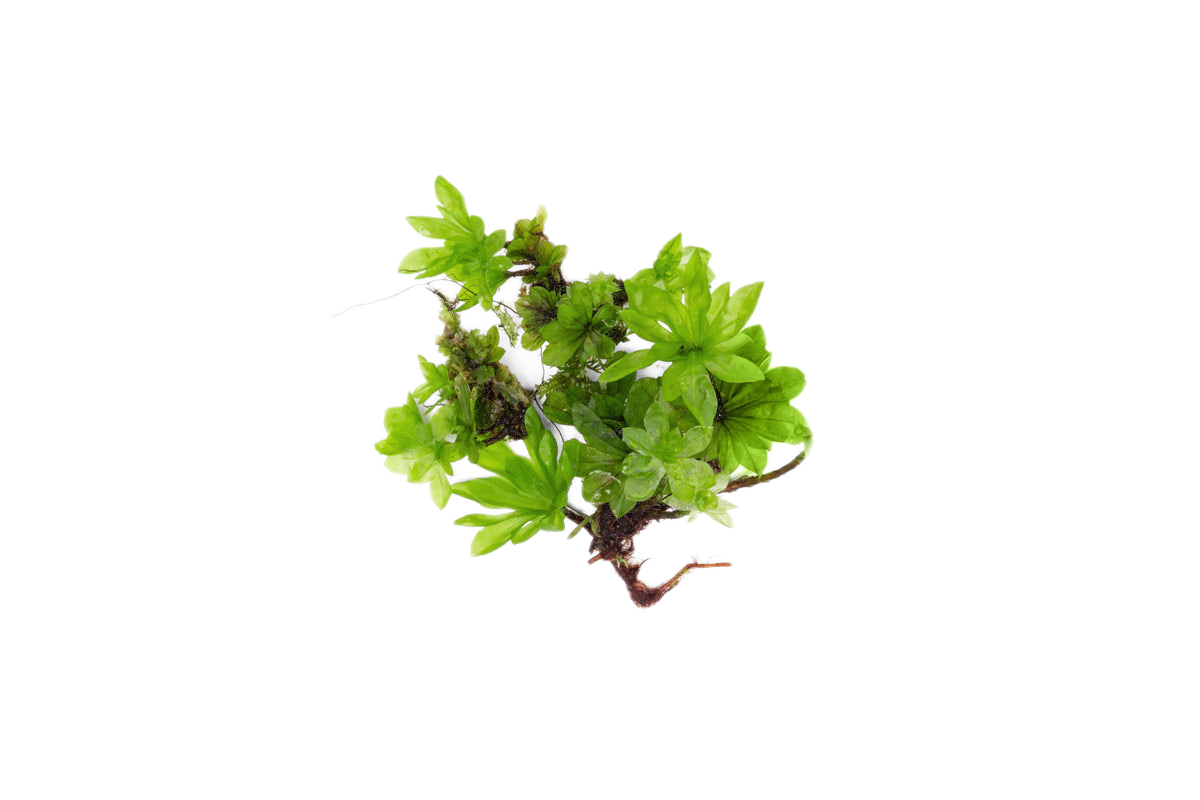
Umbrella Moss (Rhodobryum giganteum), also called Giant Rose Moss, is a slow-growing terrestrial moss forming miniature rosette crowns that resemble tiny green roses or umbrellas. Native to shaded Asian woodlands, it suits humid terrariums above the water line with medium indirect light and regular misting; it cannot survive submerged.
Quick facts
Identity
- Also known as
- Giant Rose Moss; Rose Moss
- Synonyms
- Rhodobryum giganteum var. giganteum
- Environment
- Terrestrial
- Native to
- China, Japan, Korea, India
- Habitat
- Shaded, humid forest floors and understory of deciduous and coniferous woodlands, growing in rich humus and on damp rocks near tree bases
- Sourcing
- Both
- Conservation
- Not Evaluated
Care
- Care level
- Easy
- Growth form
- Moss
- Max height
- 0.5 – 2 in (1.3 – 5.1 cm)
- Spread
- 4 in (10 cm)
- Growth rate
- Slow
- Placement
- Foreground, Carpet, Epiphyte
Water
- Temperature
- 65 – 80 °F (18 – 27 °C)
- Humidity
- 70 – 95%
Planting
- Substrate
- Nutrient-rich preferred
- Fertilizer needs
- Low
- Colors
- Green
Feeding & breeding
- Propagation
- Rhizome division, Splitting
Something wrong or missing? Submit a correction
Care guide
Overview
Humid terrariums, vivariums, and paludariums above the waterline suit this moss best, as it cannot be grown submerged. Its rosette clusters form a low, dense mat of tiny green rose-like crowns, spreading slowly across damp substrate or hardscape crevices in shaded to partially lit spots. Regular misting and good drainage keep it from browning or rotting at the base.
Care
Umbrella moss is grown exclusively as a terrestrial or emersed plant in high-humidity terrariums, vivariums, and paludariums above the waterline, never submerged. It does best in medium, indirect light and consistent moisture without waterlogging, since stagnant conditions at the base promote rot. Growth is slow, so patience is needed before the rosette clusters fill in and form a dense, textured mat resembling tiny green roses.
Planting & trimming
Press small clusters or clumps directly onto damp, moisture-retentive but well-draining substrate such as sphagnum, or wedge them into hardscape crevices above the waterline. Keep the growing area shaded to partially lit with filtered, indirect light and mist regularly to maintain high ambient humidity. Trim old or browning foliage occasionally with sharp shears to keep clusters neat and encourage compact new rosette growth.
Fertilizing
As a moss it draws most of its nutrients from ambient humidity and moisture rather than a fertilized substrate, so dedicated fertilization is rarely necessary. Occasional misting with dechlorinated or low-mineral water helps supply trace nutrients while keeping foliage from drying out. Yellowing or browning rosettes usually indicate insufficient humidity rather than a true nutrient deficiency.
Propagation
Propagate by gently separating established rosette clusters and pressing the divided sections into new areas of damp substrate or hardscape, where they will root in and expand over time. Spore propagation is possible but slow and less practical for hobbyists, typically taking several weeks to germinate under consistently humid, shaded conditions. Division is the most reliable and commonly used method in terrarium culture.
Problems
Rosettes can dry out and brown at the tips if humidity drops or airflow becomes too strong, so a well-sealed enclosure with regular misting prevents desiccation. Conversely, waterlogged substrate or standing water at the base can cause the rhizoids to rot, so drainage is important. Mold or algae can occasionally appear on the substrate around the moss in overly stagnant, poorly ventilated setups.
Sources
More Mosses
Something wrong or missing? Submit a correction
In the community
Popular tanks using Umbrella Moss
No public tanks are showcasing Umbrella Moss yet.