
Terrarium Plant
Selaginella Willdenowii
Selaginella willdenowiiSelaginellaceaeMosses
Price: $9.99 USD
Add from My tanks →1 photos
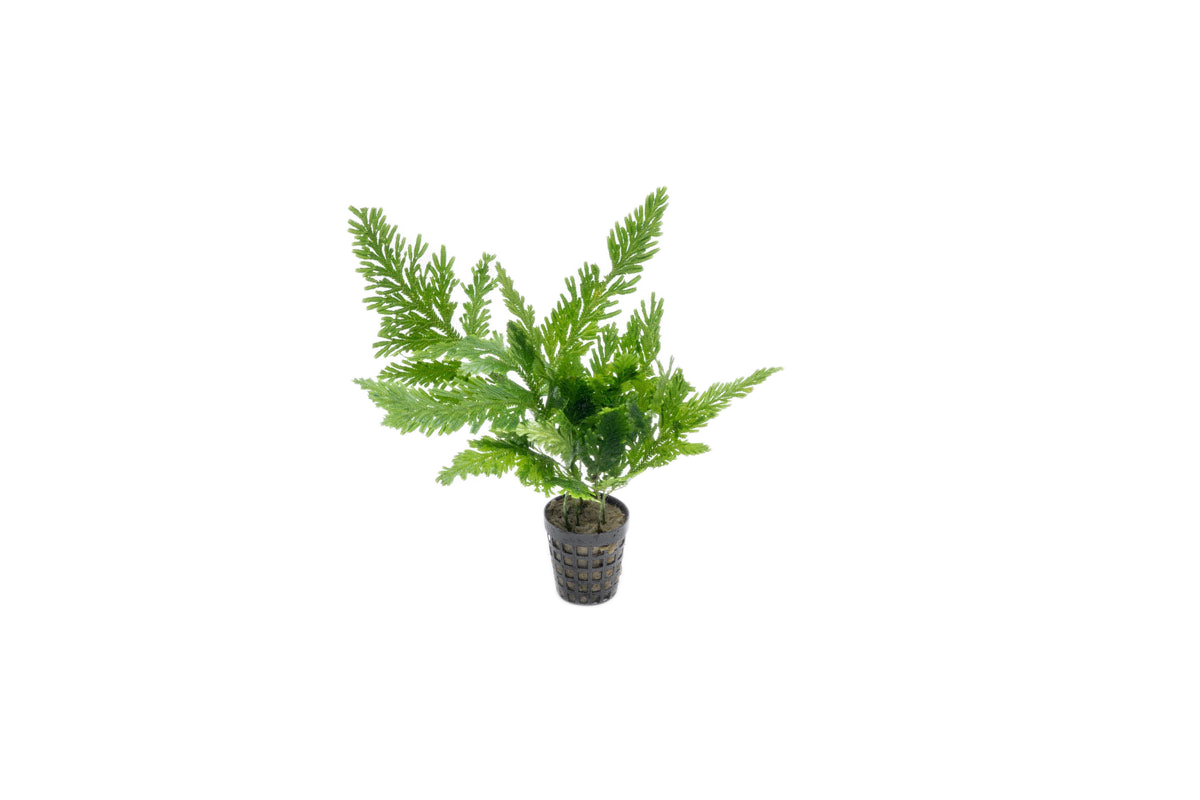
Selaginella Willdenowii (Club Moss, Spike Moss) is a primitive fern-moss-like plant with an attractive blue sheen on its leaves when light hits it. It suits emersed setups with fair humidity under a rainforest canopy, is easy care with partial shade, and can reach 2 feet tall but be kept at any size; it must never be submerged.
Quick facts
Identity
- Also known as
- Peacock Fern; Blue Spike Moss; Blue Club Moss; Vine Spike Moss; Trailing Moss
- Synonyms
- Lycopodium willdenowii
- Environment
- Terrestrial
- Native to
- Malaysia, Indonesia, Philippines, Singapore, Southeast Asia
- Habitat
- Forest floors of humid tropical rainforests, often scrambling or twining over other low vegetation, rocks, and tree trunks in deep shade
- Sourcing
- Captive-bred
- Conservation
- Not Evaluated
Care
- Care level
- Easy
- Growth form
- Rhizome
- Max height
- 4 – 24 in (10 – 61 cm)
- Spread
- 20 in (51 cm)
- Growth rate
- Moderate
- Placement
- Foreground, Midground, Carpet
Water
- Temperature
- 68 – 82 °F (20 – 28 °C)
- Humidity
- 70 – 90%
Planting
- Substrate
- Nutrient-rich preferred
- Feeds from
- Roots
- Fertilizer needs
- Low
- Colors
- Green, Blue, Teal, Pink
Feeding & breeding
- Propagation
- Cuttings, Rhizome division
Something wrong or missing? Submit a correction
Care guide
Overview
Suited to shaded paludariums and high-humidity terrariums rather than aquariums, since this lycophyte cannot tolerate submersion. Its fronds carry an iridescent blue-green sheen that fades under direct light, so filtered shade preserves the effect. Growth is slow and creeping, spreading over damp substrate or moss walls and trimmed easily to size.
Care
This lycophyte does well in the low, filtered light of a shaded terrarium or paludarium and does not tolerate strong direct sun, which fades the iridescent blue-green sheen and can scorch the fronds. Constant high humidity is essential, and the substrate should stay evenly moist without becoming waterlogged. It spreads slowly by creeping stems and rhizomes across the substrate surface or up humid backgrounds, and can be trimmed back whenever it outgrows its space.
Planting & trimming
Remove any packing material from the roots and press the rhizome lightly into a moisture-retentive, well-draining mix such as coco fiber, peat, and sand or perlite, keeping the growing tips at the surface rather than buried. It can also be laid to creep across damp substrate or moss walls in a paludarium, where it will root along the stem as it spreads. Regular misting during establishment helps it settle in before humidity levels stabilize.
Fertilizing
A diluted liquid foliage fertilizer applied every few weeks supports steady growth and helps maintain the leaf coloration, though this species is not a heavy feeder. Root tabs are unnecessary since most nutrient uptake occurs through the fine surface roots and rhizome rather than a deep root system. Yellowing leaves usually point to overwatering or waterlogged substrate rather than a nutrient deficiency.
Propagation
New plants are easily started from stem cuttings placed on or just into moist substrate under high humidity, where roots form readily within a few weeks. Sections of rhizome with attached roots can also be divided and replanted. Consistent warmth and moisture during propagation greatly improve success rates.
Problems
Yellowing or blackened fronds most often signal excess moisture at the base or poor substrate drainage rather than disease. Fungal issues can appear if humidity is high but air circulation is poor, so light ventilation helps prevent rot. Fading of the characteristic blue iridescence usually means the plant is receiving too much direct light.
Sources
More Mosses
Something wrong or missing? Submit a correction
In the community
Popular tanks using Selaginella Willdenowii
No public tanks are showcasing Selaginella Willdenowii yet.