
Aquatic Plant
Schismatoglottis Roseospatha
Schismatoglottis roseospathaAraceaeAroids
Price: $21.99 USD
Add from My tanks →1 photos
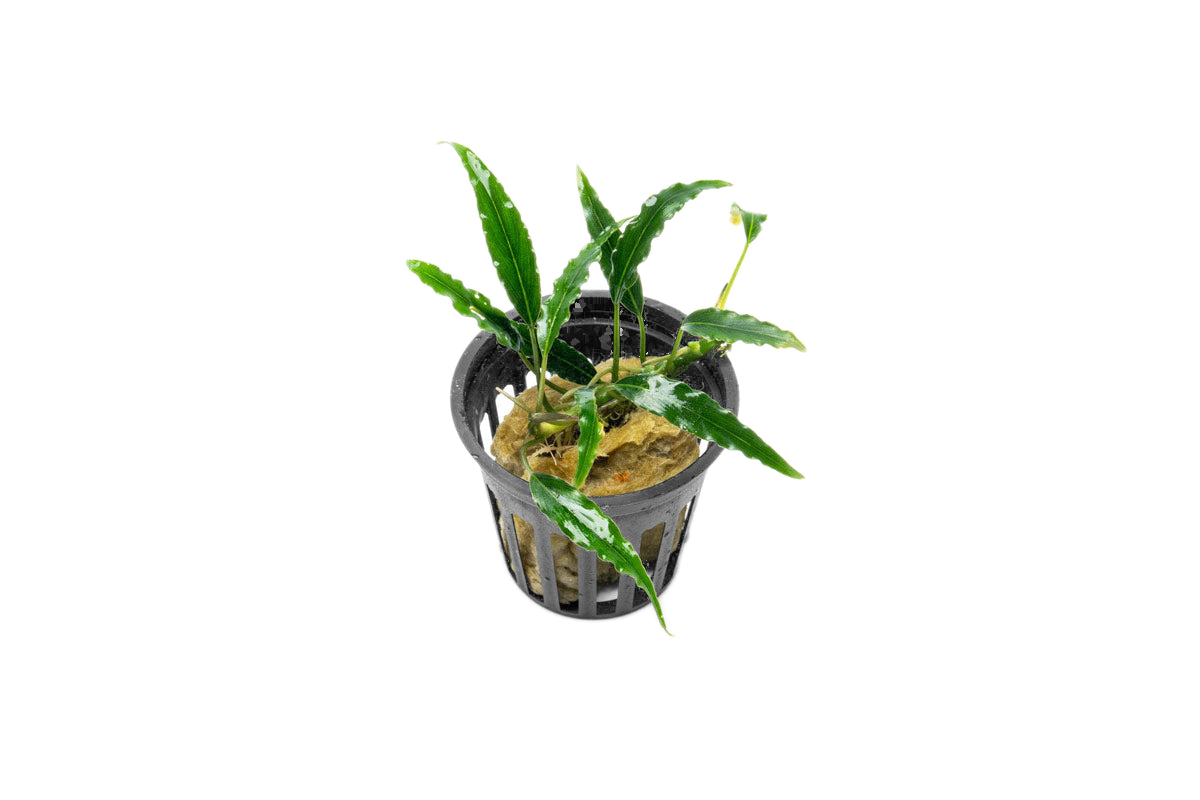
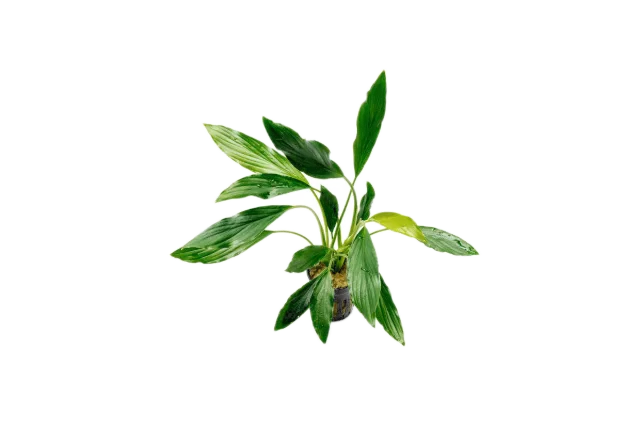
Schismatoglottis Roseospatha is a new and exciting aquarium plant from Sarawak, Borneo, found naturally clinging to rocks near waterfalls. Resembling a cross between Anubias, Aridarum, and Bucephalandra, it features narrow, pointy bright green leaves sprouting from thin brown or yellow stems, and should be attached to driftwood or rocks rather than buried.
Quick facts
Identity
- Also known as
- Roseospatha Aroid; Sarawak Rheophyte
- Synonyms
- Schismatoglottis sp. Roseospatha; Tweeddalea roseospatha
- Environment
- Freshwater
- Native to
- Borneo (Sarawak, Malaysia)
- Habitat
- Rheophyte growing on rocks along fast-flowing forest streams and rivulets, alternating between emersed on stream banks in the dry season and fully submersed during high water.
- Sourcing
- Wild-caught
- Conservation
- Not Evaluated
Care
- Care level
- Easy
- Growth form
- Rhizome
- Max height
- 1.5 – 4 in (3.8 – 10 cm)
- Spread
- 4 in (10 cm)
- Growth rate
- Slow
- Placement
- Epiphyte, Foreground, Midground
Water
- Temperature
- 72 – 79 °F (22 – 26 °C)
- pH
- 4.5 – 7.0
- GH
- 0 – 10 dGH
- dKH
- 0 – 8 dKH
- Flow
- Low-Moderate
- Light
- Low
- CO₂
- Beneficial
Planting
- Substrate
- Not needed
- Feeds from
- Both
- Fertilizer needs
- Low
- Colors
- Green, Brown
Feeding & breeding
- Propagation
- Rhizome division, Plantlets
Something wrong or missing? Submit a correction
Care guide
Overview
Suited to slow-growing hardscape displays where keepers favor stability over rapid change, this rheophytic aroid from Sarawak's waterfall rocks sends narrow, pointed bright green leaves from thin brown to yellow stems. It should be fastened to driftwood or rock rather than buried, and rewards patience and low disturbance over frequent rearranging.
Care
This slow-growing aroid is treated much like a Bucephalandra or Anubias: the rhizome is tied or glued to driftwood or rock rather than planted in substrate, since burying it invites rot. It tolerates a wide range of light from low to high, but low to medium intensity without CO2 keeps algae from colonizing the old, slow-growing leaves. Soft, slightly acidic water with moderate flow suits its stream origins, though established plants adapt to a broad range of parameters once settled. Because growth is so slow, the plant does best with stable conditions and minimal disturbance rather than frequent rearranging.
Planting & trimming
Attach the rhizome to a piece of driftwood or rock using thread, fine fishing line, or cyanoacrylate gel glue, leaving the roots and rhizome exposed to the water rather than buried. It can also be wedged into hardscape crevices where its roots will gradually anchor it in place. Trimming is rarely needed given the slow growth; simply remove any old or algae-covered leaves as they decline.
Fertilizing
Root tabs are unnecessary since the rhizome should never be buried, so feeding relies on water column nutrients and CO2 supplementation. Light liquid fertilization supports leaf development, and trace iron helps maintain the dark green, glossy leaf color. Because uptake is slow, overdosing is a greater risk than deficiency, and yellowing or pale new growth usually points to insufficient light or micronutrients rather than a lack of macros.
Propagation
New plants are produced by dividing the creeping rhizome into sections, each with at least one growth point and some roots attached, or by removing daughter plantlets that form along the rhizome. Divided sections should be reattached to hardscape and left undisturbed for an extended period to recover, since growth resumes very slowly.
Problems
Algae can build up on the older leaves if light is too strong relative to the plant's very slow growth rate, so moderate intensity is usually a safer choice than high light. Rot at the rhizome is the most common problem and almost always traces back to burial in substrate or poor flow around the attachment point. Otherwise the species is hardy and rarely troubled by disease once acclimated to submersed culture.
Sources
More Aroids
Something wrong or missing? Submit a correction
In the community
Popular tanks using Schismatoglottis Roseospatha
No public tanks are showcasing Schismatoglottis Roseospatha yet.