
Aquatic Plant
Aridarum Nakamotoi
Aridarum nakamotoiAraceaeAroids
Price: $49.99 USD
Add from My tanks →1 photos
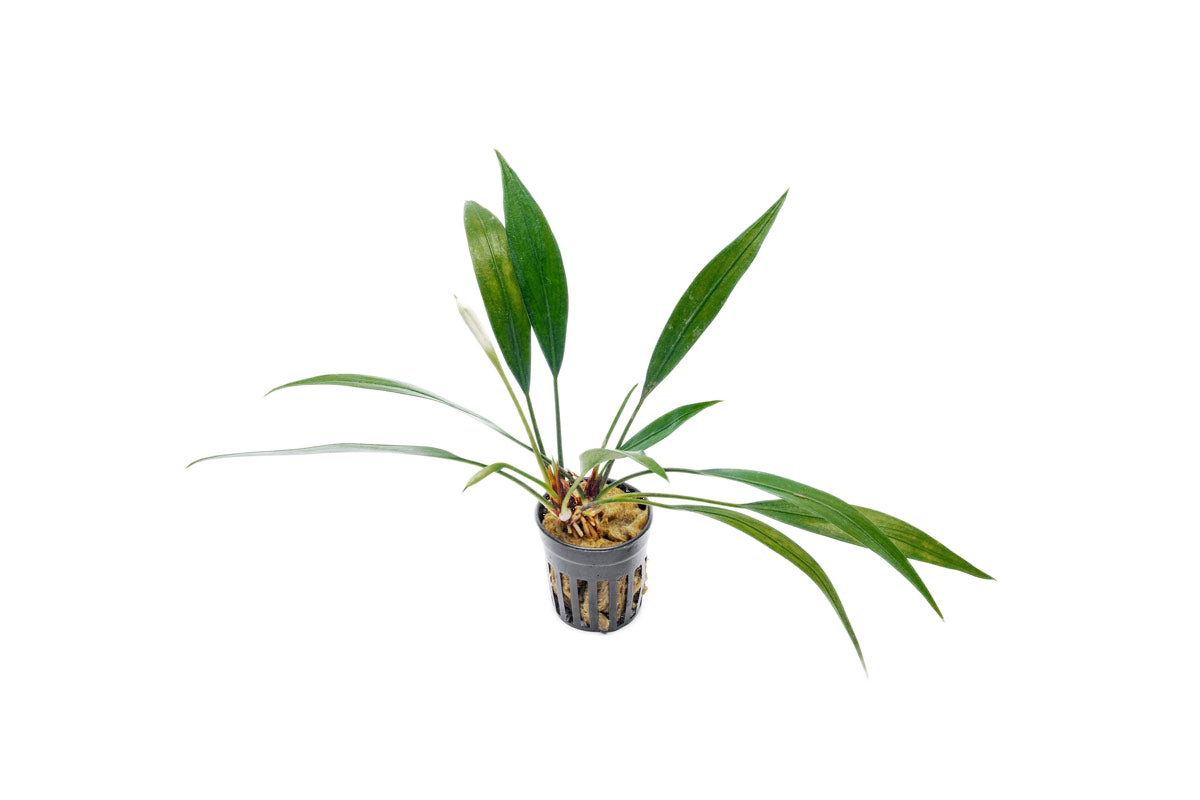
Aridarum nakamotoi is a rare Bornean aroid from Kalimantan with unique elongated leaves that have a glossy texture and wavy margins. Slow-growing and low-maintenance, it propagates by rhizome division and gradually forms dense clusters in stable aquascapes.
Quick facts
Identity
- Also known as
- Aridarum Narrow
- Environment
- Freshwater
- Native to
- Borneo (Kalimantan, Indonesia)
- Habitat
- Rheophyte growing attached to rocks and driftwood along fast-flowing streams and waterfalls in Bornean rainforest
- Sourcing
- Aquacultured
- Conservation
- Not Evaluated
Care
- Care level
- Moderate
- Growth form
- Rhizome
- Max height
- 2 – 6 in (5.1 – 15 cm)
- Spread
- 8 in (20 cm)
- Growth rate
- Slow
- Placement
- Midground, Foreground
Water
- Temperature
- 74 – 82 °F (23 – 28 °C)
- pH
- 6.0 – 7.5
- GH
- 4 – 12 dGH
- PAR
- 30 – 60 PAR
- Flow
- Moderate-High
- Light
- Low
- CO₂
- Beneficial
Planting
- Substrate
- Not needed
- Feeds from
- Both
- Fertilizer needs
- Low
- Colors
- Green
Feeding & breeding
- Propagation
- Rhizome division
Something wrong or missing? Submit a correction
Care guide
Overview
Collected from Kalimantan's fast-flowing streams, this rheophytic aroid clings to rocks and driftwood rather than rooting in substrate. Its narrow, glossy leaves have wavy margins and grow slowly under low to medium light with moderate-to-strong flow. Best fastened to hardscape and left undisturbed, it rewards patience with dense clusters over time.
Care
This slow-growing aroid does best attached to hardscape such as driftwood or rock rather than buried in substrate, and it appreciates moderate to strong water flow reminiscent of its native streams. Low to medium lighting suits it well, and while CO2 injection is not strictly necessary, it noticeably speeds up growth and leaf production. Stable water chemistry matters more than hitting exact numbers, since sudden swings in parameters tend to stall growth or trigger leaf loss.
Planting & trimming
Attach the rhizome to driftwood, rock, or other hardscape using thread, cotton line, or a small dab of cyanoacrylate glue, leaving the rhizome itself exposed rather than buried, since covering it can cause rot. It can be wedged into crevices in a hardscape layout and will slowly send out roots to anchor itself over time. The plant adapts to both fully submerged aquarium use and emersed paludarium or terrarium setups given sufficient humidity.
Fertilizing
Root tabs are of limited use since the plant is not substrate-rooted, so nutrient uptake happens mostly through the leaves and any roots clinging to hardscape. Regular liquid fertilization in the water column, including a source of iron and micronutrients, supports steady leaf growth. Pale or translucent new leaves often point to insufficient nutrients or light rather than a specific single deficiency.
Propagation
New plants are produced by dividing the rhizome once it has grown enough side shoots or length to safely section, then attaching each division to its own piece of hardscape. Growth is slow, so divisions should be made sparingly and only from healthy, well-established specimens.
Problems
Melt can occur after transplanting or during the acclimation period following a change in environment, though the plant typically recovers once conditions stabilize. Because growth is so slow, algae can accumulate on older leaves if lighting is too strong or flow is insufficient to keep detritus from settling on the foliage. Wiping leaves gently and maintaining consistent parameters over the long term reduces these issues.
Sources
More Aroids
Something wrong or missing? Submit a correction
In the community
Popular tanks using Aridarum Nakamotoi
No public tanks are showcasing Aridarum Nakamotoi yet.