
Aquatic Plant
Homalomena Humilis
Homalomena humilisAraceaeAroids
Price: $19.13 USD
Add from My tanks →1 photos
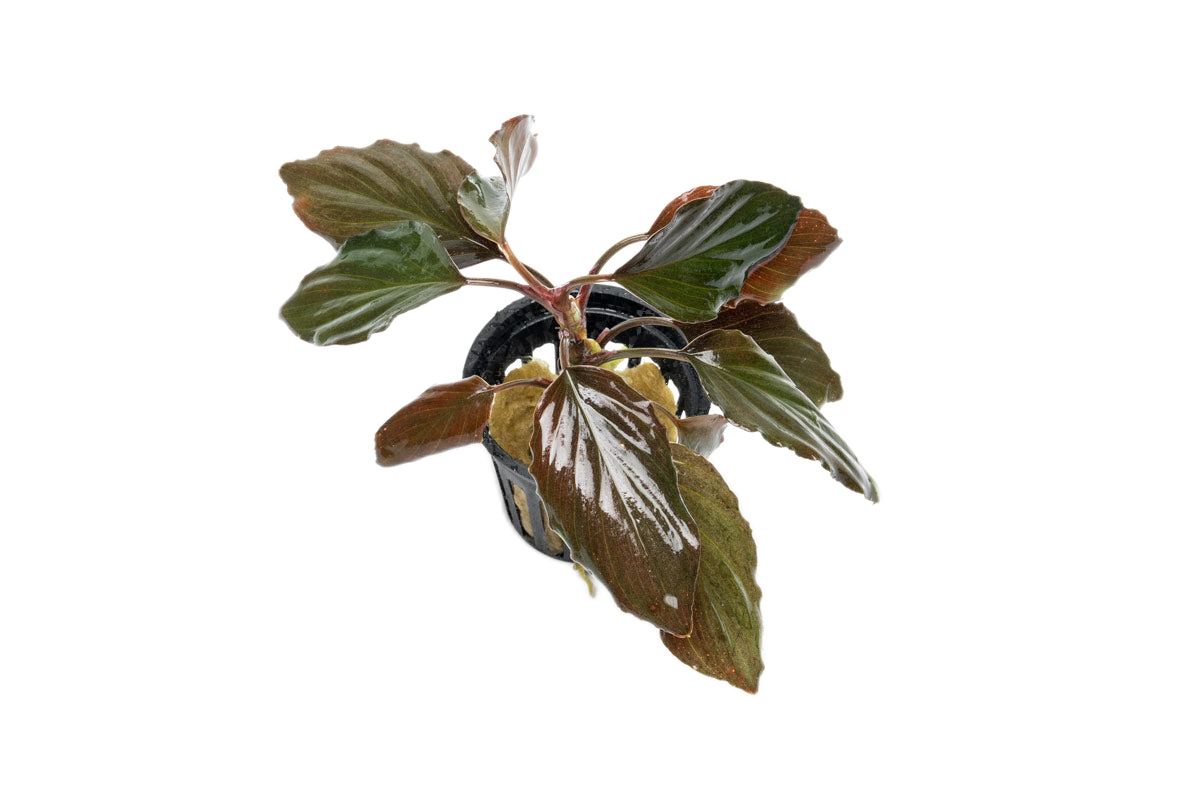
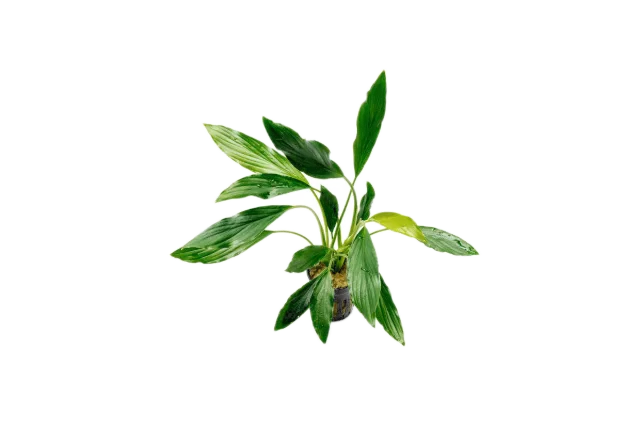
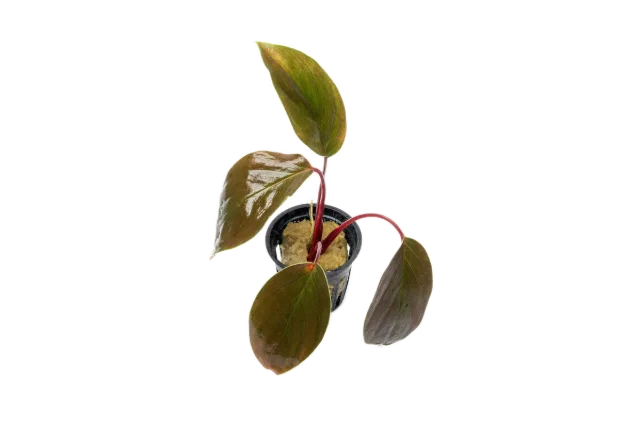
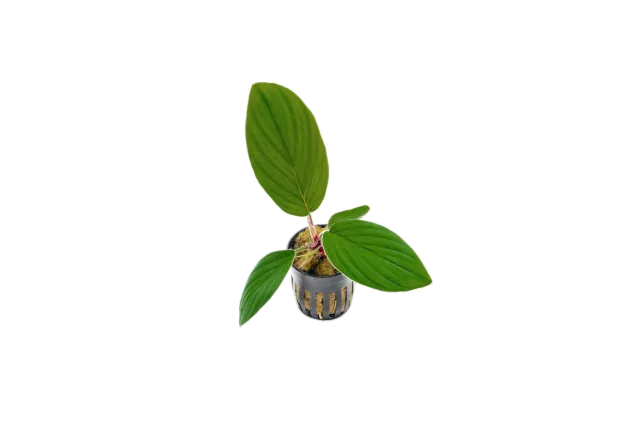
Homalomena Humilis is a new and rare plant found only in the Kalimantan part of Borneo, Indonesia. Hardy fast-flowing river survivors, its leaves have a unique varying color pattern from pink to green, with thick, waxy-sheen leaves; wonderful mid- or foreground accent, grown submerged or emersed.
Quick facts
Identity
- Also known as
- Pink Homalomena; Borneo Shield Plant
- Environment
- Freshwater
- Native to
- Borneo, Indonesia
- Habitat
- Fast-flowing rivers and streams in tropical rainforest, found on rocks and wood along the banks in Borneo and parts of Southeast Asia
- Sourcing
- Aquacultured
- Conservation
- Not Evaluated
Care
- Care level
- Moderate
- Growth form
- Rhizome
- Max height
- 4 – 10 in (10 – 25 cm)
- Spread
- 8 in (20 cm)
- Growth rate
- Slow
- Placement
- Foreground, Midground
Water
- Temperature
- 72 – 82 °F (22 – 28 °C)
- pH
- 6.0 – 7.5
- GH
- 4 – 15 dGH
- Flow
- Moderate
- Light
- Low
- CO₂
- Beneficial
Planting
- Substrate
- Nutrient-rich preferred
- Feeds from
- Both
- Fertilizer needs
- Medium
- Colors
- Green, Pink
Feeding & breeding
- Propagation
- Rhizome division
Something wrong or missing? Submit a correction
Care guide
Overview
Reaches roughly 4 to 10 inches tall with a spread of up to 8 inches, forming a low rhizome clump suited to foreground or midground placement. Thick, waxy leaves shift between pink and green tones, mounted to wood or rock rather than buried. Growth is slow but steady, tolerating both submerged and emersed setups once established.
Care
Homalomena humilis is a slow-growing rhizome plant that tolerates a wide range of water conditions once established, making it forgiving for tanks that are not perfectly tuned. It does best under low to medium lighting, since strong light tends to promote algae growth on its thick, waxy leaves rather than faster growth. Steady, moderate flow across the leaves and stable warm temperatures help it settle in and produce new growth over time.
Planting & trimming
The rhizome should be attached to driftwood or rock rather than buried in substrate, similar to how Anubias and Bucephalandra are mounted, since burying the rhizome can cause it to rot. It can also be left loose in a nutrient-rich substrate for a more rooted look, though attachment tends to give better long-term results. Given its slow growth, trimming is infrequent and mostly limited to removing old or damaged leaves near the base.
Fertilizing
Root tabs pushed into the substrate near the rhizome base support steady growth, though the plant can also be grown attached to hardscape and fed primarily through the water column with liquid fertilizer. Iron and micronutrient supplementation helps maintain leaf coloration and prevents pale or translucent new leaves. Because growth is slow, nutrient deficiencies tend to show gradually as dulled leaf color rather than sudden leaf loss.
Propagation
New plants are produced by cutting a section of rhizome bearing at least one growth point and several leaves, then reattaching that piece to a new area of hardscape. The parent rhizome will continue to push out new leaves and side shoots over time, allowing repeated divisions as the plant matures. Growth is slow, so propagation happens infrequently compared to faster stem or carpeting plants.
Problems
Melting is uncommon in this species compared to true crypts, but leaves can develop algae fouling if lighting is too strong for its slow growth rate. Poor water circulation or long periods without water changes can lead to biofilm buildup on the waxy leaf surface. Trimming off any damaged or algae-covered leaves at the base keeps the rhizome healthy and encourages cleaner new growth.
Sources
More Aroids
Something wrong or missing? Submit a correction
In the community
Popular tanks using Homalomena Humilis
No public tanks are showcasing Homalomena Humilis yet.