
Aquatic Plant
Homalomena Insignis
Homalomena insignisAraceaeAroids
Price: $19.13 USD
Add from My tanks →1 photos
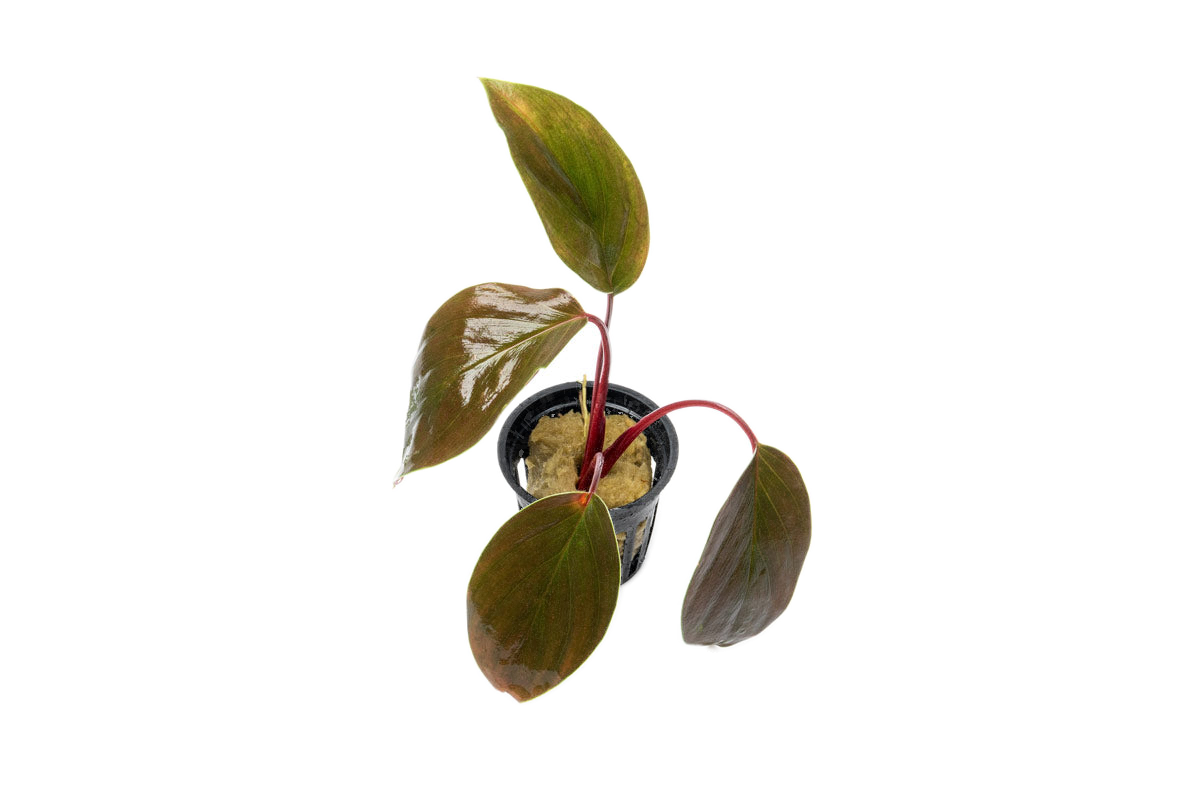
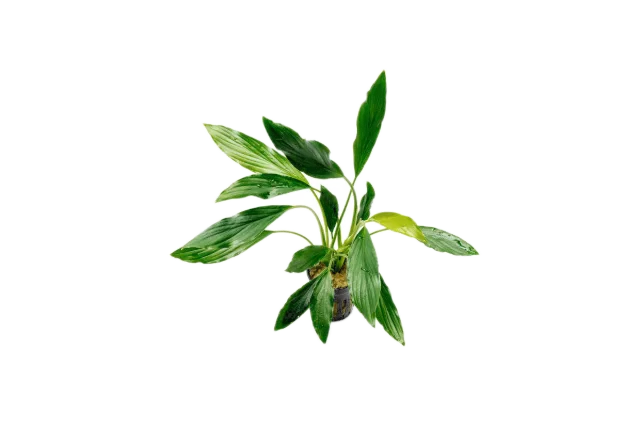
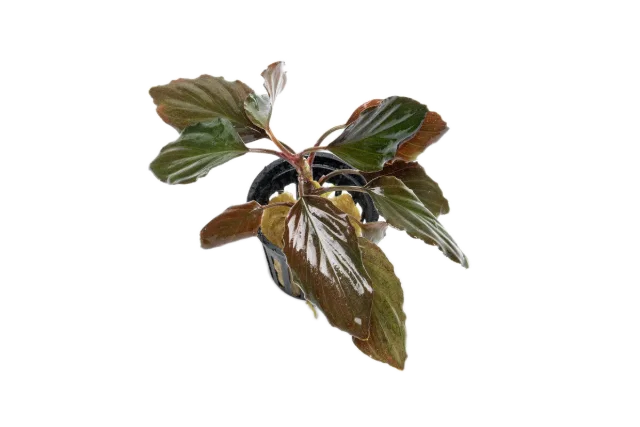
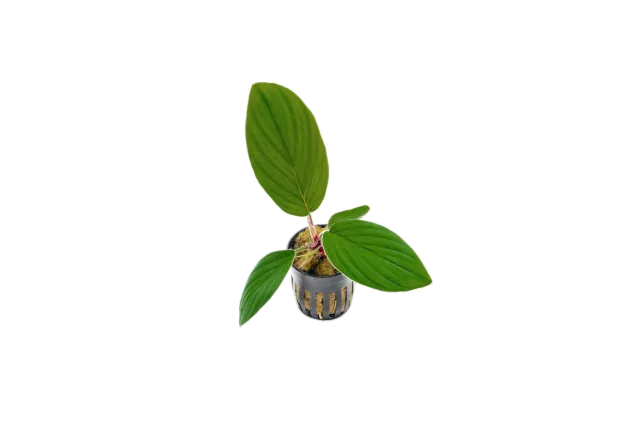
Homalomena Insignis shows off a beautiful range of bright coral-pink, iridescent purple, and deep green colorations, with thick, waxy-sheen leaves. A hardy, fast-flowing river survivor, it makes a wonderful mid- or foreground accent; grow submerged or emersed, attached to hardscape or buried in nutrient-rich substrate.
Quick facts
Identity
- Also known as
- Pink Homalomena; Purple Homalomena
- Environment
- Freshwater
- Native to
- Borneo, Southeast Asia
- Habitat
- Banks and margins of fast-flowing tropical rivers and streams, often on rocks or in humid understory near water
- Sourcing
- Aquacultured
- Conservation
- Not Evaluated
Care
- Care level
- Easy
- Growth form
- Rhizome
- Max height
- 4 – 10 in (10 – 25 cm)
- Spread
- 8 in (20 cm)
- Growth rate
- Slow
- Placement
- Foreground, Midground
Water
- Temperature
- 72 – 82 °F (22 – 28 °C)
- pH
- 6.0 – 7.5
- GH
- 3 – 8 dGH
- Flow
- Moderate
- Light
- Low
- CO₂
- Beneficial
Planting
- Substrate
- Any
- Feeds from
- Both
- Fertilizer needs
- Medium
- Colors
- Green, Pink, Purple
Feeding & breeding
- Propagation
- Rhizome division
Something wrong or missing? Submit a correction
Care guide
Overview
Anchors quietly to driftwood or rock, sending up thick, waxy-sheen leaves that shift between coral-pink, iridescent purple, and deep green as they mature. Native to Bornean river margins, it stays compact and slow-growing, tolerating low light and either submerged or emersed setups. Keep the rhizome exposed rather than buried and provide moderate flow to keep the foliage clean.
Care
This aroid tolerates a wide range of aquarium conditions and does not demand strong lighting, making it forgiving for low-tech setups. Growth is slow to moderate, and the rhizome should sit on or be lightly wedged into hardscape rather than buried, similar to Anubias or Bucephalandra. It adapts to both fully submerged and emersed (paludarium) conditions, and its thick, waxy leaves resist algae fouling better than thin-leaved plants when light is kept moderate.
Planting & trimming
Attach the rhizome to driftwood or rock with thread, super glue gel, or plant clips, keeping the rhizome itself exposed rather than buried, as with other epiphytic aroids. It can alternatively be tucked into nutrient-rich substrate at the base while leaving the rhizome mostly uncovered. Trim only fully spent or decaying leaves at the base to keep the plant tidy.
Fertilizing
Liquid fertilization with a balanced micro/macro dosing routine supports steady leaf production, and root tabs placed near the rhizome can supplement uptake if grown in substrate. CO2 injection is not mandatory but tends to noticeably speed up growth and leaf size. Pale or yellowing new leaves usually point to iron or micronutrient deficiency rather than a lighting problem.
Propagation
Propagate by dividing the rhizome once it has produced several leaves and a visible new growth point, then cutting the section free with a clean blade. Each division should retain some roots and at least one healthy leaf before being reattached to hardscape or replanted. New divisions are slow to establish and benefit from stable water parameters during recovery.
Problems
Excess light or nutrient buildup can lead to algae colonizing the waxy leaf surface, so moderate light and good flow around the plant help keep it clean. Rot at the rhizome can occur if it is buried too deeply or kept in stagnant, low-oxygen substrate. Transitioning plants between emersed and submersed forms sometimes causes older leaves to die back temporarily while the plant adjusts.
Sources
More Aroids
Something wrong or missing? Submit a correction
In the community
Popular tanks using Homalomena Insignis
No public tanks are showcasing Homalomena Insignis yet.