
Coral
ORA Skyline Granulosa Coral
Acropora granulosaAcroporidaeSPS corals
Add from My tanks →1 photos
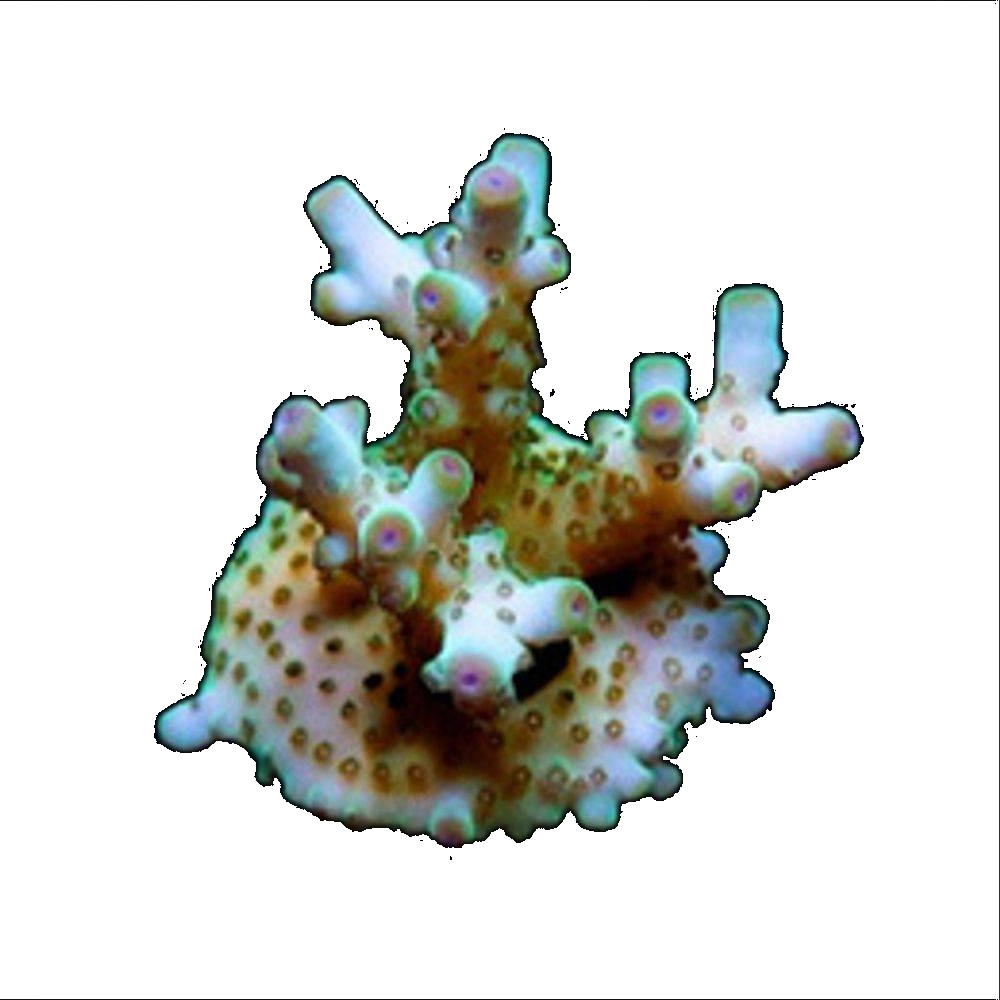
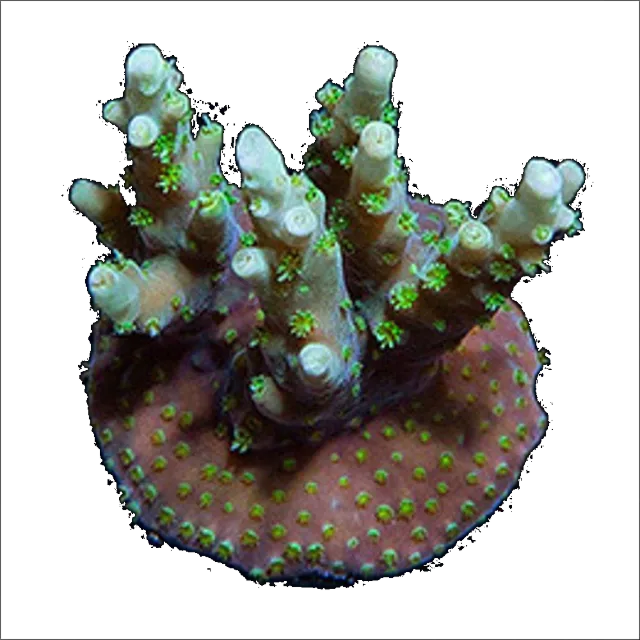
The ORA Skyline Granulosa is an SPS coral with a green base and purple-blue growth tips, growing in tight, smooth branches. It adds nice contrast to other Acropora in an SPS-dominant reef and does best with moderate to high light, strong flow, and stable water parameters.
Quick facts
Handling caution: Can inflict mild skin irritation from sharp skeleton edges; use gloves when fragging
Identity
- Also known as
- Skyline Acropora; Granulosa Acropora
- Synonyms
- Madrepora granulosa
- Environment
- Saltwater
- Native to
- Indo-Pacific, Red Sea, Indian Ocean, Western and Central Pacific
- Habitat
- Deeper or sheltered reef slopes with calmer, moderate water movement
- Sourcing
- Aquacultured
- Conservation
- Not Evaluated
Care
- Care level
- Difficult
- Coral type
- SPS
- Temperament
- Peaceful
- Growth form
- Branching
- Adult size
- 1.5 – 12 in (3.8 – 30 cm)
- Spread
- 18 in (46 cm)
- Growth rate
- Moderate
- Placement
- High
Water
- Temperature
- 76 – 80 °F (24 – 27 °C)
- pH
- 8.1 – 8.4
- dKH
- 8 – 12 dKH
- Salinity
- 1.025 – 1.026 SG
- PAR
- 150 – 350 PAR
- Flow
- High
- Light
- High
Reef care
- Nutrient preference
- Low
- Alk/Ca uptake
- High
- Target feeding
- Beneficial
- Give it room
- 6 in (15 cm)
- Colors
- Green, Purple, Blue, Pink
Feeding & breeding
- Diet
- Photosynthetic
- Foods
- Coral food, Zooplankton, Phytoplankton
- Propagation
- Fragging
Something wrong or missing? Submit a correction
Care guide
Overview
SPS-dominant reef systems with mature, stable chemistry suit this Acropora best. Tight, smooth branches carry a green base with purple-blue growth tips, eventually forming a tabling shape. High placement, strong alternating flow, and rock-solid calcium and alkalinity are essential for steady growth and color retention.
Care
This Acropora forms tight, smooth-branched colonies that can develop a tabling shape as they mature, distinguishing it from the more angular growth typical of many other Acropora species. It requires an established, mature reef system with rock-solid and stable calcium, alkalinity, and magnesium levels, since fluctuations are the most common cause of tissue loss or bleaching. Placement high in the tank under strong, moderate to high intensity lighting combined with vigorous, alternating flow gives the best growth rate and coloration.
Placement & acclimation
Acclimate new frags to lighting gradually, starting lower in the tank or under shaded conditions before moving them up to the intended high-light position over one to two weeks. Mount frags securely on rock or a frag plug using coral glue or epoxy, cleaning the attachment point of any biofilm or algae first for a solid bond. Position with strong, ideally alternating or irregular flow to prevent detritus from settling on the branches.
Feeding
Most of its energy comes from photosynthesis carried out by zooxanthellae housed in its tissue, so consistent, appropriately intense lighting is more important than direct feeding. Supplemental dosing of fine zooplankton, phytoplankton, or amino acid based coral foods can enhance polyp extension and coloration but is not required for survival. Nutrient levels should be kept low but measurable, since Acropora species tend to decline in either nutrient-starved or overly nutrient-rich water.
Neighbors
Keep this coral spaced well away from other stony corals and any species with long sweeper tentacles, since Acropora tissue is easily damaged by neighboring stings. Fish or invertebrates that nip at coral tissue, such as certain butterflyfish or some angelfish, should be avoided in the same system. Give adequate clearance around the colony to account for its eventual outward branching or tabling growth.
Fragging
Fragging is done by cutting healthy branch tips with bone cutters or a coral saw, then mounting the fragments onto plugs or rock with cyanoacrylate glue or epoxy putty. Fragging is best performed on a well-established, actively growing colony to minimize stress and improve fragment survival. Allow cut edges to heal over before handling frags further or moving them to different flow or light conditions.
Pests & problems
Rapid shifts in alkalinity, salinity, temperature, or nutrient levels are the most frequent cause of tissue recession or bleaching in this species. Brown jelly infection and Acropora-eating flatworms or red bugs are potential pest problems that should be checked for regularly, especially on newly acquired frags. Any loss of water flow around the colony for an extended period can quickly stress the tissue and lead to necrosis.
Sources
Varieties in the catalog
More SPS corals
Something wrong or missing? Submit a correction
In the community
Popular tanks using ORA Skyline Granulosa Coral
No public tanks are showcasing ORA Skyline Granulosa Coral yet.