
Aquatic Plant
Marsilea Crenata
Marsilea crenataMarsileaceaeCarpet plants
Price: $6.99 USD
Add from My tanks →1 photos
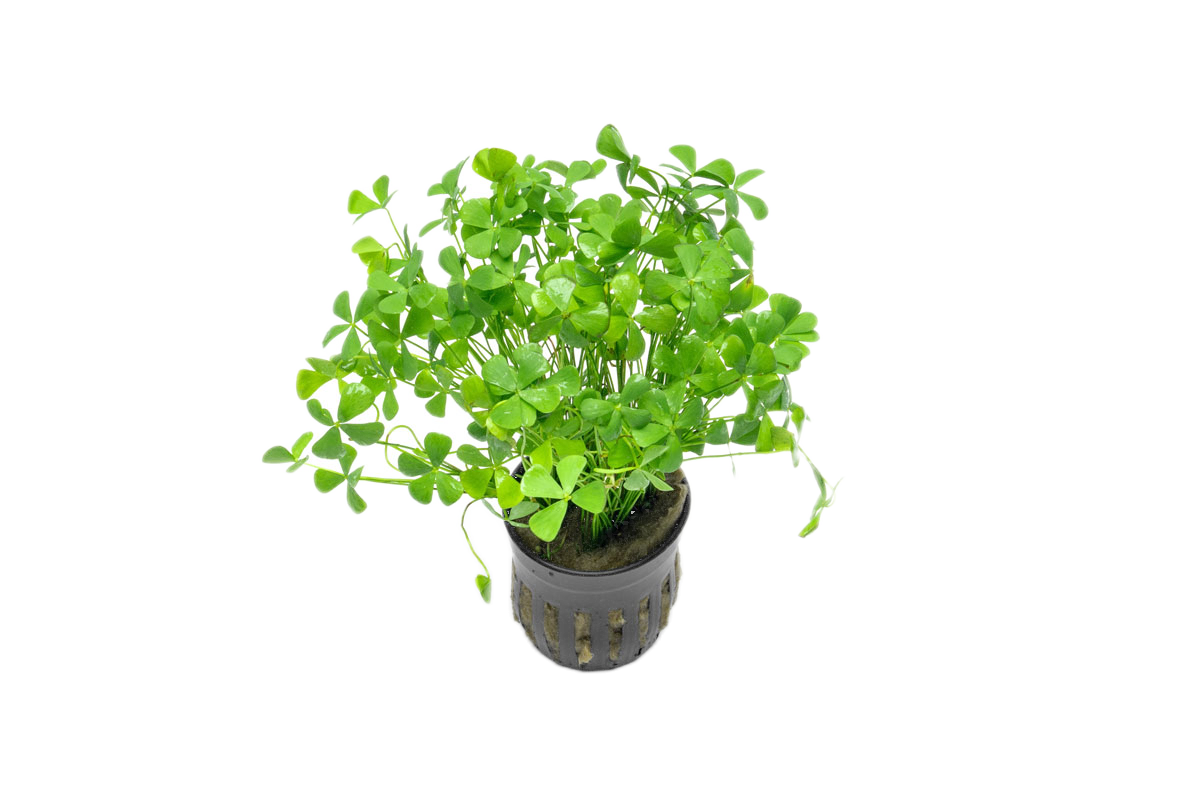
Marsilea Crenata is a delightful little fern from the tranquil rice fields of Asia, famous for miniature leaves resembling four-leaf clovers. It offers a whimsical, texture-rich foreground carpet that stays naturally short, spreading gradually and tolerating varying tank environments.
Quick facts
Identity
- Also known as
- Dwarf four leaf clover; Water clover; Dwarf water clover
- Synonyms
- Marsilea minuta (often treated as synonym in trade)
- Environment
- Freshwater
- Native to
- Southeast Asia, Indonesia, Thailand, Philippines, India, Australia
- Habitat
- Rice paddies, ditches, swamps, floodplains and marshy ground subject to seasonal flooding and drying
- Sourcing
- Aquacultured
- Conservation
- Not Evaluated
Care
- Care level
- Easy
- Growth form
- Carpeting
- Max height
- 0.4 – 1.2 in (1 – 3 cm)
- Growth rate
- Slow
- Placement
- Foreground, Carpet
Water
- Temperature
- 68 – 82 °F (20 – 28 °C)
- pH
- 6.0 – 7.5
- GH
- 2 – 15 dGH
- Flow
- Low-Moderate
- Light
- Medium
- CO₂
- Beneficial
Planting
- Substrate
- Nutrient-rich preferred
- Feeds from
- Both
- Fertilizer needs
- Medium
- Colors
- Green, Brown
Feeding & breeding
- Propagation
- Rhizome division, Runners
Something wrong or missing? Submit a correction
Care guide
Overview
Low-tech and CO2-injected foreground setups alike suit this carpeting fern, which stays compact under brighter light and grows taller in shade. Its clover-shaped leaves shift to a simpler one- or two-lobe form once fully submersed, a normal transition rather than a problem. Growth is slow, spreading by creeping rhizome, so patience and steady fertilizing matter more than intensity of care.
Care
A slow but forgiving carpeting fern that suits low-tech tanks as easily as CO2-injected setups, growing shorter and more compact under brighter light and taller and more open in shade. It spreads by a creeping horizontal rhizome that roots into the substrate and pushes up new fronds, gradually knitting into a low mat rather than shooting up quickly. Leaves change shape as the plant transitions from its emersed, four-lobed clover form to a simpler one- or two-lobe submersed leaf, which is a normal adjustment and not a sign of decline.
Planting & trimming
Divide potted or tissue-cultured portions into small clumps and press the rhizome flat along the substrate, spacing pieces a few centimeters apart so they eventually knit into a continuous carpet. Keep the rhizome itself at the substrate surface rather than burying it, weighting or pinning pieces down until roots anchor them. Trimming the tops encourages the rhizome to branch and spread sideways rather than upward, speeding carpet formation.
Fertilizing
Feeds through both roots and the water column, so root tabs placed near the rhizome combined with a weekly all-in-one liquid fertilizer give the most consistent results. Iron and other micronutrients help keep new growth green rather than pale, since deficiency tends to show as yellowing or stalled leaf production rather than obvious spotting. CO2 is not required but speeds growth and fill-in noticeably when combined with steady fertilizing.
Propagation
Propagates readily by dividing the creeping rhizome into sections, each with roots and at least one growing point, and replanting them separately. Runners naturally extend the mat outward, and daughter plantlets that form along the rhizome can be cut away and relocated once established. Growth is slow, so multiplying a single plant into a full carpet takes patience over weeks to months.
Problems
Algae on the small leaves is the most common complaint and usually points to excess light, weak flow, or insufficient nutrients rather than any fault in the plant itself. Some leaf drop after planting is expected as emersed leaves die back while the plant converts to submersed growth, and this resolves once conditions stabilize. Because it grows slowly, a heavy algae bloom can outcompete it for light, so trimming nearby fast growers and improving circulation helps it recover.
Sources
More Carpet plants
Something wrong or missing? Submit a correction
In the community
Popular tanks using Marsilea Crenata
No public tanks are showcasing Marsilea Crenata yet.