
Aquatic Plant
Glossostigma Elatinoides
Glossostigma elatinoidesPhrymaceaeCarpet plants
Price: $7.99 USD
Add from My tanks →1 photos
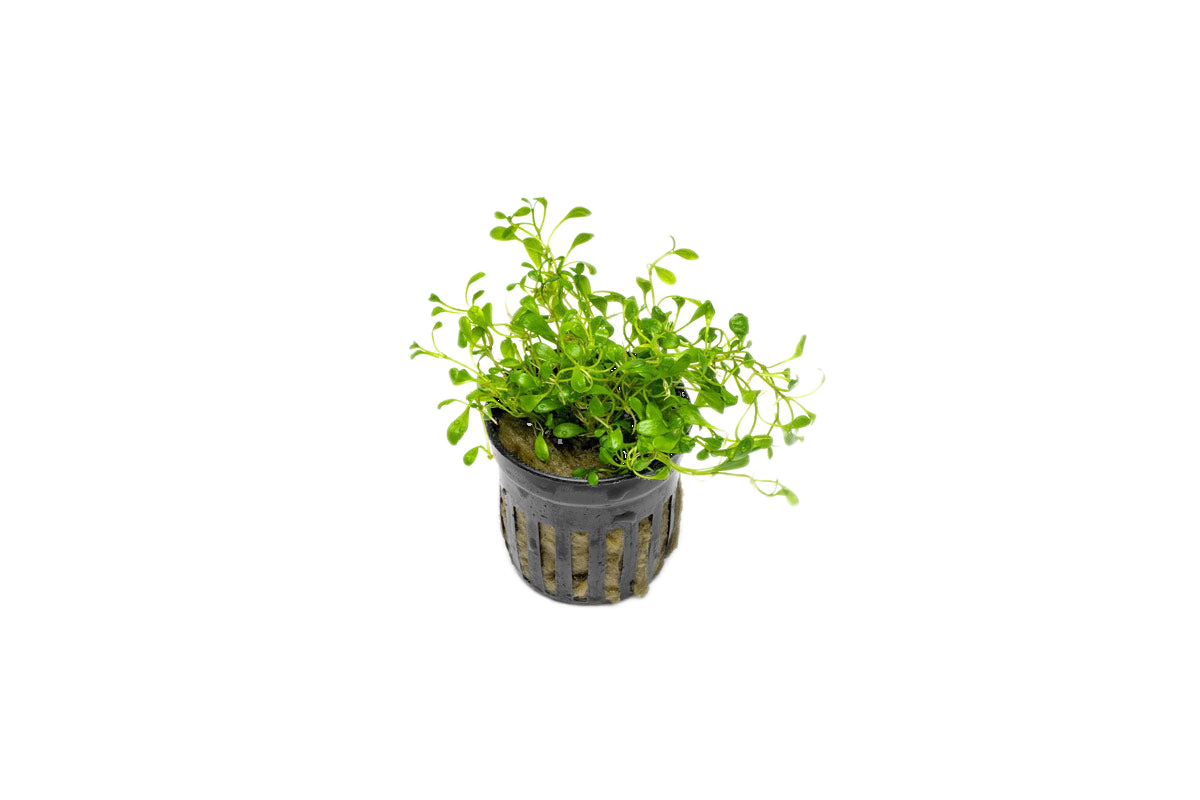
Glossostigma elatinoides, affectionately known as Glosso, is an absolute classic from New Zealand that helped define the iconic look of aquarium carpets. Its small, round, bright-green leaves stitch into a pristine, low-growing sheet of green that hugs the bottom of the tank; give it high light and steady CO2.
Quick facts
Identity
- Also known as
- Glosso; Mud mat
- Environment
- Freshwater
- Native to
- Australia, New Zealand, Tasmania
- Habitat
- Grows partially to fully submersed in shallow water, bogs, marshes, and along river banks
- Sourcing
- Captive-bred
- Conservation
- Not Evaluated
Care
- Care level
- Difficult
- Growth form
- Carpeting
- Max height
- 0.5 – 1.5 in (1.3 – 3.8 cm)
- Spread
- 1.2 in (3 cm)
- Growth rate
- Fast
- Placement
- Foreground, Carpet
Water
- Temperature
- 68 – 79 °F (20 – 26 °C)
- pH
- 5.8 – 7.2
- GH
- 2 – 12 dGH
- Flow
- Low-Moderate
- Light
- High
- CO₂
- Required
Planting
- Substrate
- Nutrient-rich required
- Feeds from
- Roots
- Fertilizer needs
- High
- Colors
- Green
Feeding & breeding
- Propagation
- Runners, Cuttings
Something wrong or missing? Submit a correction
Care guide
Overview
High-tech planted tanks with strong lighting and pressurized CO2 suit this carpeting plant best, as it forms a dense sheet of tiny round leaves only when conditions push it to spread laterally rather than climb. Reaching under two inches tall, it roots at each node along creeping stolons and knits together into a solid foreground mat. Regular trimming and a nutrient-rich substrate keep the carpet even and low.
Care
Glosso is one of the more demanding carpeting plants in the hobby, requiring high light, pressurized CO2, and a nutrient-rich substrate to form a dense mat rather than growing upward. Without strong light and consistent CO2 the stems elongate and reach for the surface, producing a leggy, unattractive growth pattern instead of a low carpet. Regular trimming keeps the mat from piling on itself and shading out its own lower growth.
Planting & trimming
Separate runners into small clumps of a few stems and plant with tweezers in rows a few centimeters apart, leaving the leaves exposed above the substrate line while burying the roots and lower stem. Individual planting rather than large clumps encourages faster, more even carpet formation as the runners knit together. Trim the carpet regularly with scissors once it thickens to prevent upper growth from shading and smothering the lower mat.
Fertilizing
Root feeding matters here: a nutrient-rich, fine-grained substrate or root tabs support the adventitious roots that form at each node. Supplemental iron helps maintain deep green coloration and steady growth, and many keepers report noticeably better spread when dosing iron alongside a complete liquid fertilizer. Pale or yellowing new growth usually signals a need for more iron or macro nutrients rather than a lighting problem.
Propagation
Glosso spreads readily via creeping stolons that root at each node, and sections with a few nodes and roots attached can be cut away and replanted elsewhere. Floating stem fragments will often continue growing and can later be pressed into the substrate once small roots appear. Because it propagates so easily under good conditions, mature carpets need periodic thinning to prevent overcrowding.
Problems
Under insufficient light Glosso stretches vertically and can detach from the substrate as lower leaves die back from self-shading, so pruning before the mat gets too thick is important. New plantings often show slow or patchy establishment for the first few weeks while roots anchor, which can be mistaken for melt but usually resolves once runners take hold. Poor CO2 or unstable water chemistry commonly shows up as stalled growth rather than outright rot.
Sources
More Carpet plants
Something wrong or missing? Submit a correction
In the community
Popular tanks using Glossostigma Elatinoides
No public tanks are showcasing Glossostigma Elatinoides yet.