
Marine Invertebrates
Linckia Sea Star, Blue EXPERT ONLY
Linckia laevigataOphidiasteridaeSea stars
Price: $14.10 USD
Add from My tanks →1 photos
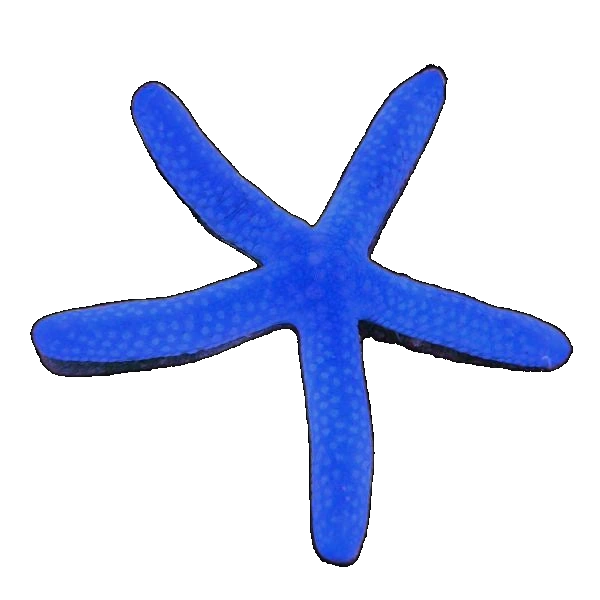
The Blue Linckia Sea Star (Linckia laevigata), also called the Comet Sea Star, is remarkable for its unusual bright blue body, sometimes embellished with red or purplish spots. It is for dedicated enthusiasts, needing a well-lit sandy or rubble substrate with rocky hiding places, intolerant of changes in oxygen, salinity, and pH, unable to tolerate copper medications, and requiring drip acclimation with no air exposure; monitor for the parasitic snail Thyca crystallina.
Quick facts
Identity
- Also known as
- Comet Sea Star; Blue Sea Star; Blue Starfish
- Synonyms
- Ophidiaster laevigatus
- Environment
- Saltwater
- Native to
- Indo-Pacific, Red Sea, East Africa, Hawaii, French Polynesia, southern Japan
- Habitat
- Shallow reef flats, lagoons, rubble zones, and seagrass beds on sunny upper reef areas, usually less than 20 m deep
- Sourcing
- Wild-caught
- Conservation
- Not Evaluated
Care
- Care level
- Expert Only
- Temperament
- Peaceful
- Adult size
- 2 – 12 in (5.1 – 30 cm)
- Lifespan
- 2 – 5 yrs
- Min tank
- 100 gal (379 L)
- Growth rate
- Slow
- Placement
- Bottom, Rock & glass
Water
- Temperature
- 72 – 78 °F (22 – 26 °C)
- pH
- 8.1 – 8.4
- dKH
- 8 – 12 dKH
- Salinity
- 1.023 – 1.025 SG
- Flow
- Low-Moderate
Behavior & compatibility
- Social
- Solitary
- Aggression to own kind
- Low
- Active
- Daytime
- Reef safe
- Yes
- Invert safe
- Yes
- Shrimp safe
- Yes
- Clean-up role
- Algae, Biofilm, Detritus
- Population boom risk
- Low
Feeding & breeding
- Diet
- Omnivore
- Foods
- Algae, Biofilm, Frozen
- Breeding type
- Broadcast spawner
- Breeding difficulty
- Not bred in captivity
- Sexing
- Sexes are externally indistinguishable; can only be determined by examining gonads or observing spawning behavior
- Target feeding
- Beneficial
Something wrong or missing? Submit a correction
Care guide
Overview
Creeps in a slow, continuous grazing motion across live rock and rubble, rasping at the biofilm coating hard surfaces. Its five arms carry a deep blue body, occasionally marked with red or purple flecks, and it needs an established reef with years of undisturbed biofilm growth to avoid slow starvation. Suited only to seasoned reefkeepers able to hold stable parameters and a copper-free system.
Care
This sea star needs a large, well-established reef system with years of undisturbed rock surfaces that have built up a natural biofilm layer, since that film makes up the bulk of its diet in captivity. It creeps slowly across live rock and rubble grazing as it goes, and does best with plenty of rockwork and open sandy or rubble areas for foraging. Sudden shifts in salinity, pH, or dissolved oxygen are poorly tolerated, and copper-based medications used anywhere in the system will kill it, so it should never share water with a hospital tank being treated with copper.
Feeding
In the wild it grazes almost continuously on biofilm and organic films coating rock and rubble, along with detritus and possibly some algae. Captive feeding is notoriously unreliable, and many specimens slowly starve over six to twelve months even in reasonable setups because aquarists cannot replicate the constant grazing surface available on a natural reef. Offering small pieces of clam, shrimp, or other meaty foods placed directly under the animal can supplement its diet, but this only partly offsets the lack of biofilm in most home systems.
Tank mates
Generally peaceful and solitary, tolerating other sea stars and calm reef fish without issue, and it will not harm corals or sessile invertebrates. Avoid housing it with pufferfish or other invertebrate-picking fish, which may nip at its arms or tube feet. It can be kept with other Linckia species but multiple individuals compete for the same limited biofilm supply, so most keepers stick to just one per tank.
Breeding
Spawning occurs seasonally, typically between May and August in the wild, with males and females releasing gametes freely into the water column after gathering in groups to improve fertilization odds. Larvae drift in the plankton for about a month before settling and metamorphosing into juveniles, a process essentially impossible to replicate in a home aquarium. Asexual reproduction by fission, where a detached arm regenerates into a new individual, occurs far more readily in the wild than in captivity.
Health
Watch the underside of the arms for Thyca crystallina, a small parasitic snail that attaches permanently and feeds on the star's fluids, leaving a visible scar at the attachment site. Stress from starvation, cramped quarters, or unstable water parameters commonly triggers a bacterial "melting" that turns patches of an arm white and soft, which is usually fatal once it begins. Thin, shrunken arms are an early warning sign of chronic starvation and should prompt closer monitoring of the animal's condition.
Sources
More Sea stars
Something wrong or missing? Submit a correction
In the community
Popular tanks using Linckia Sea Star, Blue EXPERT ONLY
No public tanks are showcasing Linckia Sea Star, Blue EXPERT ONLY yet.