
Aquatic Plant
Josefia Intricata
Josefia intricataAraceaeAroids
Price: $49.99 USD
Add from My tanks →1 photos
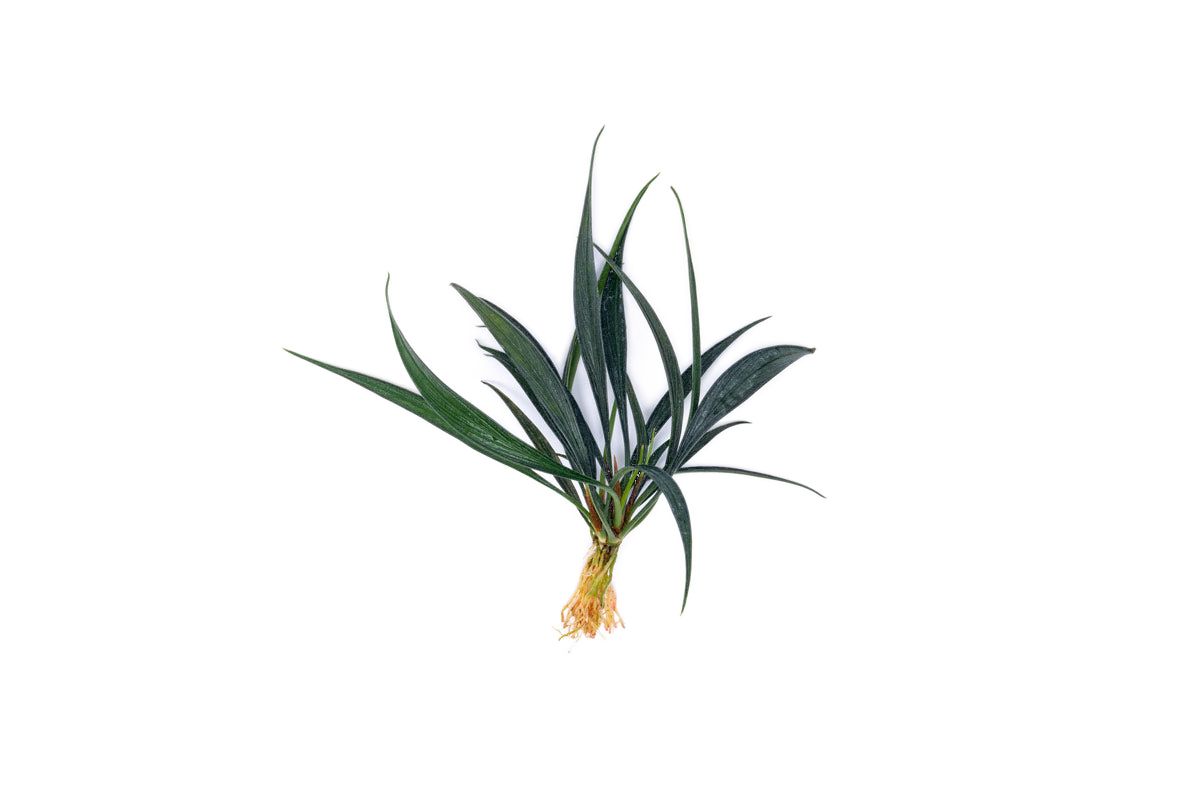
Josefia intricata is a unique, rare aroid endemic to Kalimantan in Indonesian Borneo, with long, textured, pendant leaves and intricate venation resembling miniature Anthurium foliage. This terrestrial plant needs high humidity above 80 percent, moderate light and consistent moisture without waterlogging, and suits terrariums, paludariums or as a houseplant, not aquariums.
Quick facts
Identity
- Also known as
- Aridarum Perisai
- Synonyms
- Aridarum sp. 'Perisai'
- Environment
- Freshwater
- Native to
- Indonesia (Kalimantan, Borneo)
- Habitat
- Grows on bare rock along riverbanks and streams in Bornean rainforest, mostly emersed and exposed to high humidity, briefly submerged only during seasonal floods
- Sourcing
- Wild-caught
- Conservation
- Not Evaluated
Care
- Care level
- Difficult
- Growth form
- Rhizome
- Max height
- 4 – 9 in (10 – 23 cm)
- Spread
- 6 in (15 cm)
- Growth rate
- Slow
- Placement
- Epiphyte
Water
- Temperature
- 72 – 82 °F (22 – 28 °C)
- Light
- Medium
Planting
- Substrate
- Any
- Feeds from
- Roots
- Fertilizer needs
- Low
- Colors
- Green
Feeding & breeding
- Propagation
- Rhizome division
Something wrong or missing? Submit a correction
Care guide
Overview
Clings to bare rock rather than spreading through substrate, sending out a creeping rhizome studded with narrow, leathery, pendant leaves whose intricate venation echoes miniature Anthurium foliage. Wild-collected from Bornean riverbanks, it demands humidity above 80 percent and moderate light, and belongs in a paludarium or terrarium rather than submerged in an aquarium.
Care
Josefia intricata is a rare Bornean aroid best kept as a terrarium, paludarium, or houseplant subject rather than an aquarium plant, despite occasionally being sold alongside aquatic species. It grows on bare rock along riverbanks in its native habitat and needs consistently high humidity, ideally above 80 percent, along with moderate, indirect light. The creeping rhizome should sit on or just above a damp substrate or rock surface, with roots kept moist but never waterlogged for extended periods.
Planting & trimming
Remove any packing cotton from the roots before mounting the rhizome on damp rock, wood, or a well-draining substrate mix, keeping the rhizome itself uncovered. It does best wedged into crevices or attached with thread or glue to hardscape in a humid paludarium or terrarium, similar to how Anubias or ferns are mounted. Avoid burying the rhizome directly in soggy substrate, as this invites rot.
Fertilizing
Dilute liquid fertilizer applied occasionally to the substrate or misting water supports steady growth, since this is a slow-growing epiphytic aroid with modest nutrient demand. Overfeeding is more likely to cause algae or rot on the leathery leaves than to benefit the plant. A well-draining, nutrient-poor to moderately rich substrate mimicking rock crevices with leaf litter works well.
Propagation
Propagation is done by dividing sections of the creeping rhizome, each with at least one growth point and a few roots, then remounting the divisions on damp rock or wood. Growth is slow, so divisions should be handled carefully and given time to establish before further disturbance.
Problems
Prolonged full submersion causes decline and eventual rot, since this species is adapted to only brief seasonal flooding rather than permanent aquatic life. Low humidity leads to browning or curling leaf margins, while stagnant, overly wet substrate promotes rhizome rot. Moderate airflow around the foliage helps prevent fungal issues in enclosed terrariums.
Sources
More Aroids
Something wrong or missing? Submit a correction
In the community
Popular tanks using Josefia Intricata
No public tanks are showcasing Josefia Intricata yet.