Snail
Horned Nerite Snails
Clithon coronaNeritidaeNerite snails
Price: $23.99 USD
Add from My tanks →1 photos
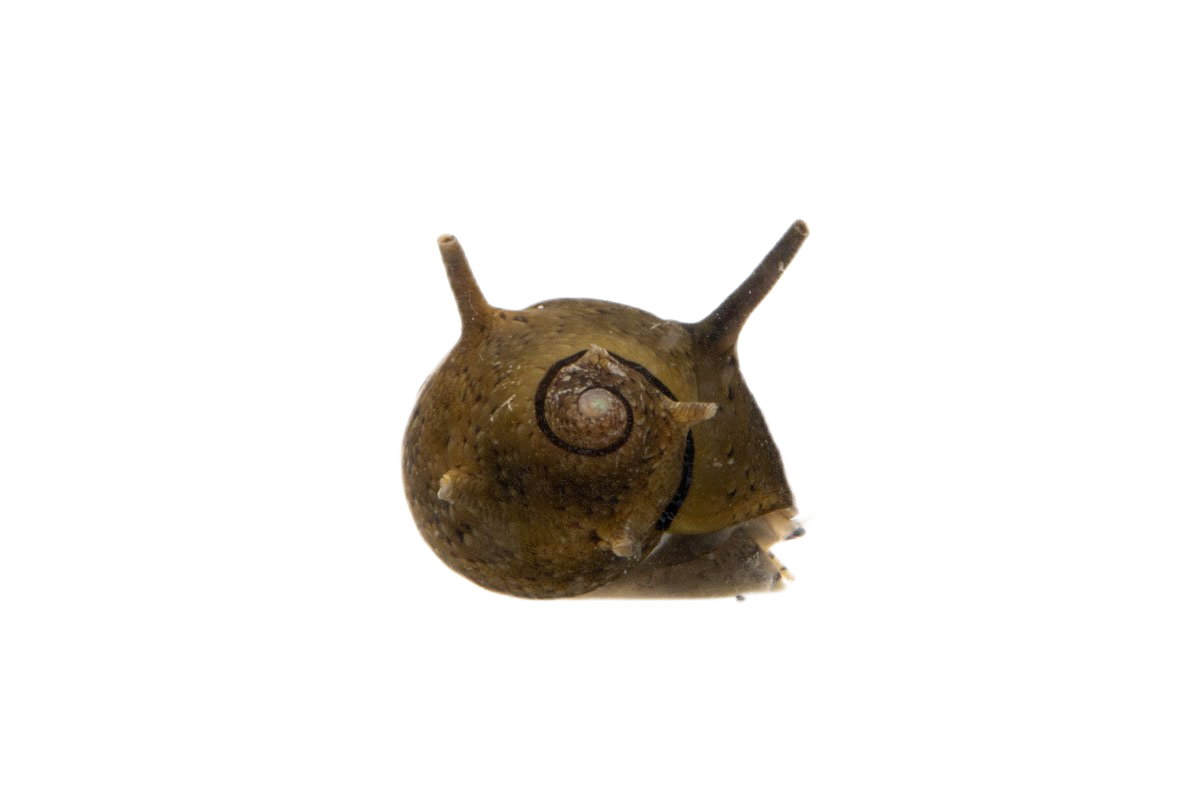
Horned nerite snails are small freshwater snails (Clithon corona) distinguished by horn-like projections on their shells, available in a wide range of colors and patterns. They are among the best algae eaters for planted aquariums, are extremely easy to care for, and feed entirely on algae and biofilm without harming live plants.
Quick facts
Identity
- Also known as
- Crown Nerite Snail; Thorn Nerite Snail; Three-Color Nerite Snail
- Synonyms
- Nerita corona; Clithon diadema (often sold interchangeably)
- Environment
- Freshwater
- Native to
- Indonesia, Philippines, Solomon Islands, Papua New Guinea, East and Southeast Asia
- Habitat
- Tropical rivers, streams, and estuarine tidal zones, clinging to stones and rocky substrates covered in algal film
- Sourcing
- Wild-caught
- Conservation
- Not Evaluated
Care
- Care level
- Easy
- Temperament
- Peaceful
- Adult size
- 0.3 – 1 in (0.6 – 2.5 cm)
- Lifespan
- 1 – 2 yrs
- Min tank
- 5 gal (19 L)
- Growth rate
- Slow
- Placement
- Rock & glass
Water
- Temperature
- 72 – 82 °F (22 – 28 °C)
- pH
- 7.0 – 8.2
- GH
- 8 – 20 dGH
- TDS
- 200 – 500 ppm
- dKH
- 2 – 15 dKH
- Flow
- Low-Moderate
Behavior & compatibility
- Social
- Solitary
- Aggression to own kind
- Low
- Active
- Night
- Invert safe
- Yes
- Plant safe
- Yes
- Shrimp safe
- Yes
- Clean-up role
- Algae, Biofilm, Detritus, Leftover food
- Population boom risk
- Low
Feeding & breeding
- Diet
- Herbivore
- Foods
- Algae, Biofilm, Vegetables, Pellets
- Breeding type
- Broadcast spawner
- Breeding difficulty
- Not bred in captivity
- Sexing
- Sexes are separate but not visually distinguishable externally; internal examination or observed mating is needed to sex individuals
- Target feeding
- Beneficial
Something wrong or missing? Submit a correction
Care guide
Overview
Horned nerite snails are small freshwater grazers named for the short spine-like projections ringing their shells, which come in mixes of yellow, brown, black, and mottled patterns. They spend most of their time scraping diatoms and biofilm from glass, rock, and driftwood, leaving live plants untouched. A tight lid is a must, as this species climbs readily and cannot breed in freshwater.
Care
This small horned nerite is one of the most reliable algae grazers for planted and nano tanks, spending most of its time scraping diatoms, green dust algae, and biofilm off glass, rock, and driftwood. It needs moderately hard, alkaline water to keep its shell intact, since soft or acidic conditions gradually etch and weaken it. A tight-fitting lid is essential, as the snail is a persistent climber and will crawl right out of an open aquarium given the chance. Copper-based medications are lethal to it, so treat tankmates in a separate quarantine tank if needed.
Feeding
Feeding relies almost entirely on naturally occurring algae and biofilm, so this snail should only go into an established tank with existing growth rather than a freshly cycled one. In low-algae setups, supplement with blanched vegetables such as zucchini or spinach, or occasional algae wafers high in spirulina. It rarely shows interest in flakes or standard pellets and can starve in an overly clean aquarium.
Tank mates
Its peaceful, non-predatory nature makes it suitable alongside small community fish, dwarf shrimp, and live plants, which it leaves untouched. Avoid pairing it with assassin snails, puffers, loaches, or other snail-eating or aggressive species. Because it does not compete with fish for food and rarely interacts with tankmates beyond grazing, it fits well into mixed cleanup crews.
Breeding
Females deposit small white egg capsules on hard surfaces like driftwood, rocks, and glass, but the larvae require brackish or marine salinity to develop, making reproduction in a standard freshwater tank impossible. This trait is actually a benefit for hobbyists, since the population stays fixed and never overruns the aquarium. Anyone hoping to breed this species would need a dedicated brackish rearing setup mimicking estuarine conditions.
Health
Shell erosion or pitting usually signals water that is too soft or acidic, and can be reversed by raising GH and KH into the recommended range. Sudden death is most often tied to copper exposure, ammonia or nitrite spikes, or introduction into a tank without enough algae to sustain it. A healthy specimen stays active, keeps its operculum tightly closed when disturbed, and shows steady shell growth without cracking.
Sources
More Nerite snails
Something wrong or missing? Submit a correction
In the community