
Snail
Black Military Helmet Snails
Neritina pulligeraNeritidaeNerite snails
Price: $29.99 USD
Add from My tanks →1 photos
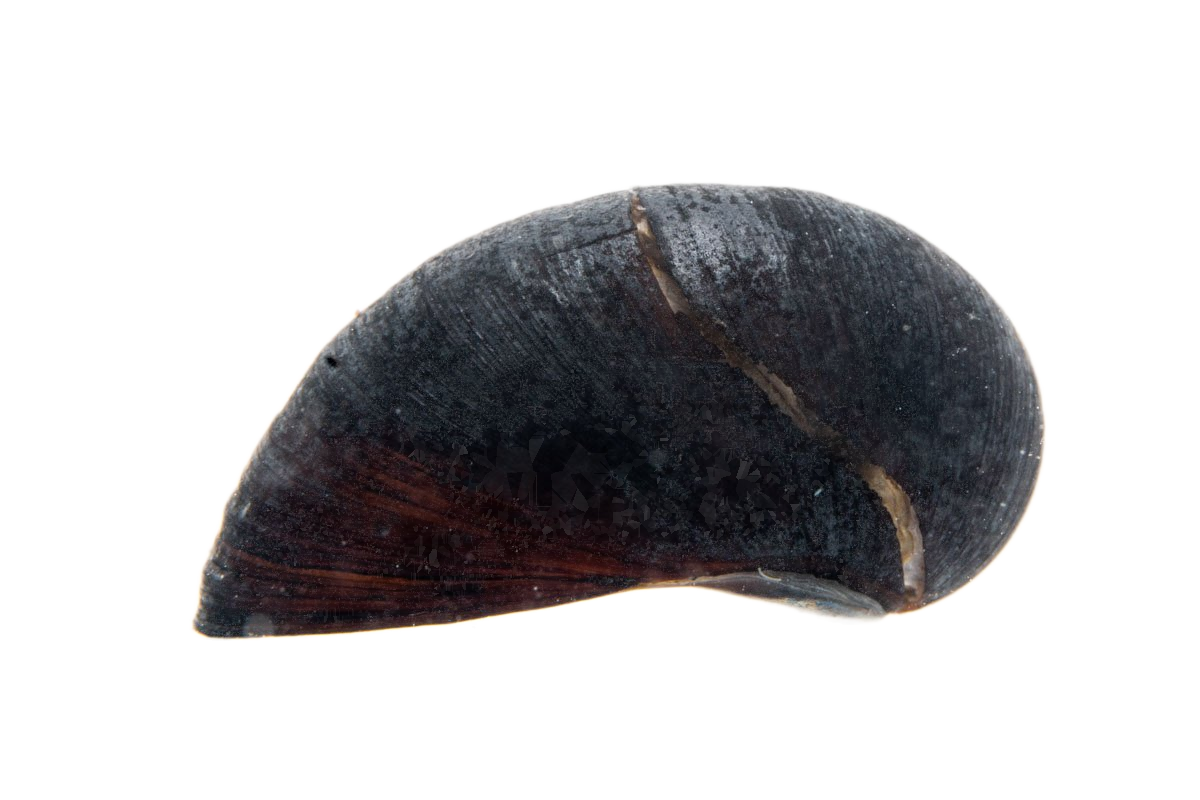
The Black Military Helmet Snail (Neritina pulligera), also called the Dusky Nerite, is a freshwater snail from the Indo-Pacific with a shiny dark brown to black shell resembling a soldier's helmet. A peaceful algae eater and scavenger, it feeds on algae, biofilm, and leftover food, won't overpopulate a freshwater tank, and prefers 72-82F water with a pH of 7-8.2.
Quick facts
Identity
- Also known as
- Dusky Nerite; Black Racer Nerite; Black-Capped Nerite; Baseball Cap Nerite; Steel Helmet Snail; Red-Lipped Nerite
- Synonyms
- Nerita pulligera
- Environment
- Freshwater
- Native to
- East Africa, Madagascar, India, Southeast Asia, Japan, New Guinea, Australia, Polynesia
- Habitat
- Fast-flowing coastal streams and lower river reaches with rocky substrate, clamped to boulders in strong current; larvae develop in brackish estuarine water
- Sourcing
- Wild-caught
- Conservation
- Least Concern
Care
- Care level
- Easy
- Temperament
- Peaceful
- Adult size
- 1 – 1.6 in (2.5 – 4.1 cm)
- Lifespan
- 3 – 5 yrs
- Min tank
- 10 gal (38 L)
- Growth rate
- Slow
- Placement
- Rock & glass
Water
- Temperature
- 72 – 82 °F (22 – 28 °C)
- pH
- 7.0 – 8.2
- GH
- 8 – 14 dGH
- dKH
- 4 – 12 dKH
- Flow
- Moderate
Behavior & compatibility
- Social
- Solitary
- Aggression to own kind
- Low
- Active
- Night
- Invert safe
- Yes
- Plant safe
- Yes
- Shrimp safe
- Yes
- Clean-up role
- Algae, Biofilm, Leftover food
- Population boom risk
- Low
Feeding & breeding
- Diet
- Herbivore
- Foods
- Algae, Biofilm, Vegetables
- Breeding type
- Broadcast spawner
- Breeding difficulty
- Not bred in captivity
- Sexing
- Sexually dimorphic; males are smaller and generally show more vivid shell coloration than the larger, duller females
- Target feeding
- Beneficial
Something wrong or missing? Submit a correction
Care guide
Overview
Wild-collected from coastal streams and river mouths across the Indo-Pacific, this nerite carries a glossy dark brown to black dome shell shaped like a soldier's helmet. It clings to rockwork grazing algae and biofilm around the clock, needs hard, calcium-rich water to keep its shell intact, and cannot reproduce in freshwater aquariums.
Care
This nerite is a heavy-duty algae grazer that does best in a mature, fully cycled tank with some water movement, since it evolved clinging to rocks in fast-flowing streams. Its thick, dome-shaped shell needs plenty of dissolved calcium, so keep GH on the higher side and avoid soft, acidic water that can etch or thin the shell over time. Provide rockwork or hardscape for grazing surfaces, and be aware that a single adult can strip algae from a small tank faster than it regrows, so supplemental feeding may be needed in low-algae setups.
Feeding
In the aquarium it grazes continuously on algae films and biofilm coating glass, rocks, and plant leaves, and it will also pick at leftover fish food. If algae growth cannot keep pace with its appetite, offer blanched vegetables like zucchini or algae wafers to prevent starvation. Slow-growing, broad-leaved plants such as Anubias and Cryptocoryne provide good biofilm-grazing surfaces alongside hardscape.
Tank mates
Its peaceful, slow-moving nature makes it compatible with shrimp, small community fish, and other snails, and it poses no threat to plants beyond incidental grazing. Avoid pairing it with aggressive or large predatory fish that may harass or eat it, and keep copper-based medications and fertilizers out of the tank since snails are sensitive to copper. Because it needs calcium-rich water, tankmates should share similar hard-water, neutral-to-alkaline preferences.
Breeding
Females lay hardened, calcareous egg capsules, often attaching them to the shells of other snails to reduce predation risk, but the larvae require a brackish or marine environment to develop and cannot mature in freshwater. As a result, eggs deposited in a home aquarium never hatch, so populations cannot become established in captivity. Every specimen in the trade is wild-caught since no commercial operation replicates the amphidromous larval stage.
Health
The main captive health issue is shell erosion or pitting caused by soft, acidic, or calcium-poor water, which can progress if not corrected with harder water or calcium supplementation. Sudden exposure to ammonia, nitrite, or copper-based treatments is quickly fatal, so the tank must be fully cycled before introduction. Watch for a snail remaining closed or unresponsive for extended periods, which can indicate poor water quality or a failing individual.
Sources
More Nerite snails
Something wrong or missing? Submit a correction
In the community
Popular tanks using Black Military Helmet Snails
No public tanks are showcasing Black Military Helmet Snails yet.