
Aquatic Plant
Helanthium Vesuvius (Echinodorus)
Helanthium bolivianum 'Vesuvius'AlismataceaeCrypts
Price: $34.99 USD
Add from My tanks →1 photos
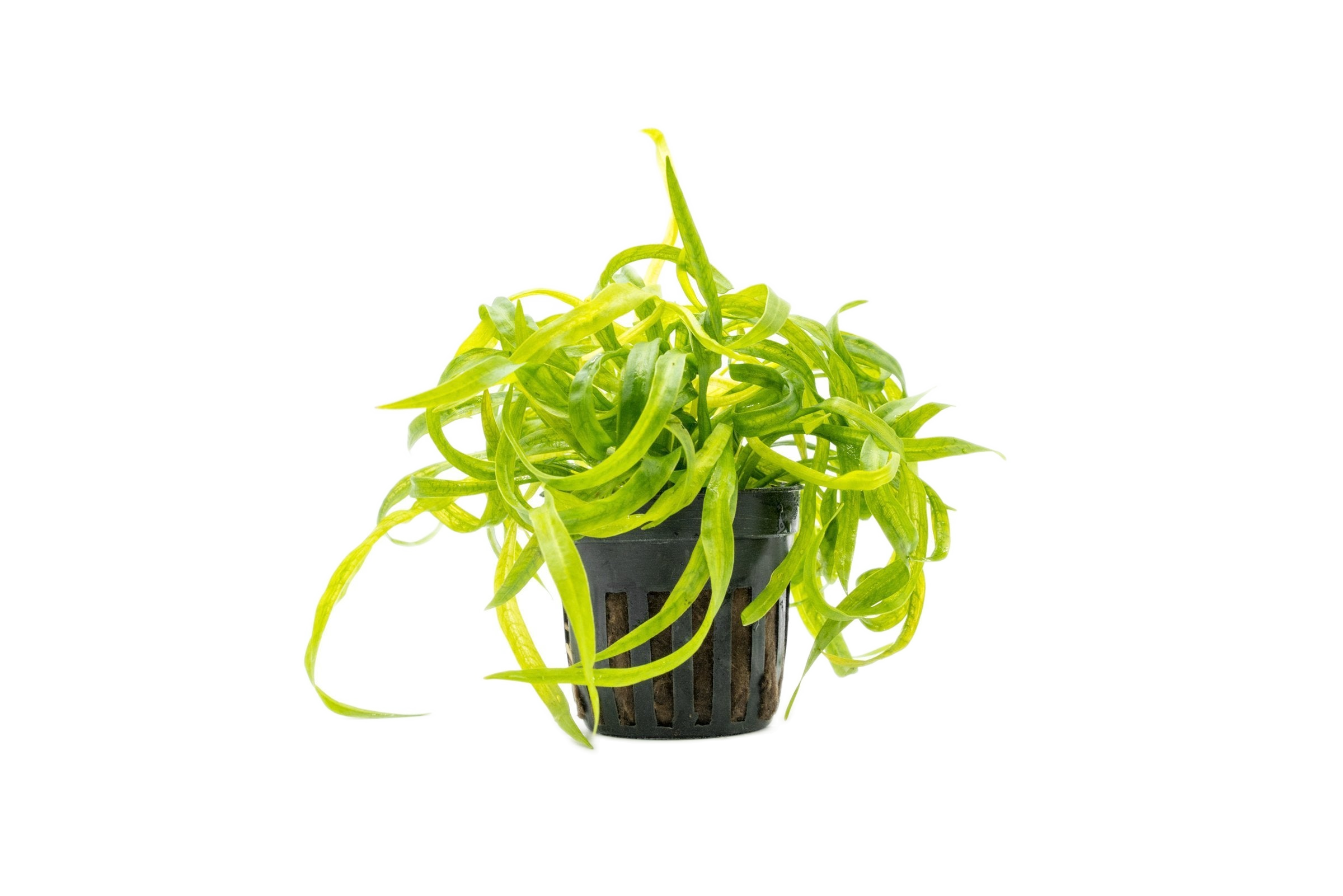
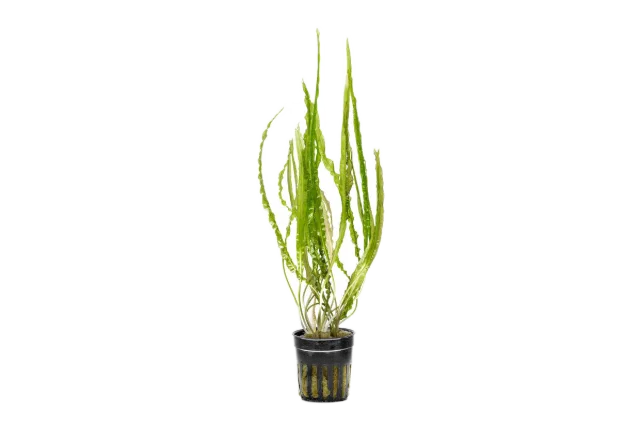
Helanthium 'Vesuvius', previously known as Echinodorus Vesuvius, features bright green leaves with a curling growth pattern. Given optimal conditions and a clean environment, it grows at a steady pace and makes a wonderful background plant; quite hardy, it propagates easily by separating runner plantlets.
Quick facts
Identity
- Also known as
- Corkscrew sword; Vesuvius sword; Vesuvius chain sword
- Synonyms
- Echinodorus 'Vesuvius'; Echinodorus bolivianus 'Vesuvius'; Echinodorus angustifolia 'Vesuvius'; Echinodorus sp. tortifolia
- Environment
- Freshwater
- Native to
- Captive-bred variety
- Habitat
- Cultivated variety selected from Helanthium bolivianum (Amazon basin chain sword species); not found in the wild in this form
- Sourcing
- Aquacultured
- Conservation
- Not Evaluated
Care
- Care level
- Easy
- Growth form
- Rosette
- Max height
- 4 – 12 in (10 – 30 cm)
- Spread
- 8 in (20 cm)
- Growth rate
- Fast
- Placement
- Midground, Background
Water
- Temperature
- 72 – 82 °F (22 – 28 °C)
- pH
- 6.5 – 7.5
- GH
- 3 – 10 dGH
- PAR
- 30 – 50 PAR
- Flow
- Low-Moderate
- Light
- Medium
- CO₂
- Beneficial
Planting
- Substrate
- Nutrient-rich preferred
- Feeds from
- Roots
- Fertilizer needs
- High
- Colors
- Green
Feeding & breeding
- Propagation
- Runners, Plantlets
Something wrong or missing? Submit a correction
Care guide
Overview
Helanthium bolivianum 'Vesuvius' is a cultivated chain sword grown for narrow, tightly spiraled green blades rising from a central rosette. It stays compact for a background or midground planting, spreading through runners once rooted, and depends heavily on a nutrient-rich substrate rather than water-column feeding. Expect early emersed-leaf melt before true aquatic foliage forms.
Care
This cultivar is a selection of Helanthium bolivianum grown for its tightly curled, ribbon-like leaves that spiral upward from a central rosette, giving it a texture similar to corkscrew vallisneria but with narrower, more tightly twisted blades. It tolerates a broad range of lighting from low to high but produces the tightest, most compact spirals under medium to high light. Given a nutrient-rich substrate and stable water parameters, the plant is undemanding and settles in without much fuss once past the initial adjustment period.
Planting & trimming
Plant the root crown so it sits just at the substrate surface, since burying it too deeply causes the plant to push itself back up over the following days. It works well as a midground specimen in larger tanks or as a background plant in nano aquariums, where its unusual curling texture contrasts with straighter-leaved neighbors. Trim only fully spent outer leaves at their base rather than partway up the blade, since partial cuts brown back and look ragged.
Fertilizing
As a heavy root feeder, it relies mainly on nutrients drawn up through its extensive root system rather than the water column. Root tabs pushed into the substrate near the crown every few months make a noticeable difference in leaf density and color, and an iron-rich substrate additive helps prevent pale or yellowing new growth. Liquid fertilizers can supplement but should not replace root feeding for this species.
Propagation
Once established with a healthy root system, the plant readily sends out horizontal runners that produce plantlets at their nodes, which can be separated and replanted once they have developed their own roots. It may also produce daughter plantlets along an emersed flower stalk, which can likewise be cut away and planted as new specimens. Propagation is easiest in the submersed form, where runner production tends to be more prolific than emersed cultivation.
Problems
Plants sold at aquarium stores are usually farm-raised emersed, so the broader, upright leaves often melt away within a couple of weeks of submersion before narrower true aquatic leaves emerge; this die-back is normal and not a sign of poor health. Insufficient light or a nutrient-poor substrate leads to thin, pale, elongated leaves and weak runner production. Good water circulation around the base helps prevent detritus buildup and algae fouling among the dense curled foliage.
Sources
More Crypts
Something wrong or missing? Submit a correction
In the community
Popular tanks using Helanthium Vesuvius (Echinodorus)
No public tanks are showcasing Helanthium Vesuvius (Echinodorus) yet.