
Aquatic Plant
Fenestratarum Mulyadii
Fenestratarum mulyadiiAraceaeBucephalandra
Price: $39.99 USD
Add from My tanks →1 photos
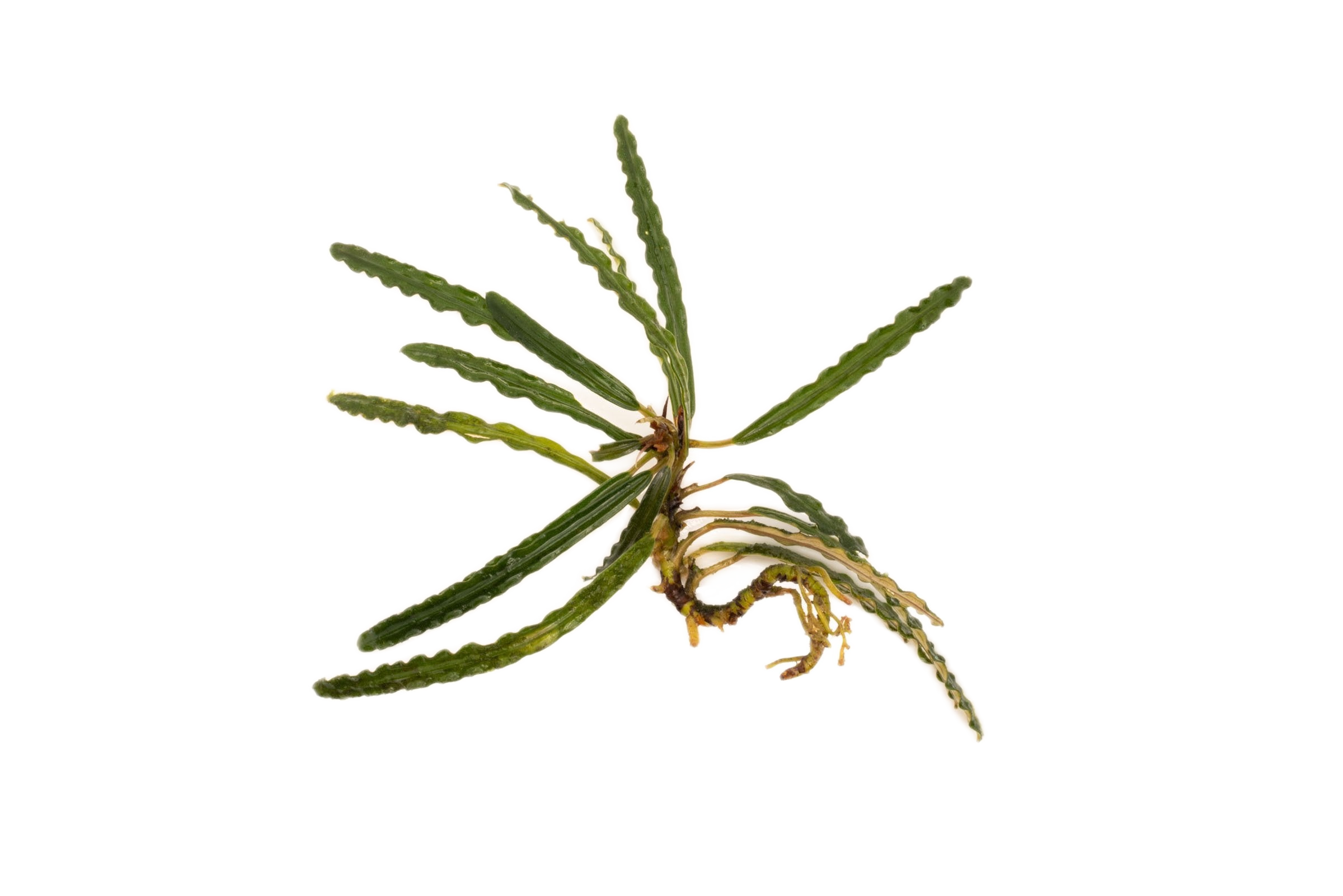
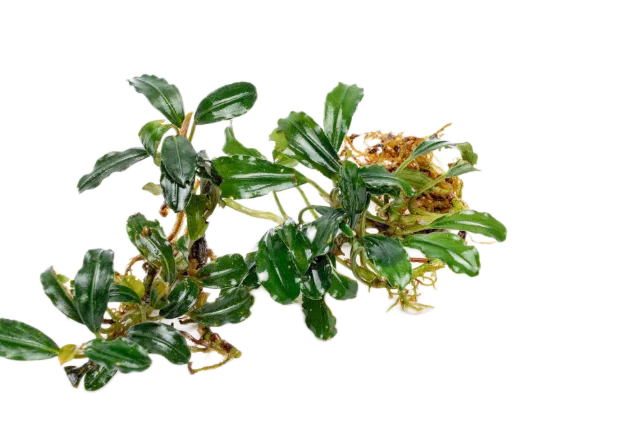
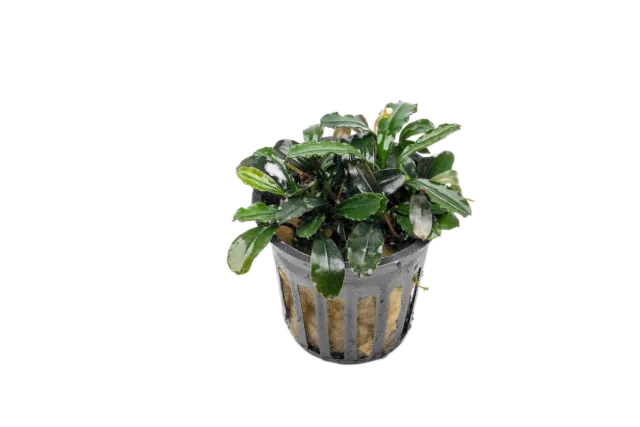
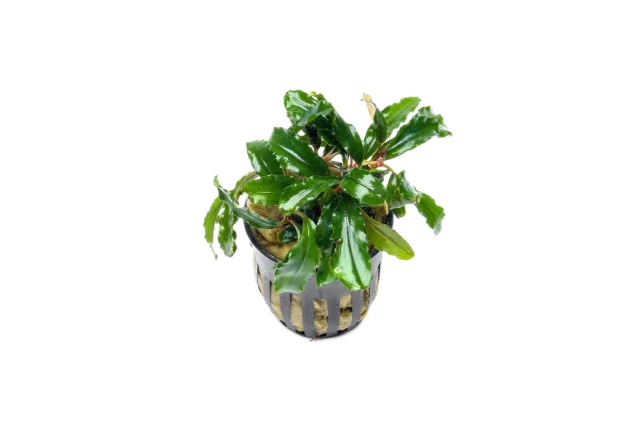
Fenestratarum Mulyadii is a newly discovered genus from East Kalimantan, Borneo, closely related to Aridarum and Bucephalandra. It displays long, slender, slightly leathery deep-green leaves with pronounced ruffled margins in dense clusters from a thick central rhizome; attach to hardscape, grown submerged or emersed.
Quick facts
Identity
- Also known as
- Fenestratarum Mulyadi
- Synonyms
- Fenestratarum mulayadii
- Environment
- Freshwater
- Native to
- Indonesia (East Kalimantan, Borneo)
- Habitat
- Grows on rocks and wood along the banks of fast-flowing, shaded tropical streams and near waterfalls in Bornean rainforest, often emersed in splash zones.
- Sourcing
- Captive-bred
- Conservation
- Not Evaluated
Care
- Care level
- Moderate
- Growth form
- Rhizome
- Max height
- 2 – 6 in (5.1 – 15 cm)
- Spread
- 6 in (15 cm)
- Growth rate
- Slow
- Placement
- Foreground, Midground
Water
- Temperature
- 72 – 82 °F (22 – 28 °C)
- pH
- 5.5 – 7.5
- GH
- 3 – 8 dGH
- Flow
- Low-Moderate
- Light
- Low
- CO₂
- Beneficial
Planting
- Substrate
- Not needed
- Feeds from
- Both
- Fertilizer needs
- Low
- Colors
- Green
Feeding & breeding
- Propagation
- Rhizome division
Something wrong or missing? Submit a correction
Care guide
Overview
Leaves reach 2 to 6 inches on a thick creeping rhizome, forming dense tufts of slender, leathery foliage with ruffled margins. Growth is slow and best under low to medium light with gentle flow, mounted to wood or rock rather than buried. Stable water chemistry and modest fertilizing keep leaves clean and rot at bay.
Care
This rare Bornean aroid grows slowly from a thick creeping rhizome, producing slender, leathery, ruffled leaves in dense tufts. It does best under low to medium light with gentle to moderate flow, mimicking the shaded streams it comes from in the wild. Stable water parameters are important, as sudden shifts in temperature or chemistry tend to trigger leaf melt and rhizome rot, so it suits keepers already experienced with Bucephalandra or Anubias.
Planting & trimming
Attach the rhizome to driftwood or rock using thread, fishing line, or cyanoacrylate glue rather than planting it in substrate, since a buried rhizome will rot. Remove any rockwool or pot material from the roots before mounting. It can be grown fully submerged or emersed in high-humidity paludariums and vivariums.
Fertilizing
A complete liquid fertilizer with trace elements, including iron, magnesium and calcium, supports steady leaf production, since deficiencies can cause pale or distorted new growth. Root tabs are not needed since the plant is epiphytic and absorbs nutrients through its leaves and rhizome rather than roots buried in substrate. CO2 injection is optional but tends to speed up otherwise very slow growth.
Propagation
New plants are produced by dividing the rhizome once it has grown large enough, cutting it into sections with a few leaves and healthy roots on each piece using sharp, clean scissors or a blade. Divisions can then be reattached to hardscape and left undisturbed to re-establish.
Problems
Because growth is so slow, leaves can quickly become coated in algae if lighting or nutrient balance is off, so placement in lower-flow, shadier spots away from intense light helps keep them clean. Melt and rhizome rot most often follow burial of the rhizome or abrupt changes in water chemistry. Older leaves naturally yellow and should be trimmed away at the base to keep the plant tidy.
Sources
More Bucephalandra
Something wrong or missing? Submit a correction
In the community
Popular tanks using Fenestratarum Mulyadii
No public tanks are showcasing Fenestratarum Mulyadii yet.