
Aquatic Plant
Echinodorus Parviflorus
Echinodorus parviflorusAlismataceaeSwords
Price: $26.99 USD
Add from My tanks →1 photos
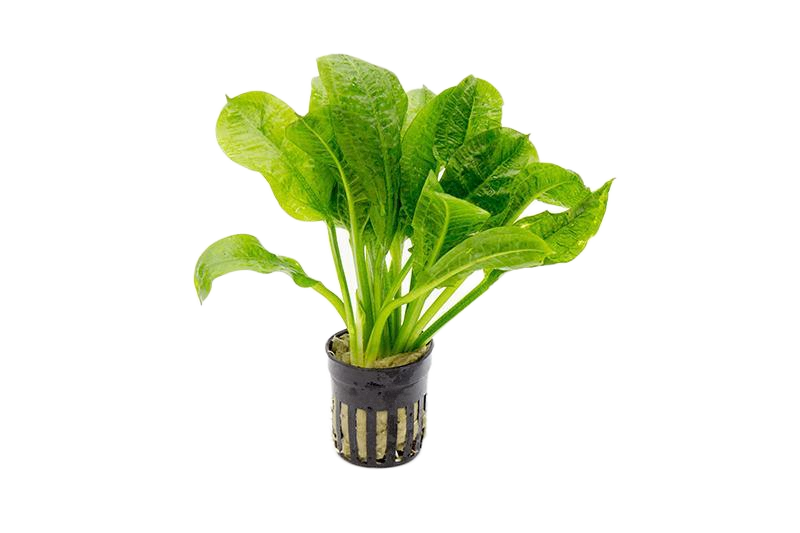
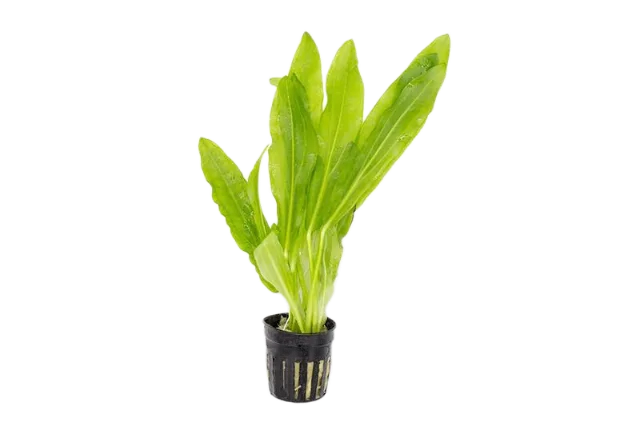
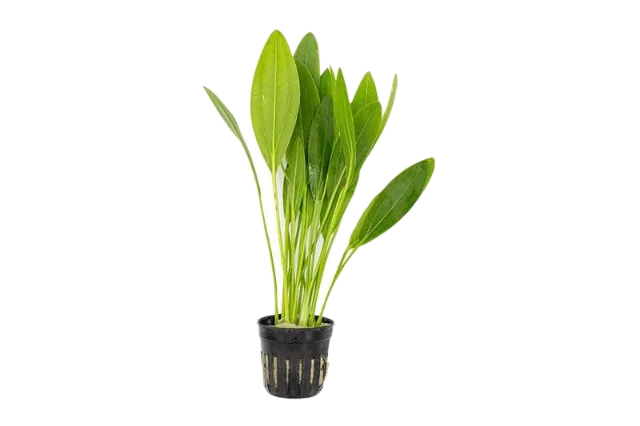
Echinodorus Parviflorus (Rosette Sword, Tropica Sword) is incredibly adaptable, growing in a rosette of long, pointed, light-green leaves with hammered texture and prominent veins. More compact than other sword plants, it makes an excellent mid- or foreground focal point; grown submersed or emersed, no CO2 needed.
Quick facts
Identity
- Also known as
- Rosette Sword; Dwarf Amazon Sword; Amazon Rosette
- Synonyms
- Echinodorus grisebachii 'Tropica'
- Environment
- Freshwater
- Native to
- Bolivia, Peru, South America
- Habitat
- Shallow tropical wetlands and slow-moving waters, growing both submerged and emersed along margins
- Sourcing
- Captive-bred
- Conservation
- Not Evaluated
Care
- Care level
- Easy
- Growth form
- Rosette
- Max height
- 2 – 10 in (5.1 – 25 cm)
- Spread
- 10 in (25 cm)
- Growth rate
- Moderate
- Placement
- Foreground, Midground
Water
- Temperature
- 71 – 82 °F (22 – 28 °C)
- pH
- 6.5 – 7.5
- GH
- 4 – 18 dGH
- Flow
- Low-Moderate
- Light
- Medium
- CO₂
- Beneficial
Planting
- Substrate
- Nutrient-rich preferred
- Feeds from
- Roots
- Fertilizer needs
- High
- Colors
- Green
Feeding & breeding
- Propagation
- Adventitious plantlets, Runners
Something wrong or missing? Submit a correction
Care guide
Overview
Light-green leaves with a hammered texture and prominent veins form a compact rosette that stays proportional in smaller tanks, unlike its larger Amazon Sword relatives. It roots heavily, so nutrient-rich substrate and root tabs matter more than water column dosing. Melting of emersed-grown leaves after planting is normal as it converts to submerged growth.
Care
A compact rosette sword that stays proportional even in smaller tanks, unlike its larger Amazon Sword relatives. It tolerates a wide range of lighting from low to moderate-high, and does not require CO2 injection, though supplementation speeds growth. Because it draws most of its nutrition through the roots, a nutrient-rich substrate matters far more to its long-term health than water column dosing.
Planting & trimming
Plant the crown at substrate level with the roots buried but the base of the leaves exposed, since a buried crown will rot. Space plants roughly 6 to 8 inches apart to allow the rosette to fill out, and trim older or damaged outer leaves as needed to keep the plant tidy. It can also be grown emersed in paludariums, where it will flower.
Fertilizing
Root tabs placed beneath the crown are the most effective way to feed this plant, since it behaves as a heavy root feeder rather than pulling nutrients from the water column. An iron supplement can help correct pale or yellowing new growth in nutrient-poor setups. Liquid fertilizers offer secondary support but should not replace substrate feeding.
Propagation
Established plants send up a flower stalk bearing small adventitious plantlets; once a plantlet has grown three or four leaves and developed roots it can be cut free and replanted separately. Some growers also report occasional runner production with daughter plants forming along horizontal shoots. Side-shoot division is a secondary option if offsets appear at the base of the rosette.
Problems
New arrivals often shed their emersed-grown leaves within the first few weeks as they convert to a submerged growth form, which is normal rather than a sign of failing health. Sudden shifts in water parameters or nutrient availability can trigger more general melt and should be avoided after planting. Pale or thin leaves usually point to insufficient root feeding or iron deficiency rather than lighting problems.
Sources
More Swords
Something wrong or missing? Submit a correction
In the community
Popular tanks using Echinodorus Parviflorus
No public tanks are showcasing Echinodorus Parviflorus yet.