
Aquatic Plant
Echinodorus Major/Martii
Echinodorus martiiAlismataceaeSwords
Price: $7.99 USD
Add from My tanks →1 photos
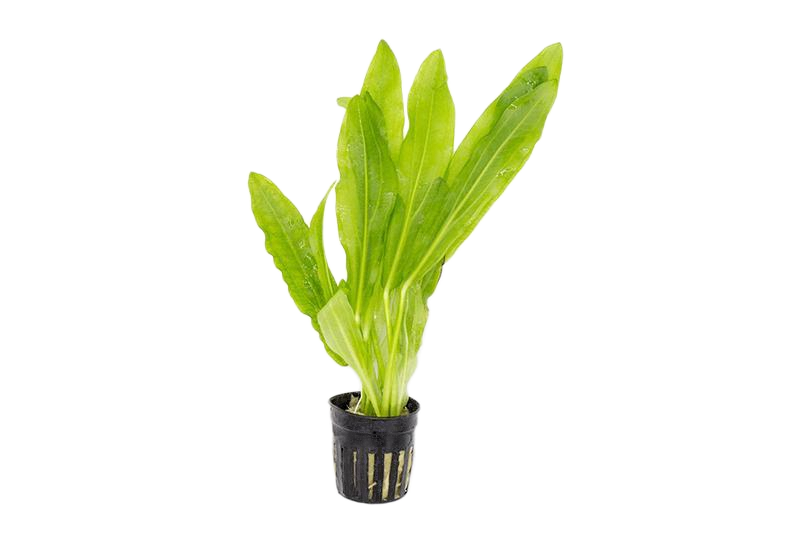
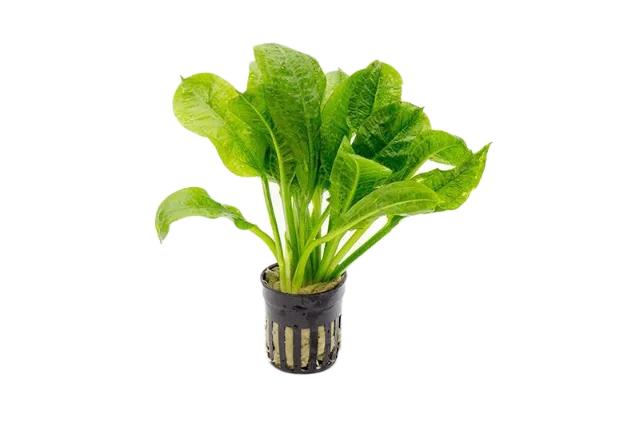
Echinodorus Major Martii (Ruffle Sword) is a long-time staple with long, thick ruffle-textured leaves and beautiful striations, bright green contrasting with red plants. Easy for beginners; grows submersed or emersed in nutrient-rich substrate, moderate to high lighting, no CO2 needed.
Quick facts
Identity
- Also known as
- Ruffled sword; Ruffled Amazon sword; Major sword
- Synonyms
- Echinodorus major; Echinodorus major 'Martii'; Echinodorus leopoldina; Aquarius major
- Environment
- Freshwater
- Native to
- Brazil
- Habitat
- Shallow rivulets and slow-to-moderate flowing streams and rivers of eastern Brazil, rooted in sandy or pebbly substrate, growing fully submersed year-round.
- Sourcing
- Aquacultured
- Conservation
- Not Evaluated
Care
- Care level
- Easy
- Growth form
- Rosette
- Max height
- 6 – 24 in (15 – 61 cm)
- Spread
- 20 in (51 cm)
- Growth rate
- Moderate
- Placement
- Midground, Background
Water
- Temperature
- 72 – 82 °F (22 – 28 °C)
- pH
- 6.3 – 7.5
- GH
- 4 – 12 dGH
- dKH
- 2 – 12 dKH
- PAR
- 30 – 60 PAR
- Flow
- Moderate
- Light
- Medium
- CO₂
- Beneficial
Planting
- Substrate
- Nutrient-rich required
- Feeds from
- Roots
- Fertilizer needs
- High
- Colors
- Green
Feeding & breeding
- Propagation
- Runners
Something wrong or missing? Submit a correction
Care guide
Overview
Cultivated from stock originating in eastern Brazil's slow rivers and rivulets, this sword produces long, thick, ruffle-edged leaves with visible striations that stay bright green, offering contrast against red-leaved companions. A large background rosette for bigger tanks, it roots heavily and rewards regular substrate fertilization with steady, beginner-friendly growth.
Care
A large, upright rosette plant well suited to spacious background positions in bigger aquariums, since a mature specimen can span 20 inches or more across. It tolerates a wide range of water chemistry and grows steadily under moderate to high lighting without requiring CO2 injection, though added CO2 will noticeably speed growth. Give it generous clearance from hardscape and neighboring plants so the long, ruffled leaves can unfurl without rubbing or shading smaller species nearby.
Planting & trimming
Plant the crown into a deep, nutrient-rich substrate with the root tabs placed beneath it, keeping the crown itself above the substrate line to avoid rot. As the plant grows, trim off older outer leaves at the base and remove side shoots or runners to control its spread and keep the rosette tidy. It can also be grown emersed in paludariums given high humidity.
Fertilizing
This is a heavy root feeder that draws most of its nutrition from the substrate rather than the water column. Push root tabs containing iron and potassium into the substrate near the base every couple of months, and supplement with liquid fertilizer if leaves begin to look thin or pale. Yellowing new growth is a common sign of iron deficiency and usually responds quickly to supplementation.
Propagation
Propagates readily via runners, horizontal stems that extend from the base of the parent plant and produce small plantlets with their own roots. Once a plantlet has developed a healthy root system, it can be separated from the runner with scissors and replanted elsewhere in the tank or in a new setup.
Problems
Generally trouble-free once established, though newly planted specimens can shed a few older leaves while adjusting to a new tank. Pale or thin leaves with reduced waviness usually point to a depleted substrate or lack of root fertilization rather than disease. This species is sensitive to copper, so avoid copper-based algaecides or invertebrate treatments in a tank containing it.
Sources
More Swords
Something wrong or missing? Submit a correction
In the community
Popular tanks using Echinodorus Major/Martii
No public tanks are showcasing Echinodorus Major/Martii yet.