
Aquatic Plant
Echinodorus Harbich
Echinodorus cordifolius 'Harbich'AlismataceaeSwords
Price: $8.99 USD
Add from My tanks →1 photos
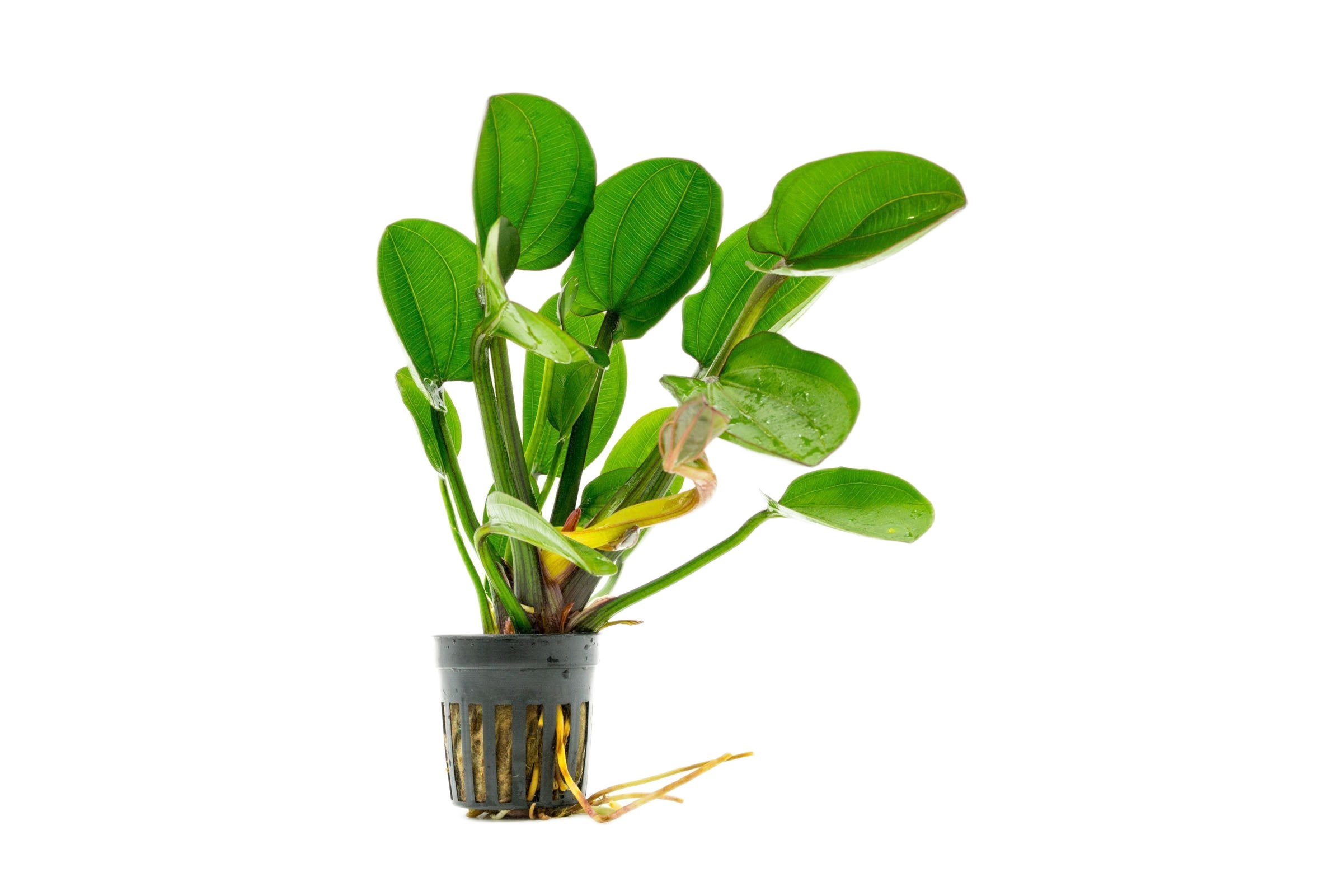
Echinodorus Harbich is a mutation of the larger Echinodorus Cordifolius, with solid, round foliage in classic sword green. Much smaller and very easy to care for, great for beginners; new leaves are reddish, maturing to green. Plant directly into quality substrate, supplementing root tabs in inert substrates.
Quick facts
Identity
- Also known as
- Round-leaf sword; Harbich Sword; Harbich Red; Harbich Green
- Synonyms
- Echinodorus 'Harbich Red'; Echinodorus 'Harbich Green'
- Environment
- Freshwater
- Native to
- Captive-bred variety
- Habitat
- Cultivar with no wild habitat; grown as a submerged or emersed aquarium and paludarium plant, derived from South American amazon sword stock.
- Sourcing
- Aquacultured
- Conservation
- Not Evaluated
Care
- Care level
- Easy
- Growth form
- Rosette
- Max height
- 4 – 12 in (10 – 30 cm)
- Spread
- 12 in (30 cm)
- Growth rate
- Moderate
- Placement
- Midground
Water
- Temperature
- 68 – 82 °F (20 – 28 °C)
- pH
- 6.0 – 7.5
- GH
- 3 – 15 dGH
- dKH
- 2 – 15 dKH
- PAR
- 30 – 80 PAR
- Flow
- Low-Moderate
- Light
- Medium
- CO₂
- Beneficial
Planting
- Substrate
- Nutrient-rich preferred
- Feeds from
- Roots
- Fertilizer needs
- Medium
- Colors
- Green, Red
Feeding & breeding
- Propagation
- Adventitious plantlets, Rhizome division
Something wrong or missing? Submit a correction
Care guide
Overview
Bred from the larger Amazon sword, this compact mutation stays low and rounded rather than tall and lance-leaved. New leaves emerge reddish before maturing to classic sword green, forming a dense rosette. It roots heavily, so plant it in nutrient substrate or feed root tabs, and expect trimming as older leaves are shed.
Care
This compact sword cultivar forms a dense, low rosette of thick, rounded leaves and tolerates a wide range of water conditions, making it forgiving for newer keepers. It grows well under low to medium light without CO2, though supplemental lighting and a nutrient-rich substrate bring out deeper green coloration and firmer leaves. Being a heavy root feeder, it benefits from being planted in substrate rather than left unanchored, and old outer leaves should be trimmed periodically to make room for new growth.
Planting & trimming
Plant the crown directly into a nutrient-rich substrate or gravel bed, keeping the base of the rhizome at the soil line so the crown is not buried. Space plants generously since the rosette spreads wide as it matures, and allow room for the extensive root system to develop. Runners or plantlets that form on flower stalks can be separated and replanted once they have grown their own roots.
Fertilizing
Root tabs pushed near the base of the rosette are the most effective way to feed this plant, since it draws most of its nutrients through its thick root system rather than the water column. Liquid fertilizers with iron supplementation help maintain leaf color and vigor, particularly in inert substrates lacking natural nutrients. Pale new growth or thin, weak leaves usually signal a need for more root-level feeding rather than water column dosing.
Propagation
Propagation happens mainly through adventitious plantlets that form along the flower stalk (pedicel), which root and can be separated once developed, a process that occurs more reliably in open-top or emersed setups. Mature clumps can also be propagated by dividing the rhizome, ensuring each division retains healthy roots and at least one growth point.
Problems
Established specimens are generally hardy and resistant to melt once acclimated, though newly transplanted plants can shed a few older leaves before settling in. Low nutrient availability can cause new leaves to emerge pale or undersized, while excess light without adequate feeding may encourage algae to colonize the broad leaf surfaces. Removing yellowing or algae-covered leaves promptly keeps the rosette looking clean and directs energy toward new growth.
Sources
More Swords
Something wrong or missing? Submit a correction
In the community
Popular tanks using Echinodorus Harbich
No public tanks are showcasing Echinodorus Harbich yet.