
Aquatic Plant
Cryptocoryne Willisii
Cryptocoryne walkeri var. luteaAraceaeCrypts
Price: $6.99 USD
Add from My tanks →1 photos
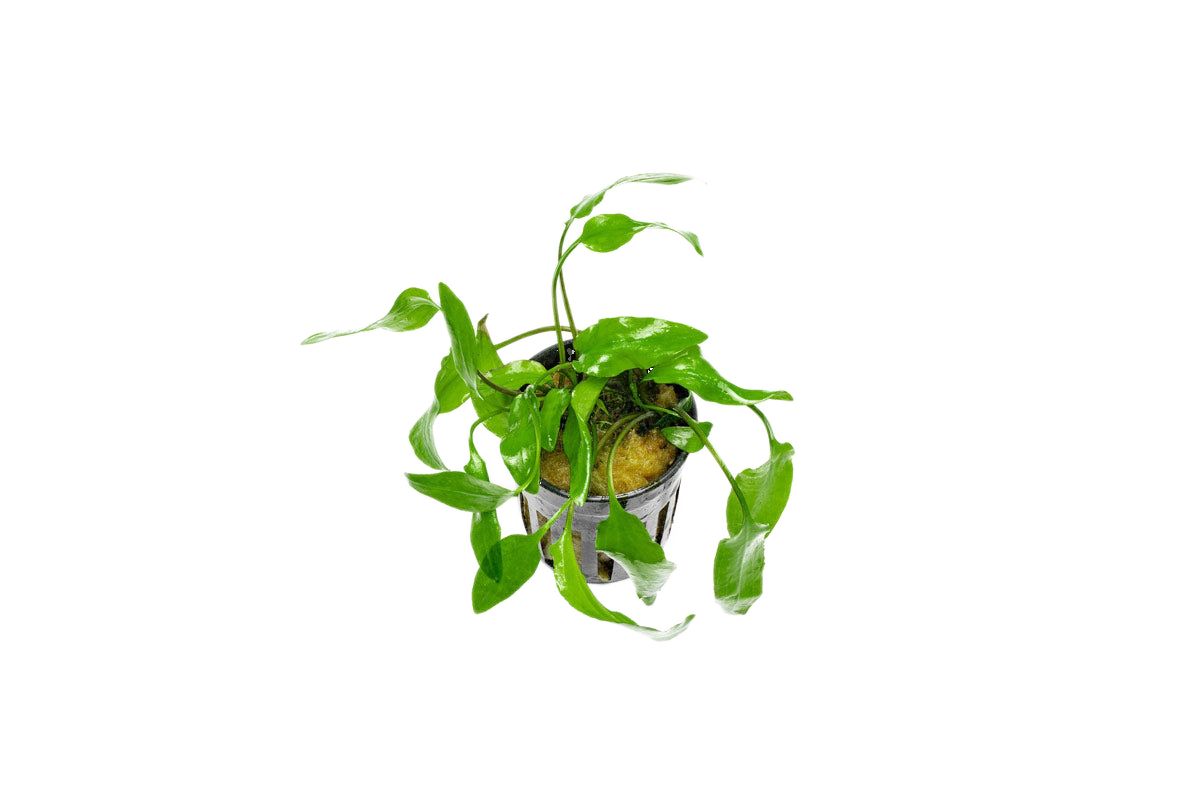
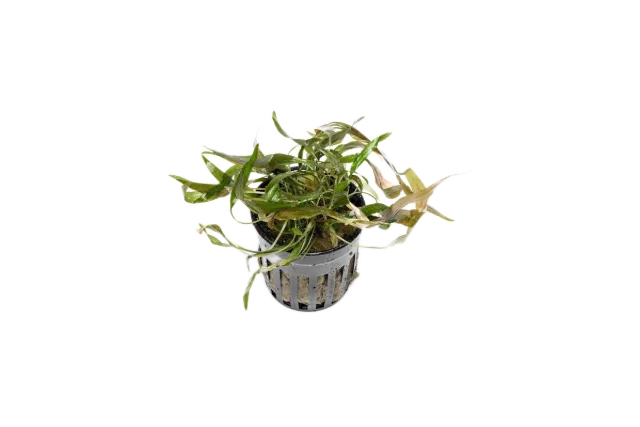
Cryptocoryne Willisii features narrow, bright emerald-green leaves forming neat, compact clusters, similar to Cryptocoryne lucens. Adaptable and stress-free for low-tech tanks once roots establish, suited to foreground or midground; like all crypts, sensitive to water parameter changes and should not be moved.
Quick facts
Identity
- Also known as
- Willisii Crypt; Cryptocoryne lucens (similar species)
- Synonyms
- Cryptocoryne lutea; Crypt lutea
- Environment
- Freshwater
- Native to
- Sri Lanka
- Habitat
- Shaded streams and muddy banks in the central highlands of Sri Lanka; submersed during wet season and emersed as water levels drop
- Sourcing
- Captive-bred
- Conservation
- Not Evaluated
Care
- Care level
- Easy
- Growth form
- Rosette
- Max height
- 3 – 6 in (7.6 – 15 cm)
- Spread
- 4 in (10 cm)
- Growth rate
- Slow
- Placement
- Foreground, Midground
Water
- Temperature
- 68 – 82 °F (20 – 28 °C)
- pH
- 6.0 – 7.5
- GH
- 2 – 15 dGH
- Flow
- Low
- Light
- Low
- CO₂
- Beneficial
Planting
- Substrate
- Nutrient-rich preferred
- Feeds from
- Roots
- Fertilizer needs
- Low
- Colors
- Green, Brown
Feeding & breeding
- Propagation
- Runners, Rhizome division
Something wrong or missing? Submit a correction
Care guide
Overview
Narrow, bright emerald-green leaves grow in neat, compact rosettes reminiscent of Cryptocoryne lucens. This low-growing crypt settles into low-tech foreground or midground plantings once rooted, tolerating a wide range of water hardness. Growth stays slow and undemanding, but the rhizome should stay put once planted to avoid triggering melt.
Care
A compact, undemanding crypt that suits low-tech setups once it has settled in. It tolerates a wide swing in hardness and does fine without CO2, though a bit of extra light and gas will speed up its naturally slow pace. The main rule with this plant is to leave it alone after planting, since crypts respond poorly to being uprooted or moved between tanks.
Planting & trimming
Plant the rhizome shallowly in a nutrient-rich substrate with the crown left exposed, spacing individual crowns a few inches apart to allow for runner spread. Avoid disturbing the plant once established, since crypts are notably sensitive to being uprooted or relocated. Trimming is limited to removing old or melted leaves at the base as the clump fills in.
Fertilizing
Most nutrient uptake happens through the roots rather than the water column, so root tabs or a nutrient-rich substrate layer are more useful than heavy liquid dosing. Growth is slow and demand is low overall, but stalled or pale new leaves usually mean the root zone has run out of nutrients. Iron supplementation can help if new leaves come in unusually small or discolored.
Propagation
Propagates readily through underground runners that send up new plantlets at a short distance from the parent. Once a daughter plant has developed its own roots and a few leaves it can be separated from the runner and replanted elsewhere. Division of an established rhizome clump is also possible but slower to recover than runner propagation.
Problems
Crypt melt is common after planting or after a sudden change in water chemistry, with leaves turning translucent and collapsing within days. The rhizome and root system typically survive this and push out a fresh set of submersed leaves within a few weeks if left undisturbed. Poor flow or a buildup of algae on the older leaves can also slow recovery, so gentle circulation around the base helps.
Sources
More Crypts
Something wrong or missing? Submit a correction
In the community
Popular tanks using Cryptocoryne Willisii
No public tanks are showcasing Cryptocoryne Willisii yet.