
Cryptocoryne
Cryptocoryne Wendtii Brown
Cryptocoryne wendtii 'Brown'AraceaeCrypts
Price: $24.99 USD
Add from My tanks →1 photos
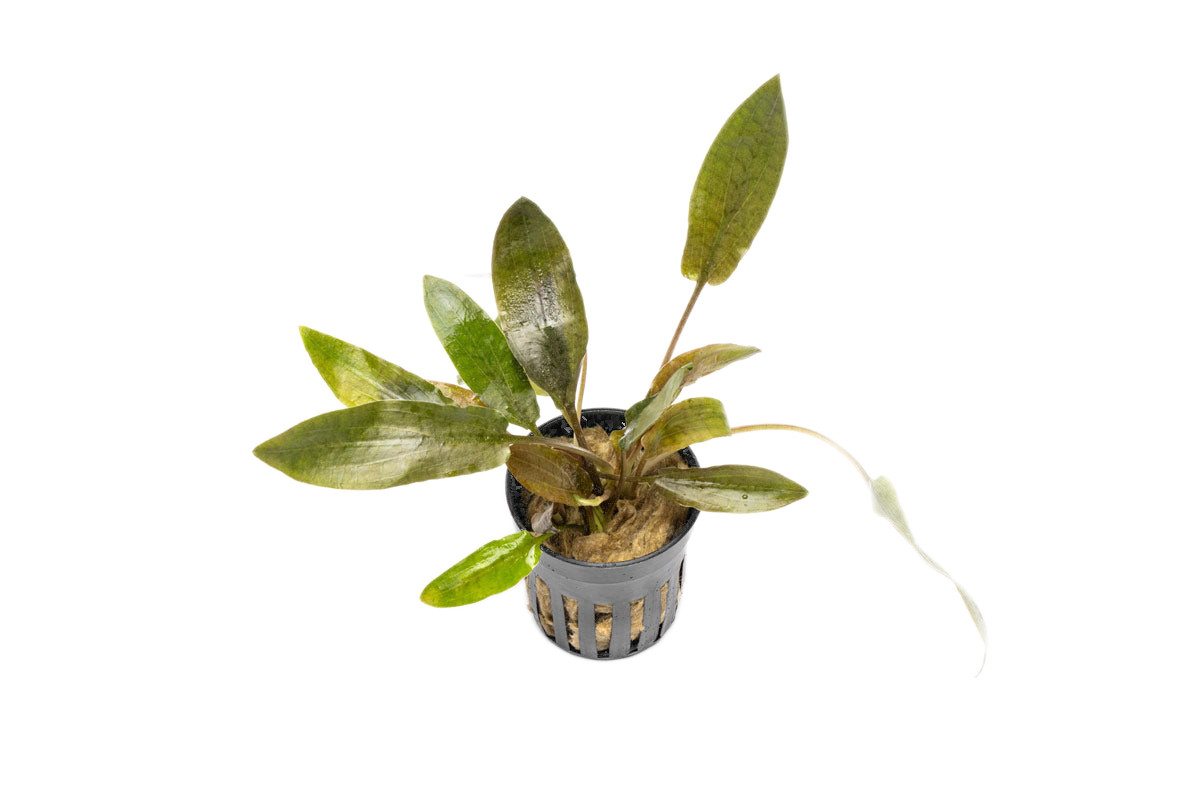
Cryptocoryne wendtii 'Brown', native to the mineral-rich streams of Sri Lanka, sports deep bronze-to-chocolate leaves with textured, wavy margins, an earthy focal point among green plants. Versatile and tolerant of hard water, great for community and cichlid tanks; sensitive to sudden parameter shifts and should not be moved.
Quick facts
Identity
- Also known as
- Brown Water Trumpet; Bronze Wendtii
- Synonyms
- Cryptocoryne wendtii var. Mi Oya
- Environment
- Freshwater
- Native to
- Sri Lanka
- Habitat
- Shaded, gently flowing streambeds and riverbanks of the Mi Oya river in Sri Lanka's warm dry-zone lowlands, growing submersed in the channel and emersed along the banks as water levels drop
- Sourcing
- Captive-bred
- Conservation
- Not Evaluated
Care
- Care level
- Easy
- Growth form
- Rosette
- Max height
- 6 – 14 in (15 – 36 cm)
- Spread
- 12 in (30 cm)
- Growth rate
- Slow
- Placement
- Midground, Background
Water
- Temperature
- 72 – 86 °F (22 – 30 °C)
- pH
- 6.0 – 7.5
- GH
- 3 – 12 dGH
- dKH
- 1 – 18 dKH
- Flow
- Low-Moderate
- Light
- Low
- CO₂
- Beneficial
Planting
- Substrate
- Nutrient-rich required
- Feeds from
- Roots
- Fertilizer needs
- High
- Colors
- Green, Brown, Red
Feeding & breeding
- Propagation
- Runners, Rhizome division, Splitting
Something wrong or missing? Submit a correction
Care guide
Overview
Older leaves are grazed down by algae under strong light rather than by any animal, leaving bronze-to-chocolate foliage with wavy margins as the main draw of this form. It tolerates hard water and a wide temperature range, making it suited to cichlid and community setups. Root tabs matter more than dosing, and it resents replanting.
Care
One of the larger and hardier members of the wendtii group, this crypt tolerates a wide swing of temperature, hardness and pH, making it forgiving in both low-tech and planted setups. Leaf color and posture respond to light intensity: low light produces more upright, olive-green growth, while medium to high light brings out a flatter rosette with hammered, reddish-brown foliage. Give it room in the midground to background, since mature specimens spread into a broad clump rather than staying compact.
Planting & trimming
Bury only the roots and rhizome base while keeping the crown at or just above the substrate surface, spacing plants a few inches apart to allow the rosette to fill out. It adapts readily between emersed and submersed forms, so it can be started in a humid emersed setup before flooding. Once established, avoid moving or replanting it, since disturbance is the most common trigger for melt; trim spent or algae-covered leaves individually at the base instead.
Fertilizing
Growth depends mainly on what the roots can reach, so push root tabs into the substrate near the rhizome every one to two months and use a nutrient-rich aquasoil or enriched gravel base. A weekly dose of liquid fertilizer supplies trace elements such as iron for the leaves, though the bulk of nutrition should still come from the substrate. Yellowing or pinholed older leaves usually point to a nutrient shortfall rather than disease.
Propagation
Propagation is mainly by runners sent out from the rhizome, which produce plantlets that can be separated once they have their own root system and replanted elsewhere. Mature clumps can also be divided by splitting the rhizome into sections, each retaining some roots and leaves. Growth is slow to medium, so new plantlets take some time to appear compared with faster-spreading crypts.
Problems
New imports or plants disturbed by uprooting and large water changes commonly go through crypt melt, where leaves dissolve to mush within days. The rhizome and roots usually survive this and push out fresh, better-adapted leaves within a few weeks, so the remaining stump should be left in place rather than discarded. Algae film on the older, slow-growing leaves is common under strong lighting and is best managed by trimming affected leaves and improving nutrient balance and flow.
Sources
More Crypts
Something wrong or missing? Submit a correction
In the community
Popular tanks using Cryptocoryne Wendtii Brown
No public tanks are showcasing Cryptocoryne Wendtii Brown yet.