
Cryptocoryne
Cryptocoryne Spiralis Tiger
Cryptocoryne spiralis 'Tiger'AraceaeCrypts
Price: $14.78 USD
Add from My tanks →1 photos
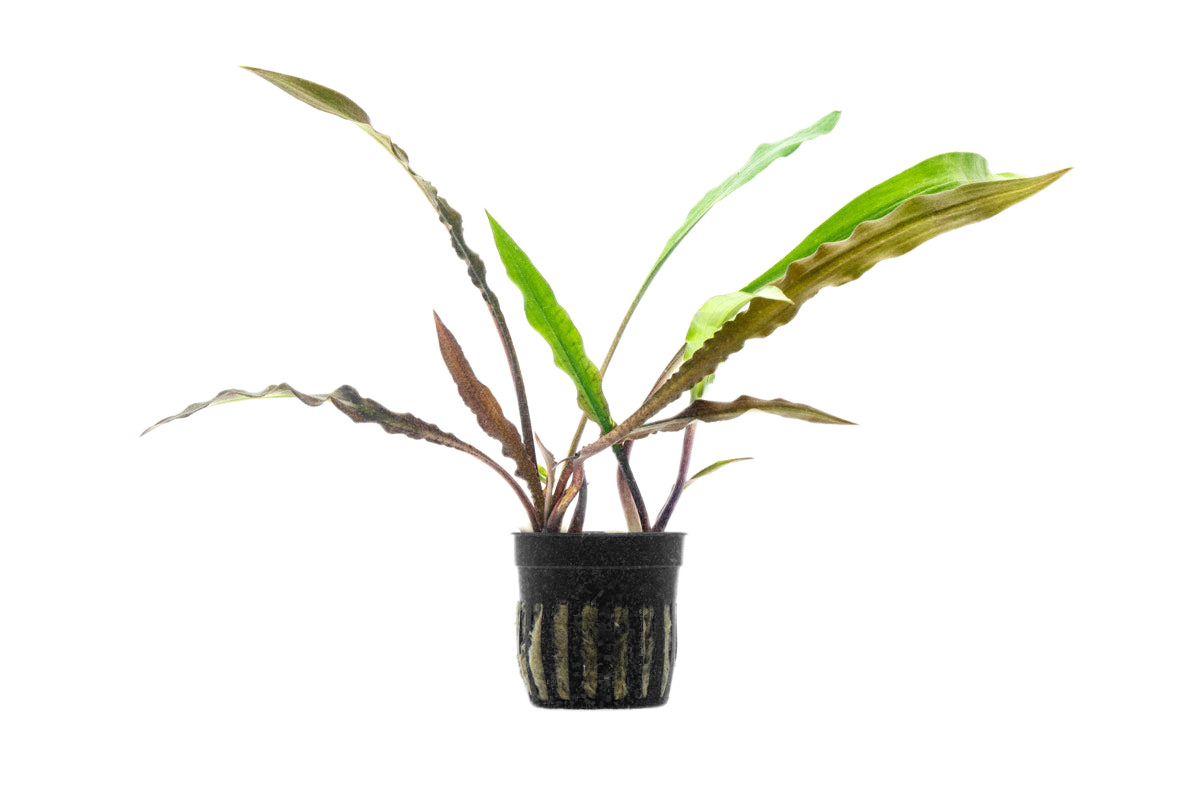
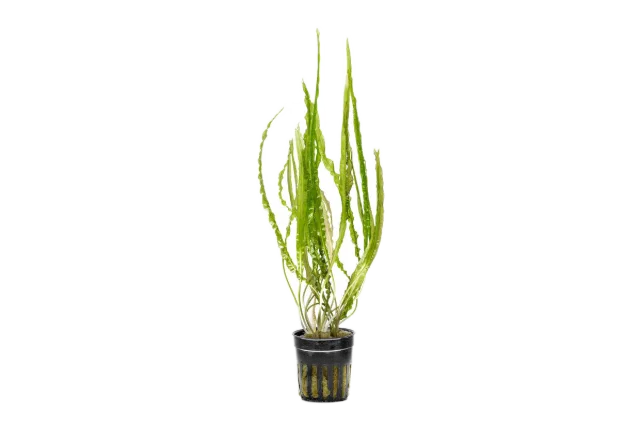
Cryptocoryne spiralis 'Tiger' is an easy Indian rosette plant with long, ribbon-like leaves covered in bold tiger-like variegated patterns for midground to background accents. A heavy root feeder, it needs low to medium light with optional CO2, and dislikes being moved, which can trigger leaf melt.
Quick facts
Identity
- Also known as
- Tiger Crypt; Spiralis Tiger; Spiral Water Trumpet Tiger
- Synonyms
- Cryptocoryne spiralis var. tiger
- Environment
- Freshwater
- Native to
- India
- Habitat
- Rivers, streams, marshes and seasonally flooded rice fields of southwestern India, growing submersed in the monsoon and emersed as waters recede
- Sourcing
- Tissue culture
- Conservation
- Not Evaluated
Care
- Care level
- Easy
- Growth form
- Rosette
- Max height
- 4 – 16 in (10 – 41 cm)
- Spread
- 8 in (20 cm)
- Growth rate
- Slow
- Placement
- Midground, Background
Water
- Temperature
- 72 – 82 °F (22 – 28 °C)
- pH
- 6.0 – 7.5
- GH
- 2 – 18 dGH
- Flow
- Low-Moderate
- Light
- Low
- CO₂
- Beneficial
Planting
- Substrate
- Nutrient-rich preferred
- Feeds from
- Roots
- Fertilizer needs
- Medium
- Colors
- Brown, Red, Green, Multicolor
Feeding & breeding
- Propagation
- Runners, Rhizome division
Something wrong or missing? Submit a correction
Care guide
Overview
Reaching roughly 4 to 16 inches, this rosette produces long, narrow leaves marked with bold tiger-like striping that intensifies under stronger light and CO2. It grows slowly, feeds mainly through its roots, and should be planted once in a permanent midground or background spot, as relocation often triggers melt.
Care
A selected form of the Indian species Cryptocoryne spiralis, this plant tolerates a wide range of light levels and does not require CO2 injection, though brighter light and added CO2 deepen the tiger-like striping on its long, narrow leaves. It grows slowly to moderately and does best planted once in a permanent spot, since crypts respond poorly to repeated uprooting. A nutrient-rich substrate supports the strong root system this plant depends on for most of its nutrition.
Planting & trimming
Bury the roots in a nutrient-rich substrate while keeping the crown and rhizome at the surface, spacing plants a few inches apart to allow the arching leaves room to spread. Choose the final position carefully, since crypts sulk and melt when relocated, and place it in the midground or background where its height will not shade shorter foreground plants. Trim only spent or damaged outer leaves rather than cutting back the plant heavily.
Fertilizing
As a heavy root feeder, it needs nutrients delivered at the root zone rather than through the water column alone. Push root tabs near the base periodically, or plant it in an aquasoil substrate that supplies iron and trace elements over time. Pale new leaves or weak striping usually point to depleted substrate rather than a lighting problem.
Propagation
Established plants spread by sending out runners from the base, and daughter rosettes that form can be separated from the parent once they have their own root systems. Division of the rhizome clump is also effective for propagation once the plant has produced multiple crowns. Growth is slow, so patience is needed between propagation events.
Problems
Newly planted specimens commonly go through crypt melt, dissolving most or all of their leaves within days of introduction or after any major disturbance to water chemistry. The rhizome and roots usually survive this event and send up fresh growth within two to four weeks, so the plant should be left undisturbed rather than removed. Once established, it is fairly resistant to algae fouling and disease compared with faster-growing stem plants.
Sources
More Crypts
Something wrong or missing? Submit a correction
In the community
Popular tanks using Cryptocoryne Spiralis Tiger
No public tanks are showcasing Cryptocoryne Spiralis Tiger yet.