
Cryptocoryne
Cryptocoryne Silver Queen
Cryptocoryne 'Silver Queen'AraceaeCrypts
Price: $35.99 USD
Add from My tanks →1 photos
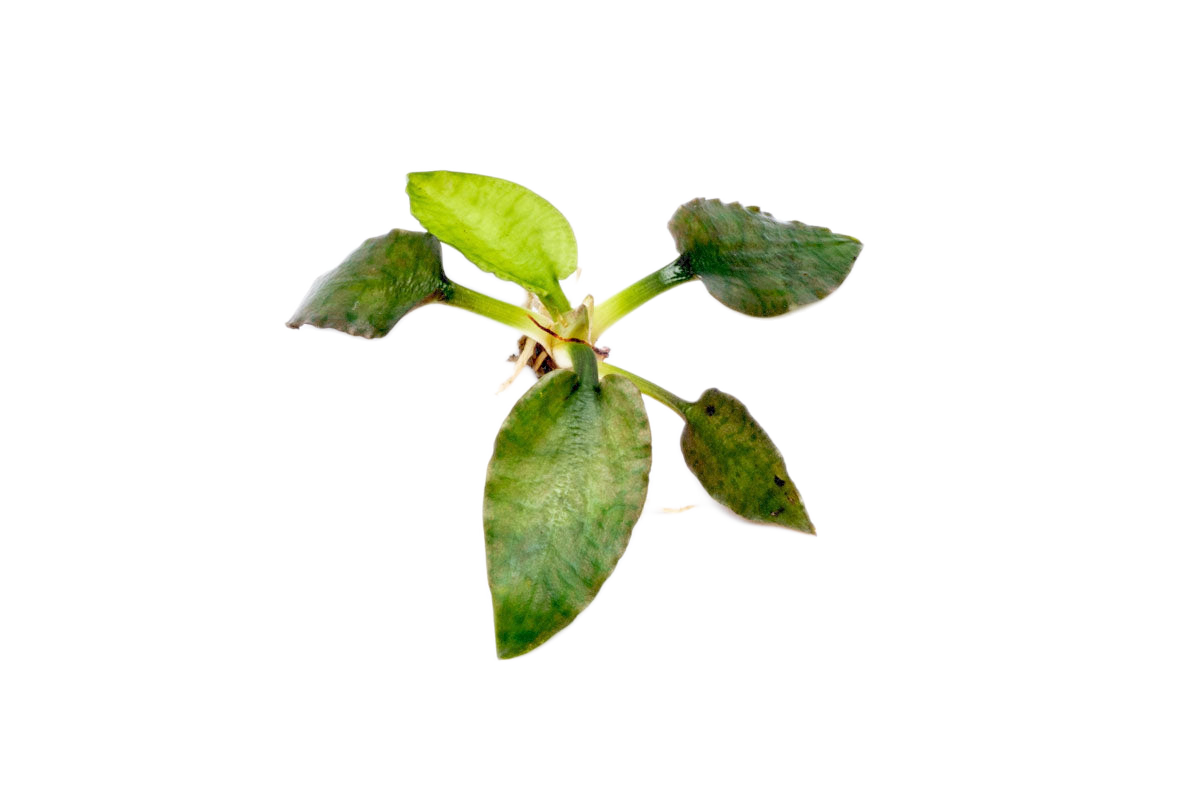
Cryptocoryne 'Silver Queen', from the specialized river basins of Borneo, is a rare collector's gem with pointed oval leaves, a gentle silver wavy margin, and dark green foliage dotted with pink or bronze spotting. More demanding than standard crypts, preferring pH above 7.0, moderate to high light, and CO2.
Quick facts
Identity
- Also known as
- Silver Queen Crypt
- Environment
- Freshwater
- Native to
- Sri Lanka
- Habitat
- Fast-flowing, calcium-rich limestone streams and rivers
- Sourcing
- Aquacultured
- Conservation
- Not Evaluated
Care
- Care level
- Moderate
- Growth form
- Rosette
- Max height
- 4 – 12 in (10 – 30 cm)
- Spread
- 8 in (20 cm)
- Growth rate
- Slow
- Placement
- Midground
Water
- Temperature
- 72 – 82 °F (22 – 28 °C)
- pH
- 6.0 – 7.5
- GH
- 3 – 12 dGH
- PAR
- 20 – 50 PAR
- Flow
- Moderate
- Light
- Low
- CO₂
- Beneficial
Planting
- Substrate
- Nutrient-rich preferred
- Feeds from
- Roots
- Fertilizer needs
- Medium
- Colors
- Green
Feeding & breeding
- Propagation
- Runners, Rhizome division
Something wrong or missing? Submit a correction
Care guide
Overview
Spreading gradually by runners, Cryptocoryne 'Silver Queen' develops pointed oval leaves marked with pink or bronze spotting along a silvery wavy margin over dark green foliage. It asks more of the keeper than typical crypts, favoring alkaline water above pH 7.0 alongside moderate to high light and CO2 injection. Established plantlets should be divided sparingly once rooted.
Care
This crypt tolerates a broad range of water hardness thanks to its origin in mineral-rich limestone streams, making it more forgiving than many other Cryptocoryne for hobbyists dealing with hard tap water. It grows slowly into a dense rosette of lance-shaped, wavy-edged leaves and does best left undisturbed once planted. Low to medium lighting suits it well, and while CO2 injection is not mandatory it noticeably improves leaf size and coloration.
Planting & trimming
Rinse all rockwool from the roots before planting, then use fine tweezers to bury the root mass deep in the substrate while keeping the crown at the surface. Choose a permanent spot from the start, since established plants resent being moved or divided. It can also be grown emersed in paludariums or high-humidity setups, where mature specimens occasionally send up a flowering spathe.
Fertilizing
Root tabs pushed into the substrate near the base supply the iron and micronutrients this heavy root feeder needs, particularly in inert substrates like sand or gravel. A nutrient-rich aquasoil reduces the need for frequent dosing but supplemental liquid fertilizer still helps sustain steady growth. Pale or yellowing new leaves usually point to iron or micronutrient deficiency rather than a lighting problem.
Propagation
Propagation occurs mainly through underground runners that send up new plantlets a short distance from the parent. Once a plantlet has developed its own root system it can be carefully separated and replanted elsewhere in the tank. Division is best done sparingly, since frequent disturbance slows the plant's overall growth.
Problems
New plants commonly shed most or all of their leaves after transplanting, a stress response known as crypt melt rather than a sign of a dying plant. Keeping water parameters stable and avoiding further disturbance allows fresh, better-adapted leaves to emerge within a few weeks. Excess light or algae buildup on the slow-growing leaves can also cause deterioration if the tank is not well balanced.
Sources
More Crypts
Something wrong or missing? Submit a correction
In the community
Popular tanks using Cryptocoryne Silver Queen
No public tanks are showcasing Cryptocoryne Silver Queen yet.